Languages
Sunday, November 8, 2026



News and Views from the Global South
Millennium Development Goals (MDGs)

AFRICA: More Dangerous to Be a Woman than a Soldier
African women who bear the brunt of the continent’s conflicts now demand to play a defining role in peacekeeping.
Rising Seas Gnawing at West Africa’s Coastline
Sea levels on the coasts of Côte d'Ivoire and other West African countries have risen again this year, devastating houses and other infrastructure. The search for effective solutions is lagging behind accelerating coastal erosion.
Salvadoran Campesinas Go Organic
The guavas grown by Mariana Rosales are big and bright green, and the best thing about them, she says proudly, is that she does not spend a single cent on fertilisers to produce them – something extremely rare in a country like El Salvador.Expanding Technologies Fail to Bridge Broadband Divide
Despite an overall increase in global internet usage and in the prevalence of information and communication technologies (ICTs), the gap between developing and developed countries remains vast when it comes to accessing broadband connections.BRAZIL: Water Mega-Project for the Thirsty Agreste
The development of one part of Brazil's semiarid Northeast, the Agreste region in the state of Pernambuco, could begin with the construction of canals that will bring in water diverted from the São Francisco River.Concern over ICC Funding
International justice advocates are worried that donors will deprive the International Criminal Court (ICC) of sufficient funding next year, hindering the court’s ability to fulfil an expanding mandate that will stretch from Kenya to Libya and potentially Ivory Coast.
Re-Greening Africa in the Footsteps of Wangari Maathai
Africa needs to remain focused and continue following the late Professor Wangari Maathai’s initiatives for environmental sustainability in order to address climate change across the continent, environmentalists say.
PERU: Councilwomen Fight Climate Change in Land of Melting Glaciers
Some symbolic acts are powerful reflections of a broader struggle. In March some 300 women planted trees in the Santa River basin in northwest Peru to demonstrate their determination to preserve the environment and help adapt to climate change.In Expanding Energy Access, Businesses Can Reap Benefits
The United Nations is partnering with private sector firms to promote universal access to energy, improved efficiency and wider deployment of renewable sources.200 Million Depend on Melting Glaciers for Water
At least 200 million people in the world are in danger of being left without water, because they depend for their supply on glaciers that are melting, although paradoxically the process creates the illusion of plentiful water resources.
Q&A: “We Do Not Want It To Be ‘East’ And ‘West'”
About 80 percent of Qatar's population is foreign. Of the 1.6 million people living in the Arab emirate in 2010, 685,000 were Indian or Pakistani, 160,000 were Iranian and about 430,000 came from other parts of the world.
SOUTH AFRICA: In Need of a Unified Climate Change Policy
The implementation of a unified climate change policy across all of South Africa’s government departments will not be easy as the divisions currently work largely as separate entities, says Greenpeace Africa.
BRAZIL: Logistics Drives Tardy Industrialisation in Northeast
The steel and oil industries are still finding new frontiers for expansion. In Brazil's impoverished semiarid Northeast the key is not, like in China, cheap labour power or abundant raw materials, but logistical advantages.DR CONGO: Hard to Save All Women Suffering from Fistula
"Every quarter, more than a hundred women with fistulas - including many younger than 20 years old - are admitted for surgery in Maniema province," says nurse Julie Mawazo. "The number of affected women who don't have the means or awareness to come in must be far greater."
BURKINA FASO: Bonuses Help Reforestation Take Root
This year Fatimata Koama and her associates received more than half a million CFA francs as a reward for planting - and looking after - 1,200 trees in their small corner of Burkina Faso.How to Nurse the Unemployment Epidemic
At a meeting in the suburb of Carthage, just outside of Tunis on Nov. 18, 2008, the former head of the International Monetary Fund (IMF) Dominique Strauss-Kahn applauded the economic efforts of the now deposed Tunisian dictator Abidine Ben Ali, calling his policies "sound, the best model for emerging countries".
WEST AFRICA: Joint Action Against Piracy
There have already been more than thirty pirate attacks on ships along the West African coast so far this year. Regional governments will meet in Cotonou, Benin in October to discuss coordinating efforts to stem piracy.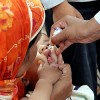
Polio Spreading Out From Pakistan
Despite two decades of mass oral polio vaccination (OPV) drives, Pakistan has failed to control the crippling paediatric disease. Health authorities now fear that it is exporting the virus and setting back global eradication plans.Give Women the Seeds and They Can Feed the World
If women farmers were given more tools and resources, the number of hungry people in the world could be slashed by 100 to 150 million.Grassroots Women Urge Rights-Based Development Path
The streets around the headquarters of the world's leading financial institutions – the World Bank and the International Monetary Fund – have been transformed into a canvas over the last three days.Moving Aid from Fire-Fighting to Long-Term Results
Civil society organisations weighed in Friday on the risks and necessities associated with results-driven aid, asking the key question when it comes to a development project: Results for whom? Donors, or the people on the ground?« Previous Page — Next Page »





The Week with IPS

NEXT STOP - SDGs
Tracking global progress towards a sustainable world
Tracking global progress towards a sustainable world
