Languages
Sunday, November 8, 2026



News and Views from the Global South
Millennium Development Goals (MDGs)
Mega Cities Could Trigger Water Shortages and Social Unrest
The rapid growth of urban population - described as one of the world’s major demographic trends - has triggered an explosion of "mega cities" in Asia, Latin America and Africa, causing a breakdown in basic services, including water supplies and sanitation facilities.OP-ED: Expanding Deserts, Falling Water Tables and Toxins Driving People from Homes
People do not normally leave their homes, their families, and their communities unless they have no other option. Yet as environmental stresses mount, we can expect to see a growing number of environmental refugees. Rising seas and increasingly devastating storms grab headlines, but expanding deserts, falling water tables, and toxic waste and radiation are also forcing people from their homes.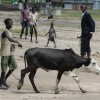
SOUTH SUDAN: Inter-Ethnic Clashes Become More Frequent and Deadly
Thousands of women and children are being abducted and over 1,000 people have died this year as communities in oil-rich South Sudan war over a precious commodity – cattle.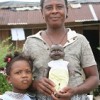
U.N. Development Goals Should Include Anti-Racism Targets
The first world summit of people of African descent, held in the city of La Ceiba on Honduras's Caribbean coast, ended with a declaration calling for the fight against racism to be included in the Millennium Development Goals (MDGs).
Too Much Water As Dangerous As Too Little
The international community is running the risk of losing the battle for water and sanitation in many cities around the world.
ECONOMY-ZIMBABWE: Good Policies Make for Good Business
With effective political and economic policies, Africa can be a haven for multinational companies (MNCs) even in the continent's least developed countries.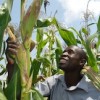
KENYA: Lime Improves Maize Harvest
As the world’s worst food security crisis continues across the Horn of Africa, including in Kenya, some smallholder farmers in the western part of the country are still feeding their families with last year’s abundant harvest.
LATIN AMERICA: Citizens Chart Crime Using Online Maps
"I was walking down the street, talking on my cell phone, when a guy on a motorbike came by and grabbed the phone out of my hand. I ran after him but I couldn't catch him. He had probably been following me."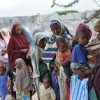
SOMALIA: Massive School Dropouts As Famine Continues
Jamaal Abdi, an eight-year-old boy at the Badbaado camp on the outskirts of Mogadishu, would like to have an education. He has his own dreams for the future.
Q&A: “Donor Base for UN Women Continues to Widen”
The donor base for UN Women has expanded to 95 countries since the new United Nations entity was launched at the start of this year, according to Lakshmi Puri, the assistant secretary-general and deputy executive director of UN Women.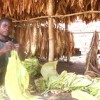
MALAWI: Giving Up on Tobacco
Malawi is reducing the production of tobacco following huge losses by smallholder tobacco farmers and commercial estates trading the crop on the country’s only official tobacco markets, the auction floors.
GHANA: Guidelines for Unregulated Microfinance Sector
When Andrew Poku's mother passed away he needed help to pay for her funeral. So the 35-year-old teacher from Accra turned to one of the country's several loan companies for a 670-dollar loan.
CUBA: Dreams and Progress in a Rural Community
The day that electricity arrived in the Cuban village of Jova, there were shouts, laughter and tears of joy, even among the most incredulous, who had doubted it was possible. "I didn’t know what to do; it actually made me nervous," Carmen Carvallosa confessed.
MALAWI: Hospitals Struggle Amid Water Shortage
Two battered plastic chairs bar entry to the toilets at the Bangwe Township Clinic in Blantyre. The toilets are not working because there is no running water – yet again. And if patients want to use the facilities they will have to run to the next- door primary school, which has pit latrines.
AFRICA: Emerging Trend Towards Establishing Offshore Tax Havens
As several African governments examine the possibility of setting up their own "offshore" financial centres, the trade name for tax havens, campaigners are calling for transparency and fair tax regimes.
Q&A: Water Will Be Lifeblood of Smart Urban Expansion
The world's water map is being significantly redrawn due primarily to the mass migration of people into urban centres, threatening one of life's vital resources.
MOZAMBIQUE: Climate Change Threatens Smallholder Farmers
Long after the wintry sun set over her patch of crops outside the Mozambican capital Angelina Jossefa keeps pulling out weeds. Much of her lettuce, carrots and beetroot died during a cruel winter, which means she has to work harder to feed her three children.
SOMALIA: City in Need of More Aid
The shelling and gunshots, once a common sound in Mogadishu, no longer ring out in the city's streets. The surprise withdrawal on Aug. 6 of the Islamist extremist group Al Shabaab from their stronghold in Mogadishu has meant that people now move about the city, for the first time in two years, without fear of constant attack.
SWAZILAND: Disagreement on How South African Loan Should be Spent
Despite the 2.4 billion emalangeni (342 million dollar) loan from the South African government to its cash-strapped neighbour, Swaziland is sinking deeper into debt.
NAMIBIA: No Option but to Adapt to a Changing Climate
Extreme weather conditions predicted because of climate change in Namibia are likely to have a tremendous effect on the 70 percent of the country’s people who live in rural areas and depend heavily on agriculture.
VENEZUELA: Caribbean Town Declares Plastic Bags Non Grata
A Venezuelan municipality where the main industry is oil refining, and that has an import-export "free zone", is set to become a plastic bag-free area.« Previous Page — Next Page »





The Week with IPS

NEXT STOP - SDGs
Tracking global progress towards a sustainable world
Tracking global progress towards a sustainable world
