Languages
Sunday, November 8, 2026



News and Views from the Global South
Millennium Development Goals (MDGs)
Eurozone Crisis Could Spill Over into Developing World
When the global economy was hit by a severe recession in 2008- 2009, the negative fallout impacted heavily on the world's developing nations, hindering the U.N.'s key development goals, including plans for the elimination of extreme poverty and hunger worldwide by 2015.ARGENTINA: Needs Outstrip Efforts to Build Affordable Housing
The Argentine economy has grown steadily since 2003, and hundreds of thousands of social housing units have been built. Nevertheless, the protests and conflicts that periodically break out make it clear that the solutions have failed to keep up with the need for affordable housing
UGANDA: Post War Reconstruction Ignores Victims of Sexual Violence
Ester Abeja has experienced both physical and emotional atrocities. She was captured by Uganda's feared rebel group the Lord’s Resistance Army (LRA) and was forced to join them. But not before the soldiers made her kill her one-year- old baby girl, by smashing her skull in, and then gang raped her.
ZAMBIA: Outlook Dim for Women Candidates
Although there is a female presidential candidate contesting Zambia's Sept. 20 general elections, her prospects are not strong. And in fact, fewer women overall are likely to be elected into public office this year, analysts say.BOLIVIA: Amazon Road Plan Has Native People on the March Again
Indigenous people in the eastern lowlands of Bolivia are again preparing to make the long march to La Paz, 21 years after their first such protest. They have vowed to make the trek in defence of their lands, which they say are threatened by plans for a highway to be built with the backing of the Brazilian government.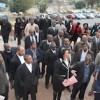
SWAZILAND: Women and Children Bear Brunt of Lawyers’ Strike
The standoff between the Law Society of Swaziland and the Judicial Services Commission is negatively affecting women, and their children, who are seeking justice from abuse.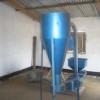
MALAWI: Remaining in the Dark
Malawi’s attempts to improve trade and investment in the country have taken a huge step backwards following a decision by the Millennium Challenge Corporation (MCC), a United States government foreign aid agency leading the fight against global poverty, to put on hold 350.7 million dollars meant to improve the country’s flawed energy sector.CLIMATE CHANGE: “Last Straw” Pushes Millions from Their Homes
With political will to dramatically cut the world's greenhouse gas emissions failing to materialise, a multi-pronged approach is needed to protect the millions of people who are being displaced as a result of environmental factors driven largely by climate change, experts say.
HORN OF AFRICA: U.N. Shares Responsibility in Famine, Experts Say
The United Nations Human Rights Council should accept responsibility, on behalf of the world forum, for the famine spreading through eastern Africa, and should call for member countries' cooperation to overcome the desperate food crisis there, experts said.
Q&A: ‘Men Have Failed Zambia, Now Is the Time for a Woman’
In Zambia's highly patriarchal society Edith Nawakwi, 52, has broken a few records on the political scene over the last two decades. And she broke another one on Sunday by being the only female candidate to file for nomination to run for president in Zambia's upcoming elections.
KENYA: Post Election Violence Victims Still Suffer
The Mawingu camp for internally displaced persons affected by Kenya’s 2007- 2008 post-election violence is a desolate place. Located in the Rift Valley, the camp is a collection of tattered, sagging and forlorn tents.
EDUCATION-CHILE: Protests Demand Deeper Reforms of Unequal System
The problems plaguing Chile's education system are not unknown in the rest of Latin America, but are especially complex in this long, narrow country sandwiched between the Andes mountains and the Pacific ocean.SOUTH AFRICA: Failing Women as Maternal Mortality Quadruples
Only six sub-Saharan African countries have failed to reduce the number of women dying in childbirth over the last two decades. High-spending South Africa is among them, with maternal mortality rates more than quadrupling since 1990. Human Rights Watch researcher Agnes Odhiambo says this is largely due to a lack of accountability.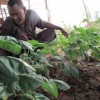
KENYA: Relief Food Sourced from Local Farmers
Mourid Abdi Dolal and Wilson Rotich are both small-scale farmers who grow staple crops. But while one sells his produce at the local village market, the other farms to feed the growing number of refugees in Kenya.
Q&A: “Governments Must Listen to the People, Not the Polluters”
The historic 1992 Earth Summit in Rio de Janeiro marked one of the world's seminal international conferences on the environment, creating or reinforcing a slew of U.N. treaties and protocols on climate change, biodiversity, desertification and forests.DR CONGO: Fresh Start for DR Congo’s Coffee Producers
Long years of civil war and instability set off a crippling decline in coffee production in the Democratic Republic of Congo: the country's output in 2010 was less than a tenth the harvest twenty years earlier. Now the DRC government has a strategy to bolster recovery of the sector.
SWAZILAND: Impossible for Children to Access Public Information
Many public officials in Swaziland do not think that access to information is a public right, but rather a privilege – which can be withdrawn at anytime.
ARGENTINA: One Poor Woman Who Feeds Thousands
The endeavour gave a deeper meaning to her life and turned her into an internationally recognised community organiser. Nevertheless, the real wish of Margarita Barrientos is that there would be more need for soup kitchens for the hungry, like the one she founded in the capital of Argentina.NIGERIA: Refined Oil Shortage Continues for Africa’s Largest Producer
"We are suffering in the midst of plenty." That was how Nelson Ilemchi summed up his plight as he spent an entire day queuing to buy kerosene. Since January Africa’s largest producer of crude oil has been experiencing a protracted nationwide scarcity of the refined product.MEXICO: Microloans from Distant Lands a Mouse Click Away
Norma Isela from the city of Piedras Negras in the northern Mexican state of Coahuila needs 500 dollars to expand the merchandise inventory in her business selling shoes by catalogue and to broaden her offer of clothes and accessories. So far she has managed to raise 45 percent of that amount.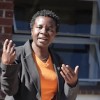
ZIMBABWE: Women Seeking Justice Face Archaic Rules and Discrimination
The four armed robbers who gang raped her may be serving time for their crimes, but six years later justice has turned out to be a myth for Mildred Mapingure.« Previous Page — Next Page »





The Week with IPS

NEXT STOP - SDGs
Tracking global progress towards a sustainable world
Tracking global progress towards a sustainable world
