Languages
Tuesday, October 6, 2026



News and Views from the Global South
Millennium Development Goals (MDGs)

Nationwide Protests Rage against Colombia’s Economic Policies
A strike declared nearly two weeks ago in Colombia by farmers and joined later by truck drivers, health workers, miners and students spread to include protests in the cities before mushrooming into a general strike Thursday, demanding changes in the government’s economic policies.
West Cold-Shoulders Rebuilding Southern Africa
The Southern African Development Community has had to revisit its plans to raise funding for its ambitious regional development plan in the wake of a cold-shoulder from western nations and multilateral finance institutions.
DR Congo Armed Groups Increase Child Recruitment
Over 2,000 children are still being used as soldiers by 27 armed groups in North Kivu in eastern Democratic Republic of Congo despite efforts by the United Nations Children’s Fund to remove them from the frontlines and return them to their homes.
Cuban Doctors Bring Eyesight, Healthcare to Haiti
It's Saturday, and the entrance hall of a police station in front of the busy market in Salomon in the Haitian capital has become an improvised health post. In a few minutes there is a long queue of people waiting to be seen by the Cuban medical brigade.U.S. Court Ruling Boosts Vulture Funds at Developing World’s Expense
A recent U.S. court ruling over a fight between Argentina and its creditors on Wall Street will increase global poverty by making it easier for "vulture funds" to seize the assets of indebted nations, according to anti-debt campaigners who are urging the U.S. government to overturn the decision.
Q&A: Everyone Loses in War Over Amazon Dams
In the war over major hydropower dams in the Amazon jungle, everyone loses - even the winners who manage to overcome the opposition and build them, but who suffer delays, costs that are difficult to recoup, and damage to their image.
Widows Celebrate a Little At Last
Namuna Gautam was among millions of Indian women who celebrated Rakshabandhan this year, but one thing set her apart. It was the first time the 80-year-old took part in the festival, in which sisters pray for the long life, health and happiness of their brothers.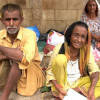
Few Pakistanis Donate Organs
Forty-year-old Sajja Bibi from Sukkur, 470 km from Pakistan’s port city of Karachi, has been camping on the pavement across from the Sindh Institute of Urology and Transplantation for over two years now.
Civil Society Calls for Vote on Drilling in Ecuador’s Yasuní Park
The Ecuadorean government’s decision to allow oil drilling in the Yasuní National Park, one of the most biodiverse areas of the planet, has caused alarm among environmentalists and indigenous people, who are calling for a referendum on the issue.
Doctors in Brazil: Too Few, or Just Too Far Between?
Brazil plans to import doctors to provide healthcare in poor suburbs of large cities, impoverished regions of the interior and border areas. But is there really a shortage of doctors in this country?Aid Cuts Childbirth Risks in Bangladesh
Seven months pregnant, 24-year-old Shumi Begum has travelled 220 km from her village with her paternal grandmother to consult a specialist on childbirth.
Higher Temperatures, More Dengue
The spread of the virus that causes dengue fever has created an emergency situation for institutions, governments and scientists in Latin America seeking sustainable solutions for a health problem that could worsen as a result of climate change.
Civil Society Trial Finds Oil Corp Guilty in Colombia
An “ethical and political trial on pillaging of natural resources” in Colombia condemned three foreign corporations, including Canada’s Pacific Rubiales Energy, which has dozens of oil and natural gas operations around the country.
Hard to Stay, Harder to Return
After working in Thailand legally for four years, many Myanmar migrant workers are facing an uncertain future in the coming weeks as their visas expire. Tired of the lack of security, they want the Myanmar government to improve the current labour agreement with Thailand.
Bahrain’s Tamarod Is Here to Stay
On Aug. 14, the 42nd anniversary of Bahrain’s independence from Britain, an online group called Tarmarod (“rebellion” in Arabic) officially joined Bahrain’s democracy movement that began in February 2011.
Musical Toilets for a Few While 2.5 Billion Lack Basics
Even as the United Nations laments the fact that more than 2.5 billion people in the developing world are still without adequate sanitation, both Japan and South Korea have gone upscale: offering automated toilets and piped-in classical music.
Water Dispute Pits Communities Against Brewing Giant
Josefina Escamilla was in the Salvadoran capital to protest against UK brewing giant SABMiller, whose local subsidiary plans to drill a new water well on land alongside her community that, she says, will cause water scarcity for local residents.
The World Trade Organisation after Eight Transformational Years
On Aug. 31, I will be stepping down after eight years as Director-General of the World Trade Organisation (WTO).
Swazi Chiefs Shut Women Out of Parliament
Archaic and chauvinistic practices are being used to prevent Swazi women from taking part in the upcoming primary elections, despite the country having a constitution that guarantees their rights, says political analyst Dr. Sikelela Dlamini.
Poor and Disabled When Disaster Strikes
Upon first glance, the emergency checklist distributed in Haiti after the 2010 earthquake looks like any other. Organised into key categories like water, sanitation and hygiene, and psychosocial support, the information is typical of the kind circulated for emergency response.
When Disaster Rains, Talk
Gulam Rasul, chief meteorologist at the Pakistan Meteorological Department, was sure early this month that the second leg of the annual monsoon due in the latter half of the month was going to be bad. “Normally it peaks towards late August,” Rasul told IPS.« Previous Page — Next Page »





The Week with IPS

NEXT STOP - SDGs
Tracking global progress towards a sustainable world
Tracking global progress towards a sustainable world
