Languages
Sunday, June 7, 2026



News and Views from the Global South
Politics

DR CONGO: Women Candidates Needed
Women make up just 12 percent of the roughly 18,000 candidates who will stand for election to parliament in the Democratic Republic of Congo's Nov. 28 elections.
PERU: In Prison, a Little Health Care Goes a Long Way
"I caught tuberculosis, but I'm lucky because it's been cured," says Hernán Arévalo from his bed in the new hospital at the Peruvian prison of Lurigancho, one of the most crowded and dangerous in Latin America. "Before, whoever came in here was unlikely to get out alive."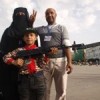
LIBYA: After Gaddafi, Unease Rules
"The war is over and Gaddafi already buried. What else could we possibly ask for?" says Adnan Abdulrafiq at his busy street restaurant in Omar Mukhtar street in downtown Tripoli. But troubles may not have ended with the war.TURKEY: Media Bares Its Anti-Kurdish Bias
Following the attacks by Kurdish rebels against the Turkish military last week, the Turkish press has openly struck a nationalist and militaristic tone.
FILM: Political Prisoners Are Burma’s Unsung Heroes
In a move that highlighted its sub-par human rights record, the government of Burma announced Oct. 11 that it would release 6,359 prisoners, but how many of these will be drawn from the country's estimated 500 to over 2,000 political prisoners remains uncertain.CHINA: New Laws to Crack Down on Uyghurs
China is contemplating new legislation to define terrorism more precisely, raising fears that the government is using the so-called ‘war on terror’ to crack down on Uyghur separatists in the country’s restive Muslim region of Xinjiang.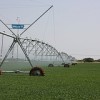
OP-ED: China’s Farming History Misapplied in Africa
As sub-Saharan Africa grapples with high food prices in some regions and famine in others, many experts argue that increasing food production through a programme of hybrid seeds and chemical inputs is the way to go.Yemeni Women Burn Veils to Protest Killings
Hundreds of Yemeni women have set fire to traditional female veils in protest against the government's brutal crackdown on the country's popular uprising, as overnight clashes in the capital and another city killed 25 people, officials said.EL SALVADOR: Water Bill Stagnates in Congress
A bill for protection, recovery and use of water resources in El Salvador, drafted by a platform of about 100 social, religious and academic organisations, has been bogged down in parliament for the past five years in spite of the country's water crisis.Anti-G20 Summit Prepares Its Case
Anti-globalisation and anti-capitalist groups are gathering ahead of the G20 meeting in Cannes in the south of France next week.MIDEAST: UNESCO Becomes a New Battleground
Palestine’s bid to become a member of the United Nations Educational, Scientific and Cultural Organisation (UNESCO) has created a tense atmosphere here, as the United States threatens to cut financing if the application is approved.PHILIPPINES: Prisoners Find Their E-Families
For the first time since giving birth in prison 13 years ago, Sarah, an inmate in the Philippines’ largest detention centre for female convicts, saw her daughter via Skype video chat in her prison cell.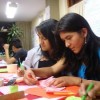
In Latin America, Closing the Gender Gap Brings Fresh Challenges
Over the past four decades in Latin America and the Caribbean, women have made remarkable strides in education, health, labour, and beyond, with girls now outperforming boys in school, the rate of working women more than doubling in many countries, and female participation rising in politics.U.S.: New Inequality Data Likely to Boost “Occupy” Movement
A major study on income equality by a non-partisan government agency is likely to boost the "Occupy Wall Street" movement, whose standing with the general public appears on the rise, according to a new poll.
U.S.: Police Tear Down Occupy Oakland; Protesters Say It’s Not Over
As the sun came up over Oakland City Hall Wednesday, Mike Porter, 24, was standing behind police barricades, watching a public works crew power wash the plaza that had been home to some 200 participants in the Occupy Oakland movement.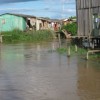
BRAZIL: Boycott of Dam Hearing Shows ‘Radical’ Foreign Policy Shift
Activists opposed to the construction of the Belo Monte hydropower dam in the Amazon jungle say the Brazilian government's decision to boycott an Inter-American Commission on Human Rights hearing represents a "radical" shift in the country's foreign policy.GUATEMALA: Costly Botched Port Ruins Beach Town Economy
"Now it's really dangerous to go out to sea, because of the huge waves. The few who brave it do so to survive," said fisherman Venancio Morales, one of the residents of the Guatemalan beach town of Champerico who have been affected by the construction of an unfinished new port.POPULATION: Youth Bulge Adds to Pakistan’s Woes
Pakistan’s population explosion is posing a greater danger than militancy and religious intolerance, says noted medical doctor and demographer Farid Midhet.EGYPT: Mubarak Men Begin to Resurface
Members of the regime of ousted dictator Hosni Mubarak have demanded to be allowed to run in upcoming elections and warned of violence if legislation to prohibit their political ambitions is passed.MIDEAST: Israel Evicting the Indigenous
As Israel moves ahead with a plan to forcibly displace tens of thousands of Palestinian Bedouins in the occupied West Bank, Mohammad Al-Korshan and his family are facing the real prospect of not only losing their home, but their traditional way of life.
INDIA: Kashmir’s Media Miracle Feeds on Conflict
"If one were to search for a positive outcome to the ongoing armed conflict in Jammu and Kashmir state, it would be the growth of journalism," says Prof. Shams Imran at the department of journalism, Central University of Kashmir.« Previous Page — Next Page »


The Week with IPS

NEXT STOP - SDGs
Tracking global progress towards a sustainable world
Tracking global progress towards a sustainable world
