Languages
Friday, October 2, 2026



News and Views from the Global South
Poverty & MDGs
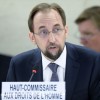
Cash-Strapped Human Rights Office at Breaking Point, Says New Chief
After six weeks in office, the new U.N. High Commissioner for Human Rights (UNHCHR) Zeid Ra'ad al-Hussein of Jordan launched a blistering attack on member states for insufficient funding, thereby forcing operations in his office to the breaking point "in a world that seems to be lurching from crisis to ever-more dangerous crisis."
Panama’s Coral Reefs Ringed with Threats
Fermín Gómez, a 53-year-old Panamanian fisherman, pushes off in his boat, the “Tres Hermanas,” every morning at 06:00 hours to fish in the waters off Taboga island. Five hours later he returns to shore.
Vanishing Species: Local Communities Count their Losses
The Mountain Chicken isn’t a fowl, as its name suggests, but a frog. Kimisha Thomas, hailing from the Caribbean island nation of Dominica, remembers a time when she could find these amphibians or ‘crapaud’ as locals call them “just in the backyard”.
Kyrgyzstan Looks to Alternative Fuels Ahead of Looming Winter Shortages
Each winter in Kyrgyzstan the energy situation seems to worsen; blackouts last longer, and officials seem less able to do anything to improve conditions. This year is expected to be particularly difficult.
Africa Can Be its Own ‘Switzerland’
Africa has the capacity to access at least 200 billion dollars for sustainable development investment but it will remain a slave to foreign aid unless it improves the climate for investment and trade and plugs illicit financial flows, development experts say.
High-Tech, High Yields: Caribbean Farmers Reap Benefits of ICT
Farmers in the Caribbean are being encouraged to make more use of farm apps and other forms of ICT in an effort to increase the knowledge available for making sound, profitable farming decisions.OPINION: The U.S. and a Crumbling Levant
As the international media is mesmerised by the Islamic State’s advance on Kobani or ‘Ayn al-Arab on the Syrian-Turkish border, Arab states and the United States would need to look beyond Kobani’s fate and the Islamic State’s territorial successes and defeats.
Facing Storms Without the Mangrove Wall
As the cyclonic storm Hudhud ripped through India’s eastern state of Andhra Pradesh, home to two million people, at a land speed of over 190 kilometres per hour on Sunday, it destroyed electricity and telephone infrastructure, damaged the airport, and laid waste to thousands of thatched houses, as well as rice fields, banana plantations and sugarcane crops throughout the state.
Family Farming – A Way of Life
It does not make the headlines, but 2014 is the International Year of Family Farming (IYFF) and family farming will be centre-stage at this year’s World Food Day on Oct. 16 at the Food and Agriculture Organisation of the United Nations (FAO).
Measuring How Climate Change Affects Africa’s Food Security
For the past 40 years Josephine Kakiyi, 55, has been cultivating maize, beans and vegetables on her small plot of land in the remote area of Kwa Vonza, in Kitui County, eastern Kenya.
Civil Society in Cuba Finds More Space Under the Reforms
Cafés, real estate agencies, taxis and other small privately-owned businesses and cooperatives in Cuba have brought new life to the depressed local economy and have given rise to pockets of prosperity in the country’s towns and cities.
Ahead of Myanmar Trip, Obama Urged to Demand Extractives Transparency
Lawmakers here are urging President Barack Obama to put transparency in the extractives sector at the centre of an upcoming trip to Myanmar.
Corruption, Tax Evasion Fuel Inequality in Latin America
Corruption and tax evasion are flagrant violations of human rights in Latin America, where they contribute to inequality and injustice in the countries of the region, according to studies and experts consulted by IPS.
Vanuatu Puts Indigenous Rights First in Land Reform
Stemming widespread corruption in the leasing of customary land to investors is the aim of bold land reform, introduced this year in the Southwest Pacific Island state of Vanuatu, which puts the rights of traditional landowners above the discretionary powers of politicians.
Cycle of Death, Destruction and Rebuilding Continues in Gaza
When the international pledging conference to rebuild a devastated Gaza ended in Cairo over the weekend - the third such conference in less than six years - the lingering question among donors was: is this the last of it or are there more assaults to come?
Reducing Hunger: More Than Just Access to Food
“We want healthy food, we want to produce according to our traditions,” farmers and activists demanded during an international forum of experts on agriculture and the environment in this southern Italian city.
In Pakistan’s Tribal Areas, a Nobel Prize Is a ‘Ray of Hope’
For girls living in northern Pakistan’s sprawling tribal regions, the struggle for education began long before that fateful day when members of the Taliban shot a 15-year-old schoolgirl in the head, and will undoubtedly continue for many years to come.
New Trains, New Hopes, Old Anguish
The kids of Kodikaman, a dusty village straddling the newly laid railway line in Sri Lanka’s northern Jaffna District, enjoy a special treat these days.
Drought Plagues Brazil’s Richest Metropolis
Agricultural losses are no longer the most visible effect of the drought plaguing Brazil’s most developed region. Now the energy crisis and the threat of water shortages in the city of São Paulo are painful reminders of just how dependent Brazilians are on regular rainfall.
New Trains, New Hopes, Old Anguish
 The kids of Kodikaman, a dusty village straddling the newly laid railway line in Sri Lanka’s northern Jaffna District, enjoy a special treat these days.

Marine Litter: Plunging Deep, Spreading Wide
Imagine a black-footed albatross feeding its chick plastic pellets, a baby seal in the North Pole helplessly struggling with an open-ended plastic bag wrapped tight around its neck, or a fishing vessel stranded mid-sea, a length of discarded nylon net entangled in its propeller. Multiply these scenarios a thousand-fold, and you get a glimpse of the state of the world’s oceans.« Previous Page — Next Page »


