Languages
Sunday, September 27, 2026



News and Views from the Global South
Poverty & MDGs

OPINION: Water Shutoffs and Unintended Consequences – Lessons from Detroit
United Nations Special Rapporteur on the Human Right to Safe Drinking Water and Sanitation Catarina de Albuquerque and Special Rapporteur on Adequate Housing Leilani Farha were in Detroit, Michigan Oct. 17-20.
Asia: So Close and Yet So Far From Polio Eradication
The goal is an ambitious one – to deliver a polio-free world by 2018. Towards this end, the multi-sector Global Polio Eradication Initiative (GPEI) is bringing out the big guns, sparing no expense to ensure that “every last child” is immunised against the crippling disease.Global South Brings United Front to Green Climate Fund
The United Nations’ key mechanism for funding climate change-related mitigation and adaptation in developing countries is now ready to receive funds, following a series of agreements between rich and poor economies.
OPINION: The Group of 77 & IPS at 50
When the Group of 77 commemorated its 50th anniversary recently, Inter Press Service (IPS) news agency was not far behind.
Kashmir Flood Carries Away Humble Dreams
Rafiqa Kazim and her husband Kazim Ali had a simple dream – to live a modest life, educate their four children and repay the bank-loan that the couple took out to sustain their small business.Central Asia Hurting as Russia’s Ruble Sinks
Pensioner Jyparkul Karaseyitova says she cannot afford meat anymore. At her local bazaar in Kyrgyzstan’s capital, Bishkek, the price for beef has jumped nine percent in the last six weeks. And she is not alone feeling the pain of rising inflation.
Añelo, from Forgotten Town to Capital of Argentina’s Shale Fuel Boom
This small town in southern Argentina is nearly a century old, but the unconventional fossil fuel boom is forcing it to basically start over, from scratch. The wave of outsiders drawn by the shale fuel fever has pushed the town to its limits, while the plan to turn it into a “sustainable city of the future” is still only on paper.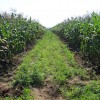
Sustaining Africa’s Development by Leveraging on Climate Change
By leveraging knowledge about climate change, through adopting improved agriculture technologies and using water and energy more effectively, Africa can accelerate its march towards sustainable development.
The Nagoya Protocol: A Treaty Waiting to Happen
For over 20 years, Mote Bahadur Pun of Nepal’s western Myagdi district has been growing ‘Paris polyphylla’ - a Himalayan herb used to cure pain, burns and fevers.
OPINION: The Politics of Biodiversity Loss
To mainstream biodiversity concerns into development planning, we must offer a compelling rationale and demonstrate biodiversity’s relevance to wealth generation, job creation and general human wellbeing. Only a persuasive “why” resonating throughout society will successfully get us to urgently needed negotiations of who, what, where, when and how to halt disastrous biodiversity loss.
Ebola Outbreak Threatens Food Crisis in West Africa
The widespread outbreak of Ebola in West Africa, which has resulted in over 4,500 deaths so far, is also threatening to trigger a food crisis in the three countries already plagued by poverty and hunger.
Panama’s Indigenous People Want to Harness the Riches of Their Forests
For indigenous people in Panama, the rainforest where they live is not only their habitat but also their spiritual home, and their link to nature and their ancestors. The forest holds part of their essence and their identity.
We Must Think of “Security” in New Ways
Recent events in the Arab world and elsewhere have underscored the point that traditional notions of security being dependent solely on military and related apparatus are outmoded.
Warmer Days a Catastrophe in the Making for Kenya’s Pastoralists
Seif Hassan is a pastoralist from Garissa, Northern Kenya, some 380 kilometres outside of the capital, Nairobi. He sells his animals at the Garissa livestock market where, during a good season, pastoralists can sell up to 5,000 animals per week and “it is a cash-making business.”
OPINION: Innovation Needed to Help Family Farms Thrive
Family farms have been contributing to food security and nutrition for centuries, if not millennia. But with changing demand for food as well as increasingly scarce natural resources and growing demographic pressures, family farms will need to innovate rapidly to thrive.
Israel Planning Mass Expulsion of Bedouins from West Bank
Thirty-year-old Naifa Youssef and 50 other members of her Bedouin community live a precarious life, eking out a hand-to-mouth existence alongside the main road which links Jerusalem with the Dead Sea and the ancient city of Jericho.
Family Farmers – Forward to the Future
"Who is more concerned than the rural family with regards to preservation of natural resources for future generations?"
OPINION: The Survivors
Oct. 18 is the EU’s Anti-Trafficking Day, as well as the United Kingdom’s Anti-Slavery Day. These events offer a good opportunity to talk about human trafficking within Europe’s borders, but we should not forget that there are victims and survivors all over the world.
Mexico’s Cocktail of Political and Narco-Violence and Poverty
The images filled the front pages of Mexico’s newspapers: 61 half-dressed state policemen kneeling, with their hands tied, in the main square of the town of Tepatepec in the central state of Hidalgo, while local residents threatened to burn them alive.
Writing the Final Chapter on AIDS
Although AIDS has defied science by killing millions of people throughout Africa in the last three decades, HIV experts now believe that they have found the magic numbers to end AIDS as a public health threat in 15 years.
Pressure Building on Obama to Impose Ebola Travel Ban
President Barack Obama is under significant pressure to impose a range of restrictions on travellers coming to the United States from West African countries affected by the current Ebola outbreak.« Previous Page — Next Page »


