Languages
Tuesday, October 13, 2026



News and Views from the Global South
Reproductive and Sexual Rights
POPULATION: Youth Bulge Adds to Pakistan’s Woes
Pakistan’s population explosion is posing a greater danger than militancy and religious intolerance, says noted medical doctor and demographer Farid Midhet.
MEXICO: Women Reject Normalisation of Gender Violence
Ninety percent of the non-governmental organisations in Mexico are founded and run by women, says journalist and women's rights activist Lydia Cacho Ribeiro, even as crimes against women remain cloaked in impunity.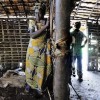
DR CONGO: No End to Mass Rapes: “It’s a Miserable Life”
Angeline Mwarusena, 61, sits on a small wooden bench in front of her hut, head bent, shoulders slumped. Her voice is barely audible. Four years ago, three soldiers from the Democratic Forces for the Liberation of Rwanda (FDLR) entered her home, hit her and raped her repeatedly. One after the other.
SOMALIA: Rape – The Hidden Side of the Famine Crisis
When Aisha Diis* and her five children fled their home in Somalia seeking aid from the famine devastating the region, she could not have known the dangers of the journey, or even fathom that she would be raped along the way.Afghan Women’s Rights ‘Under Threat’
Women's rights in Afghanistan are once again under threat after 10 years of progress, two leading British aid agencies have said.
CAMEROON: Protect Your Daughters, Iron Their Breasts
"Please God, make my breasts disappear." Joyce Forghab used to pray the same line every night during the month she was suffering from breast ironing. The shocking practice, carried out by a quarter of mothers in Cameroon, is meant to reverse female sexual development.DR CONGO: Hard to Save All Women Suffering from Fistula
"Every quarter, more than a hundred women with fistulas - including many younger than 20 years old - are admitted for surgery in Maniema province," says nurse Julie Mawazo. "The number of affected women who don't have the means or awareness to come in must be far greater."Grassroots Women Urge Rights-Based Development Path
The streets around the headquarters of the world's leading financial institutions – the World Bank and the International Monetary Fund – have been transformed into a canvas over the last three days.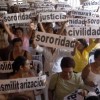
COLOMBIA: Victims of Sexual Violence Under Threat and on Their Own
"Another one? Another rape?" was the response Mari got at the Attorney General's Office in Colombia when she went to report what she had been through. "When they said that, I froze and got up and said 'Thank you, I’ll come back another day'," she told human rights defenders later.
INDIA: ‘Missing Girls is About Femicide’
India has been ranked the fourth most dangerous country in the world for women, but the widespread practice of selectively aborting female foetuses may make it the most hostile to the female gender.
NEPAL: No Brakes on Sex Trafficking
While a Nepalese campaign to stop human trafficking gains recognition by the White House and Hollywood, Nepal continues to be a prime source for sex trafficking, thanks to unsettled conditions created by a protracted political crisis.Unleashing the Power of Women and Girls
Kakenya Ntaiya was engaged at age five and would have been married by 13 if her mother had not insisted that she attend her small village school in Enoosaen, Kenya.INDIA: Kashmir Gets a Grip on AIDS
When the sole Community Care Centre in Jammu and Kashmir providing medical and psychosocial services to people living with HIV/AIDS (PLWHA) closed down for lack of patients it was a sure sign that the north Indian state had beaten back dire forecasts.
Q&A: “People With Disabilities Want Work”
More than one billion people worldwide live with disabilities, some 15 percent of the world's population.Reproductive Health Security Empowers Women’s Choices
Each day, one thousand women die in childbirth and one million people become infected with sexually transmitted infections (STIs), including 7,000 cases of HIV. Yet these numbers are preventable, experts insist, when countries possess the resources and willpower to address and deal with them.US-LATAM: Human Trafficking Scourge Needs More Than Policing
South American experts and officials met in Washington this week to discuss current policy initiatives to combat human trafficking in their respective countries, part of a broader U.S.-wide tour to share information and strategies to deal with the issue.
HAITI: U.N. Troops Accused of Exploiting Local Women
Seventeen-year-old Rose Mina Joseph says she is nine months pregnant. Her belly is swollen and she moves slowly, placing each step, as she walks around her family's dusty yard.INDIA: Campuses Lead Gay Rights Struggle
It was with some trepidation that Nivvedan, a student at the prestigious Indian Institute of Technology (IIT) - Bombay, helped launch ‘Saathi’ (Companion), catering to the needs of people with different sexual orientations on campus.
HAITI: Patchy Healthcare Adds to Miseries of Women and Girls
"I just gave birth on the ground...I had no drugs for pain during delivery," one Haitian mother tells Human Rights Watch (HRW) in a report released Tuesday that says a year and a half after the country's devastating earthquake, women and girls are still facing gaps in access to available healthcare services necessary to stop preventable maternal and infant deaths.
IRAN: Music Finds a Voice in Tehran
The waiter at the coffee shop moves rapidly to the entrance for a quick glance outside. Within, a young Iranian musician has started to play the saxophone. He has five minutes to perform, he cannot risk a raid on the "guerrilla" location for a little music.BRAZIL: Fight for Gay Rights Making Strides
Brazil is making progress in cracking down on homophobia and upholding the rights of homosexuals. The latest step was the introduction in Congress of a bill on sexual diversity, sponsored by the bar association in consultation with civil society.« Previous Page — Next Page »





The Week with IPS

NEXT STOP - SDGs
Tracking global progress towards a sustainable world
Tracking global progress towards a sustainable world
