Languages
Saturday, October 17, 2026



News and Views from the Global South
Senegal
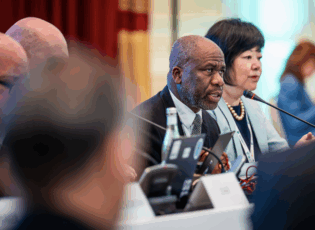
GEF Approves Adaptation Funds Strengthening Resilience in Vulnerable Countries
Bangladesh, the Democratic Republic of Congo, Guinea-Bissau, Niue, Senegal, Solomon Islands, Sudan, and Togo will receive over USD 67 million in new funding to help strengthen resilience.
Ambitious Great Green Wall Shows Slow, Steady Progress in Strengthening Landscapes, Improving Livelihoods
In 2021, Gadeja Shehu and about a hundred farmers in Garbadu village, Zamfara State in northwestern Nigeria, were invited by officials of the National Agency for the Great Green Wall to plant trees across a large stretch of land in their community.
Maison des Talibés Confronts Abuse of ‘Talibé’ children in Senegal
When you walk through the streets of Senegal’s cities, you notice them almost immediately: young boys in worn clothes, clutching plastic cans or tin bowls, weaving between cars and pedestrians to ask for spare change or food. They are often barefoot, alone and hungry. These children are known as talibés.
Inside Africa’s Big Bet on Youth to Feed the Continent and Who’s Actually Getting Funded
Winnie Wambui leans forward on the panel stage, microphone in hand, scanning the room until she spots a raised hand.
Once Scattered by Colonialism, Today United in Urgent Pursuit of Climate Justice
The Seychelles consider the ongoing public hearings at the International Court of Justice (ICJ) both timely and critical “for the people of the small island developing state in the middle of the Indian Ocean,” Flavien Joubert, Minister for Agriculture, Climate Change and Environment of the Seychelles, told the court today.
Afghan Girls, Women Deprived of Education, Find Hope in Africa
When providing education to her small group of Afghan girls, who had been studying at a boarding school back home, became tenuous, Shabana Basij-Rasikh, relocated them to Rwanda.
Farmers in Senegal Adopt Farming as a Business to Beat Climate Change
Onions and rice are a conspicuous part of every meal in Senegal, including the famous Poulet Yassa. However, climate change makes it hard for smallholder farmers to grow enough staple food with extra to sell for income.
Inadequate Water & Sanitation Threatens Women’s & Girls’ Development in Senegal
With Tabaski (Eid al-Adha) around the corner, 11-year-old Fatoumata Binta from Terrou Mballing district in M'Bour, western Senegal, wakes up early and joins her brothers Iphrahima Tall and Ismaila to fetch water from a river several miles from home.
Are Women-led Startups Key to Sustainability in Senegal?
Growing up in the Senegalese capital of Dakar, Siny Samba (28) watched with fascination as her grandmother made snacks for her family, using the fresh fruit from their garden. She would often help her grandma make these snacks to feed the neighbourhood children.
How Senegal is Providing Reproductive Health Services to those Who can Least Afford it
Pregnant with her second child, 30-year-old Ndiabou Niang was enduring pelvic pain, but couldn’t afford to access prenatal care in Diabe Salla, a village on the outskirts of the small town of Thilogne in north-east Senegal. Her husband was unemployed and her earnings of under CFAF 10,000 (17 USD) from selling seasonal fruits in the local market were insufficient to make ends meet.
Providing an Education in Favour of Senegal’s Girls
When Fatima* became pregnant in the middle of the school year and dropped out, she was disowned by her parents. Hers is a story that could have ended as another statistic of dropout rates among female learners in Senegal.
Non-formal Education Helps Senegalese Women Combat FGM and Harmful Practices
Growing up in Senegal’s southern Casamence region — a conflict zone — Fatou Ndiaye, now 43, often heard gunfire and watched fearfully as she saw people flee their villages. But what she dreaded more than a flying bullet was Female Genital Mutilation (FGM).
Senegalese Women’s Participation in Energy Sector equals Empowerment
Aïssata Ba, 45-year-old widow and mother of seven children, has been practising market gardening for the past 30 years in Lompoul Sur Mer village in the Niayes area of north-west Senegal. For many women in the village, endowed with fertile soil and favourable climate, it is the primary source of income throughout the year.
From Irregular Migrant to Graduate Lawyer: One Woman’s Journey to Success
Masters of Laws student Khoudia Ndiaye will graduate from Senegal’s University Cheikh Anta Diop (UCAD) next year. The 24-year-old, who specialised in notarial law and dreams of becoming a notary, wants to bring justice closer to local communities like those in her local district of Hann Bel-Air, in Senegal’s capital Dakar, where she rarely sees female lawyers.
Senegal Hosts Unique Community Events on Irregular Migration
It is four o'clock in the afternoon in Senegal’s capital, Dakar, when pupils, students and workers begin to fill the municipal town halls of Grand Yoff and Sociocultural Centre Grand Médine to attend a unique community event - a film screening and a debate.
Communities Meet to Share and Discuss Experiences of Migration in Dakar
Communities in Senegal's capital, Dakar, have been meeting across the city to watch a 45-minute documentary film made by returnee migrants, with support of the International Organization for Migration (IOM).
Senegal’s Migrant Returnees Become Storytellers
Khoudia Ndiaye and Ndeye Fatou Sall set up a smartphone on a tripod to begin recording a video interview with Daro Thiam in Hann Bel-Air, a neighbourhood in Senegal’s capital Dakar. Hann Bel-Air is the departure point for many of the migrants who leave the city and country on irregular routes – boats to Spain, crossing the Sahara desert to the Mediterranean Sea, or to countries nearby.
‘All the Roads Leading to Agadez and Italy are Dangerous’
El Adama Diallo left his home in Senegal on Oct. 28, 2016, with dreams of reaching Europe in his heart and a steely determination that made him take an alternative, dangerous route to get there despite the absence of regular migration papers in his pocket.
Migrants as Messengers Explain the Dangers of Irregular Migration
 Migrants as Messengers is a peer-to-peer messaging campaign by the International Organization for Migration (IOM) where returning migrants share with their communities and families the dangers, trauma and abuse that many experienced while attempting irregular migration.
Building West Africa’s Capacity to Access Climate Funding
When Senegalese president Macky Sall opened the 30MW Santhiou Mékhé solar plant last June, the country gained the title of having West Africa's largest such plant. But the distinction was short lived.
Senegalese Returnees from Libya, Niger Face Uncertain Future
Bouba Diop looks in delight at his uncle’s newly refurbished food canteen in the poor township of Keur Massar on the outskirts of the Senegalese capital Dakar.Next Page »





The Week with IPS

NEXT STOP - SDGs
Tracking global progress towards a sustainable world
Tracking global progress towards a sustainable world
