Languages
Sunday, October 18, 2026



News and Views from the Global South
The Information Society
“Microfinance Can Help Rural Communities Adapt to Climate Change”
Projects to fight climate change are being designed all around the world. But only five percent of them can be financed with the current international funds available, which means resources have to be used more wisely. Microfinance could be one solution.
MEDIA-LATIN AMERICA: The Seduction of Power
The governments and big private media groups in Latin America are waging a war to win over public opinion, the ultimate arbiter of legitimacy, and the only solution would appear to be to strike up an alliance.U.S.: Brain Injuries Especially Invisible Among Homeless – Part II
James Smith is a 53-year-old Portland veteran who used to have a job he loved. After a car accident left him with traumatic brain and neck injuries in 2005, Smith lost his job, ran out of money and wound up on the streets.
New Arsenal Emerges in Struggle over Iran’s Internet
Millions of Iranians who have lived under an intense level of internet filtering and advanced monitoring systems for years may soon benefit from new technology that sidesteps the censors.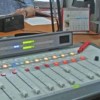
EL SALVADOR: Radio Station under Threat in Mining Region
Manuel Navarrete fiddles with the buttons and adjusts the volume on the control panel at the Radio Victoria community radio station in northern El Salvador, while he reads over the microphone the latest communiqué in which social organisations express their solidarity with the station's journalists, who have received death threats.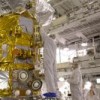
Argentina and U.S. Launch Climate Observatory into Orbit
Argentina and the United States have launched a jointly developed satellite observatory that will provide real-time information critical to understanding two major components of the earth's climate system: the water cycle and ocean circulation.SPAIN: Protest Movement Spreads to Neighbourhoods, Small Towns
The May 15 Movement (15-M) which sprang up as huge rallies in public squares in Spain's largest cities to protest against the political, economic and social system, is multiplying as assemblies in local neighbourhoods in provincial capitals and other municipalities.
Asylum-Seekers Find Refuge in a Street Paper
The reasons why people become street paper vendors are many and diverse. Some are homeless; others suffer mental or physical health problems, struggle with addiction or face unemployment. And some people do it because the magazines offer them the refuge they so desperately need.Governments and Powers-That-Be Fear the Internet
The global reach of the internet, and its ability to transmit information in real time and mobilise populations, creates fear among governments and the powerful, says Frank La Rue, United Nations Special Rapporteur on the promotion and protection of the right to freedom of opinion and expression.
INDIA: Kashmir in Search of Lost Culture
While the conflict in Indian Kashmir and the destruction it has caused often makes the news, its impact on culture has hardly gotten any attention.SINGAPORE: Social Media Challenges Govt Grip
Weeks after a watershed general election in Singapore, the influential role played by social media to dramatically transform political debate in this affluent city- state continues to reverberate through cyberspace.ZIMBABWE: Cross-Border Traders Don’t Trust Banks With Their Money
A newly available electronic banking service has received a lukewarm reception from cross-border traders in Zimbabwe’s second largest city Bulawayo, despite it alleviating the need to move around with large sums of cash.Social Media Takes a Far Right Turn
Social media is being heralded as a revolutionary weapon for the empowerment of discriminated groups such as migrants. But so far it is the xenophobic far right that has made the most of it.
Q&A: Prompting Cubans to Think and Talk
"I talk to deal with problems. In Cuba, there is too much formal, repetitive discourse and not enough directed at people, with their anxieties and joys," said Manuel Calviño, the host and writer of a television programme that tries not to add to that deficit.EUROPE: Media Complicit in Rise of Xenophobia
As European leaders increasingly question the concept of Europe without borders and follow each other in announcing the end of multiculturalism, the media response has been mostly to present migrants as destabilising Europe’s labour markets and welfare states.
ECONOMY: Malawians Keen to Build Trade Ties with India
Building on historical relationships, Malawians have set their sights on strengthening trade and investment relations with India in sectors as diverse as agriculture, telecommunications and pharmaceuticals.
MEDIA: Uniting in the Face Of “Unnatural” Disasters
"In my opinion, there is no such thing as a natural disaster," says Sylvia Richardson, a volunteer broadcaster, mother of two, assistant librarian, and the new vice president of the North American region of the World Association of Community Radio Broadcasters (AMARC).Radio Free Libya Transmits Live from Misurata
For residents of besieged Misurata, all it takes is a flick of the dial to tune into freedom.ECUADOR: Correa Set for Victory in Referendum
Pollsters predict that a majority of voters in Ecuador will approve a package of reforms backed by leftwing President Rafael Correa, in a May 7 referendum that has further polarised the population.Flagged for Removal: Online Censorship on the Rise
The shutdown was surprisingly swift and almost total. In the midst of a popular revolution – one that was blogged, YouTubed, and Twittered in minute-by-minute cyber blasts – the Egyptian regime tightened its Internet spigot in late January, choking the free flow of information down to a trickle.
MEXICO: Journalists Defy Violence, Self-Censorship
In Mexico, the country in the Americas facing the worst wave of violence against reporters, different journalistic initiatives are combating this dynamic, which fuels a tendency towards self-censorship.« Previous Page — Next Page »





The Week with IPS

NEXT STOP - SDGs
Tracking global progress towards a sustainable world
Tracking global progress towards a sustainable world
