Languages
Sunday, October 4, 2026



News and Views from the Global South
West Africa
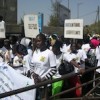
TRADE: African NGOs Oppose Human Rights Clause in EPAs
Part of the delay in the finalisation of the economic partnership agreements (EPAs) is due to the so-called non-execution clause that gives the EU the power to take steps against its African, Caribbean and Pacific (ACP) trading partners if they violate human rights, democracy and good governance principles.MALI: Early Anxiety Over Price of Grain
In the small village of Gwélékoro, 60 kilometres south of the capital, Bamako, the fields are empty now, during the dry season. After a poor harvest, farmers are worried by swiftly rising prices for staple foods like sorghum and millet.Manufacturing in Africa Can be Profitable – And Developmental
Investing in adding value to raw materials is crucial for the development of the African continent.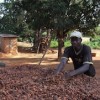
Ivorian Cocoa Producers Cry Foul Over Sanctions
The international community's efforts to deny embattled president Laurent Gbagbo access to funds from cocoa exports have resulted in hundreds of thousands of tonnes of Ivorian cocoa surfacing in neighbouring countries.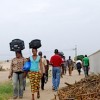
Growing Humanitarian Crisis in Cote D’Ivoire
The U.N. has announced that some 200,000 people have already fled the Abobo neighbourhood, in the north of Abidjan. Each morning for a week now, luggage on their backs, bundles on their heads, the sick riding in wheelbarrows, new borns cradled in their arms, thousands of people have fled Abobo on foot.Ivorian Women Fatally Shot at Rally
Security forces loyal to Laurent Gbagbo, Cote d'Ivoire's disputed president, have shot dead at least six women at a demonstration in support of his rival, Alassane Ouattara, witnesses said.
TRADE: South African Imports Filling Zimbabwean Shop Shelves
When the government of national unity (GNU) was formed two years ago, Zimbabweans expected that the days of shop shelves being filled with imported consumer goods would soon be over.
TRADE: Civil Society Ensuring Development Stays on EPA Agenda
In an unusual move, West and Central African civil society organisations have participated in the negotiations between their countries and the European Union on the economic partnership agreements (EPAs). The organisations stress developmental concerns while assisting under-resourced African governments with trade expertise.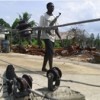
Niger Delta Demands for Justice Undaunted by Decades of Violence
Nigerian environmental rights groups have been making the case for the expulsion of oil companies from the Niger Delta in the southeastern part of the country at the World Social Forum in Dakar.
WORLD SOCIAL FORUM: Fisheries Need Transparent Regulation
Senegalese fishers participating in the 2011 World Social Forum (WSF) warned governments to "wake up to the ethical and transparent regulation of access to fisheries" to halt the overexploitation of this increasingly scarce resource.
WORLD SOCIAL FORUM: “We Don’t Want Everybody to Think the Same”
It is only the second time that the World Social Forum (WSF) takes place in Africa, the first one having been held in Nairobi, Kenya, in 2007. Since the start of the WSF in Porto Alegre, Brazil, 10 years ago, the organisers have been building African participation.COTE D’IVOIRE: February Month of Action by African Union
A High Level Panel has been set up by the African Union to send a team of experts to Côte d'Ivoire and come up with a solution to the political impasse that would be binding on both incumbent Laurent Gbagbo and his rival for the presidency, Alassane Ouattara.
TRADE: Doha Round Tariff Cuts “Will Still Hit” Poor Countries
To allow least developed countries (LDCs) to protect nascent industries, they are not required to cut tariffs for industrial goods and fisheries in the Doha Development Round. However, tariffs cuts will affect them if they are members of customs unions where some of their neighbours are larger developing countries without LDC status.AFRICA: France Plays Suspicious Role in Countries in Crisis
The three African states in which political crises have recently erupted – Côte d’Ivoire, Niger and Tunisia – all feature a strong French economic presence as well as close military and political ties to the former European colonial power, with France at times playing a protective role towards elites accused of abuses.
COTE D’IVOIRE: Protecting Public Health Despite Political Impasse
The political stand-off between Alassane Ouattara, certified by the United Nations as winner of Nov. 28 elections, and the incumbent president, Laurent Gbagbo, who has refused to step down, is stretching into its eighth week.
COTE D’IVOIRE: New Techniques, New Profits for Tomato Farmers
Even while the country has faced civil war and political crisis, innovative research organisations have worked to meet the challenges of food security and rural poverty.
MALI: Cotton and Food Security Closely Linked
Many Malian farmers are boycotting cotton this year, instead planting cereals. Cotton isn't edible, but observers say that the shift could weaken food security.Health System Failing Nigeria’s Youngest Citizens
Despite some progress, Nigeria is lagging behind its peers in reducing deaths among children under five. The mortality rate remains worryingly high for newborn infants - 700 children less than 28 days old die in the country every day.DEATH PENALTY: Perception of Crime an Obstacle to Abolition
The past year has seen mixed fortunes for activists working towards abolishing the death penalty in Africa. Togo and Burundi joined the ranks of African states that have removed capital punishment from their statutes, while Gambia extended its application to new offences.
GAMBIA: Families Left Homeless by Floods
Amie Manneh and her family lived securely in their single-bedroom home in Bundung, 15 kilometers from the capital, Banjul. Then their home was destroyed by heavy rainfall in September. Since then Amie, her husband and six children have been living in the damaged house.
POLITICS: Human Suffering Escalates in Cote d’Ivoire
For three days, 25-year-old Ousmane Traoré attended the private clinic in the populous district of Abobo, north of Abidjan. Suffering from gunshot wounds to the head and abdomen as a result of the Ivorian opposition demonstrations, he was forced to leave the main hospital in Treichville, south of Abidjan, due to a lack of assistance.« Previous Page — Next Page »


The Week with IPS

NEXT STOP - SDGs
Tracking global progress towards a sustainable world
Tracking global progress towards a sustainable world
