Languages
Tuesday, October 6, 2026



News and Views from the Global South
West Africa
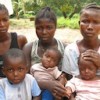
REFUGEES: Liberians Struggle to Cope With Fleeing Ivorians
Albertine Yahwah sits on a hard wooden bench, cradling her little baby in her arms. The 20 year-old walked from the Ivory Coast with her two children and her husband to reach this small town across the border in Northern Liberia.Death Penalty Alive and Well in the Gambia
The appeal by the Gambia's former Chief of Defence against his death sentence for treason is being heard during December. An amendment to the country's drugs and human trafficking laws could mean many more capital cases come before the courts.
Niger Herders Count Losses, Plan For the Future
Bacharou Gorel had 300 head of cattle before the food security crisis began in Niger. Today he has only 53 left.WEST AFRICA: New Vaccine For Mass Campaign Against Meningitis
More than 20 million people will be vaccinated between now and the end of the year in Burkina Faso, Mali and Niger as a mass vaccination campaign using a new conjugate vaccine unfolds across West Africa. Manufactured in India, MenAfriVac offers health authorities a powerful weapon against a deadly disease.SENEGAL: Funding Could Weaken Campaign Against Maternal Mortality
Senegal's efforts to improve maternal health and reduce child mortality are hampered by a lack of health centres and poor care in those that do exist. But the government faces a major financial hurdle in financing the Bajenu Gox initiative - a community health programme intended to address this.SENEGAL: Maternal Care Not Up to the Mark
The Gaspard Kamara maternity centre in Dakar was not especially full on Nov. 25, but the medical staff seemed overwhelmed. Midwives, nurses and gynecologists rushed in all directions dealing with women in difficult labour.SIERRA LEONE: (Misused) Key to Malaria Prevention
Lucky for Osman Conteh that one of his aunts disagreed with the family consensus that he had been stricken by an evil spirit. She insisted the twitching, incoherently babbling child be taken to the hospital rather than a witch doctor.
Slowly Winning Fight Against FGM in Northern Senegal
The harm done by female genital mutilation is still enormous in Podor, a city in the north of Senegal, say officials at the local hospital. While the practice is declining slightly, some religious leaders in the region still support it.
Prenatal Care Key to Reducing Maternal Mortality
Despite successive awareness campaigns, many Malian women see no need to attend pre-natal check-ups. Health workers say this results in an elevated rate of maternal and infant mortality.
Senegal Debates Merits of Ban on Begging
The face of the Senegalese capital has been transformed. The beggars who swarmed along its major arteries, especially in the centre of the city, its biggest markets and independence square are gone.
CONGO: Beninois Fishing Community Evicted
The Autonomous Port of Pointe-Noire has evicted 8,000 residents of a fishing village to make way for expanded facilities. The move is a blow to the community's livelihoods, as well as closing down the market that supplied the city's poor with affordable protein.
AFRICA: Church Leaders An Obstacle To Preventing Maternal Deaths
The resurgence in religious fundamentalism and the inordinate influence of certain church leaders over public health policy present major obstacles to the prevention of needless deaths and injuries of women from unsafe abortion on the African continent.BURKINA FASO: Cost Major Obstacle to Reducing Maternal Mortality
Elizabeth Kaboré says she has paid for each of her visits to the clinic, despite a government promise that prenatal check-ups in health centres would be free.
AFRICA: Malaria Vaccine To Protect the Most Vulnerable
As nearly 25 years of development of a malaria vaccine come to fruition, health authorities across Africa will need to come to grips with how to effectively introduce it.
AFRICA: FIFA Moves Against Trafficking of Young Footballers
When he was 15, Maurice Koné dreamed of becoming a great footballer. Adored for his technical skill and eye for goal by fans in Koumassi, a neighbourhood in the south of Abidjan, he dreamed of living the life of a professional overseas.
Female Factor Key to Human Rights
Gender training for peacekeeping operations "is not something you do for two weeks before you go for deployment," says Florence Butegwa, UNIFEM representative to the African Union (AU) and U.N. Economic Commission for Africa (UNECA).
Cuba, Brazil Unite for Africa’s Health
The risk of meningitis outbreaks rises during the dry season -- December to June -- in some 20 countries of sub-Saharan Africa. Meningitis in the region is too often deadly, though the disease can be prevented with vaccination.
India’s Female Peacekeepers Inspire Liberian Girls
It is break time at the Victory Chapel School in Congo Town. Children dressed in their royal blue uniforms with bright yellow and white trim fight to get under the shade of the only mango tree in the yard. It is the start of the dry season and the scorching sun will soon be almost unbearable to stand in.
Chinese Aid Bringing Smiles to Sierra Leone Farmers
"I think I am successful now," says Fanta Jabbah. "I am able to take care of my three children and support my husband; now I have a say in my household."
SIERRA LEONE: Unfulfilled Promise of Free Maternal Health Care for Mothers
Marie Musa, 37, is devastated. After the mother of four gave premature birth, her baby boy died a few hours later – because the hospital did not have enough incubators to rescue the infant.Liberian Women Find Their Voice
"Voice for the voiceless" is the slogan adorning the walls of Liberia’s first and Africa’s second radio station for women.« Previous Page — Next Page »





The Week with IPS

NEXT STOP - SDGs
Tracking global progress towards a sustainable world
Tracking global progress towards a sustainable world
