Languages
Wednesday, April 24, 2024



News and Views from the Global South
Women's Empowerment
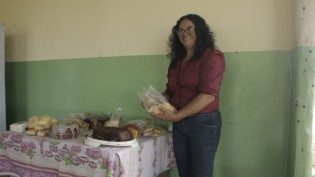
Solar Power and Biogas Empower Women Farmers in Brazil
A bakery, fruit pulp processing and water pumped from springs are empowering women farmers in Goiás, a central-eastern state of Brazil. New renewable energy sources are driving the process.
Education, Not Condemnation, Say Women Leaders Who Survived Violence
Sally Mboumien remembers the day she pressed a steaming hot stone against her chest. In Bawock, the rural community of western Cameroon where she grew up, young girls often had their young, sprouting breasts flattened with a hot iron or a hammer or spatulas that had been heated over burning coals.
Putting Women Front and Centre in the Development Agenda
Reengineering the framework of support by bringing in women as new actors in effective development cooperation will play a pivotal role in achieving the 2030 Agenda for the Sustainable Development Goals (SDGs).Climate Change and Women Across Three Continents
The link between women in climate change is a cross-cutting issue that deserves greater recognition at climate negotiations. It is pervasive, touching everything; from health and agriculture to sanitation and education.
The Double Burden of Malnutrition
Not only do 805 million people go to bed hungry every day, with one-third of global food production (1.3 billion tons each year) being wasted, there is another scenario that reflects the nutrition paradox even more starkly: two billion people are affected by micronutrients deficiencies while 500 million individuals suffer from obesity.
Where Women Don’t Work
Saleema Bibi graduated from medical school 15 years ago – but to this day, the 40-year-old resident of Peshawar, capital of Pakistan’s northern Khyber Pakhtunkhwa (KP) province, has never been able to practice as a professional.
Burundian Women Want a Greater Say in Running of Country
As Burundi heads towards the 2015 general elections, and despite a quota of 30 percent women’s representation in parliament, women in this southeast African nation feel that they are yet to have a significant say in the management of their country.
Woman President Shows Malawi the Way
Malawi’s President Joyce Banda knows a thing or two about women’s empowerment. After all she is the first female southern African head of state.
Q&A: How One Woman Demands Answers and an End to FGM
Bogaletch Gebre knows exactly what women in her Ethiopian community are going through. Along with her sisters, the women's rights activist was a victim of female genital mutilation (FGM) when she was a child in a part of Ethiopia where the practise was carried out on every girl.
Award Spotlights Indian Women Helping Women
Jassiben, a self-employed potter from Nana Shahpur village in western India, loves summer despite the heat waves and frequent power cuts, because summer days always mean great business.
Giving Paraplegic Women a New Lease on Life
Gul Shada thought it was the end of the road for her when she and her husband met with a road accident last year in the Nowshera district of Khyber Pakhtunkhwa, one of the four provinces of Pakistan. Not only did the mishap leave Shada widowed at the relatively young age of 37, she also sustained an injury to her back that immobilised her.
The Challenge of Being a Maasai Woman
The Maasai tribe of Kenya and Tanzania has long been a beacon of traditional culture to many Africans - and for Westerners on safari through Maasai Mara, Samburu or Amboseli, a familiar face.
Kenyan Women to Break Glass Ceiling in Cabinet
Kenya’s nominees for cabinet secretary positions, who include an unprecedented number of women - six out of 18 - will undergo a gruelling public vetting process by the Parliamentary Committee on Appointments Thursday.
Equal Chances for Women Critical in ‘Healthy, Productive Society’
In an effort to promote gender equality in workplaces and communities, business leaders, politicians and supporters came together during last week's fifth annual Women's Empowerment Principles Event to explore ways to ensure women are supported in their careers and life choices.
Q&A: The Challenges of Women’s Empowerment and Equality
Today, approximately 125 countries have laws that penalise domestic violence - a great advance from a decade ago. Yet 603 million women around the world still live in countries where domestic violence is not a crime, and up to seven in ten women are targeted for physical or sexual violence, or both.
Violence Against Women Persists in Bangladesh
Bangladesh, often cited as a model of progress in achieving the United Nations Millennium Development Goals (MDGs), appears to be sliding backwards when it comes to dealing with violence against women (VAW).Nearer the Church, Farther From MDGs
When Philippines President Benigno Aquino III delivered his annual state of the union address in July, he appealed to the country’s lawmakers to break a deadlock on progressive birth control laws in this predominantly Catholic nation.
Women Spend 40 Billion Hours Collecting Water
As the weeklong international conference on water concluded Friday, it was left to one of the keynote speakers from the United Nations to focus on a much neglected perspective on water and food security: the role of women.
Bangladesh ‘Fixes’ Grameen Microcredit
Laboni Vhoumik’s lingerie manufacturing unit in the Gopai village of Noakhali district, about 180 km outside the capital, is a forceful argument in favour of the Grameen Bank microcredit model that fosters female entrepreneurship and also relies on it.Little Money to Promote Gender Equality in Eastern Europe
Despite pushes from international bodies such as the United Nations (UN) or the European Union (EU) to promote gender equality in Central and Eastern Europe, access to funding for such initiatives remains largely conditional upon national governments’ willingness to embrace this agenda.U.N. Meet Holds Governments to Account on Women’s Equality
In 2008, delegates meeting for the annual U.N. Commission on the Status of Women (CSW) agreed that much greater investments in women and gender equality were a critical – and overlooked – aspect of sustainable development.Next Page »






The Week with IPS

NEXT STOP - SDGs
Tracking global progress towards a sustainable world
Tracking global progress towards a sustainable world
