Languages
Saturday, November 7, 2026



News and Views from the Global South
Opinion

Profound Reform or Redundancy – United Nations’ Quandary?
Three recent developments bring about again the reasoning on the dire need to immediately reform the United Nations (UN) and avoid its predictable slide to redundancy.
Only Multilateral Cooperation Can Stop Harmful Tax Competition
US Treasury Secretary Janet Yellen has urged all governments to support a global minimum corporate tax rate of at least 21%. The US is working with other G20 nations to get other countries to end the “thirty-year race to the bottom on corporate tax rates”.
The UN Security Council and the “New US-China Cold War”
Commentators talk about a “new Cold War” between the United States and China. They sometimes conclude that the geopolitical rivalry between these two major powers has ruined the effectiveness of the UN Security Council through hostile vetoes and other barriers to Council action.
In the Secretive World of Government-to-Government Lending, 100 Chinese Debt Contracts Offer a Trove of New Information
Is Chinese financing good for developing countries? This has become a provocative question, freighted with ideology, geopolitics, and commercial rivalries. That doesn’t mean it isn’t worth trying to answer factually and empirically.
Clash of Cultures – Is it Real or a Smokescreen?
The notion of “Clash of Cultures” is most frequently used as a justification for anti-immigrant prejudice and, particularly in Europe and in the USA, for islamophobia. The reasoning goes as follows: immigrants, especially Muslims, have a deeply different culture from the hosting communities and these differences create unsurmountable tensions and conflicts.
The Invisible Women in Energy: Biomass Producers Who Deserve More Recognition
As the world looks to address issues of gender equity, development and climate change, the importance of increasing the participation of women in the energy sector is gaining attention. To date, this topic has generally been framed around the underrepresentation of women in the energy workforce.
Overcoming COVID-19: World Leaders Must Finance a More Equal World to Beat Pandemics
Leaders at this year’s World Bank/IMF Spring Meetings (April 5-11) will determine how best to recover from one of the biggest crises the institutions have faced since their founding in 1944—COVID-19’s impact and its economic aftermath.
Helping Youth Agribusiness Keep Pace with Fast Growing Africa
From small towns to big cities, sub-Saharan Africa has the fastest urban growth rate in the world. The continent’s population is expected to double by 2050 with the youth representing 60% of the overall population. The UN Department of Global Communication, for example, projects that for the next 15 years urban growth is set to double for several African cities: Dar es Salaam will reach over 13 million inhabitants and Kampala will exceed seven million.
A Post-COVID-19 Recovery will not be Possible if Water, Sanitation & Hygiene are not High on the Agenda
This World Health Day, G20 finance ministers will meet in Rome, Italy, to discuss how they will build back from the pandemic. The global economy is and concerted effort, coordination and imagination is needed to enable not only a worldwide recovery but also to ensure that the world’s poorest people are not left behind.
On World Health Day, a Call for Equity, Justice & the End of Paternalism
The past year has forced many of us to address difficult truths about how we treat and take care of each other — among them is a reckoning with racism and injustice.
Transforming Global Food Systems
Jose Graziano da Silva on the Path to Zero Hunger
The battle for the future of food has grown contentious, and José Graziano da Silva has become a lightning rod for criticism. In 2014, as Director General of the United Nations Food and Agriculture Organization (FAO), he presided over the institution’s first International Agroecology Symposium, opening what he called “a new window in the Cathedral of the Green Revolution.” The FAO has since then formalized support for “Scaling Up Agroecology” while continuing to promote the kinds of chemical-intensive agriculture associated with the Green Revolution.

A Healthy Indian Ocean Feeds, Protects, and Connects all South Asians
It is the oceans that engendered life. The lives of humans remain connected to the seas, making the good health of the seas and the efficient management of sea-based activity essential elements for the wellbeing of people and nations.
Women and Girls to the Front
Women hold up half the sky. Some years ago, Sarah al-Amiri, a young Emirati engineer, had a fixed gaze beyond the sky and towards our galaxy. “Space was a sector that we never dared to dream growing up,” she noted.
IMF, World Bank Must Support Developing Countries’ Recovery
The COVID-19 pandemic continues to take an unprecedented human and economic toll, wiping away years of modest and uneven progress towards the Sustainable Development Goals (SDGs). Developing countries now need much more support as progress towards the SDGs was ‘not on track’ even before the pandemic.
Three Ways the US Can Promote Equity in Ending the COVID-19 Pandemic Globally
As richer western nations continue hoarding COVID-19 vaccines to the detriment of poorer nations, there is some light on the horizon. On April 15, 2021, the U.S. will join the Global Vaccine Alliance (GAVI) and co-host the launch of the Investment Opportunity for COVAX Advance Market Commitment.
Syrians are Victims of a War “We Did not Choose”
Syrians are among the greatest victims of this century, according to the UN Special Envoy for Syria, Geir Pedersen. Indeed, we are.
Should the 2021 Climate Summit in Glasgow Still Take Place?
Among the COVID-19 pandemic’s many damaging impacts, could a halt to international progress on environmental issues be added to the list?
UN Leadership Necessary for Fairer Tax Cooperation
Illicit financial flows (IFFs) hurt all countries, both developed and developing. But poor countries suffer relatively more, accounting for nearly half the loss of world tax revenue. IFFs refer to cross-border movements of money and other financial assets obtained illegally at source, e.g., by corruption, smuggling, tax evasion, etc. This often involves trade mis-invoicing and transnational corporations’ (TNCs) transfer pricing via ‘creative’ accounting or book-keeping.
Generation Equality: Women’s Leadership as a Catalyst for Change, Say 49 UN Women Envoys
March, women’s history month, closes with the Generation Equality Forum in Mexico and against the background of significant setbacks on the empowerment of women caused by the COVID-19 pandemic.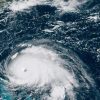
What’s in a Hurricane Name? Dorian, Laura, Eta & Iota Retired from WMO List
The World Meteorological Organization’s (WMO) Hurricane Committee decided at its annual meeting to retire four tropical cyclone names from its rotating list after assessing the record-breaking hurricane 2020 season.
Covid19 a Wake-up Call to Address Development Fault Lines in Asia and the Pacific
The world is emerging from the biggest social and economic shock in living memory, but it will be a long time before the deep scars of the COVID-19 pandemic on human well-being fully heal. In the Asia-Pacific region, where 60 per cent of the world lives, the pandemic revealed chronic development fault lines through its excessively harmful impact on the most vulnerable. The United Nations Economic and Social Commission for Asia and the Pacific (ESCAP) estimates that 89 million more people in the region have been pushed back into extreme poverty at the $1.90 per day threshold, erasing years of development gains. The economic and educational shutdowns are likely to have severely harmed human capital formation and productivity, exacerbating poverty and inequality.« Previous Page — Next Page »





The views expressed in these articles are those of the authors and do not necessarily represent the views of, and should not be attributed to, IPS-Inter Press Service

The Week with IPS

NEXT STOP - SDGs
Tracking global progress towards a sustainable world
Tracking global progress towards a sustainable world
