Languages
Wednesday, November 11, 2026



News and Views from the Global South
Opinion
Spain: This fall will be a hot one.
As if the summer holiday were a veil of forgetfulness, the media have tried to distract us the brutality of the crisis with massive doses of collective stupefaction: the European Football Championship, the Olympics, the summer adventures of celebrities, etc. Do they want us to forget that a new wave of cuts is on the way and that the second bailout of Spain will be even more painful? But they haven't succeeded. This fall will be a hot one.OP-ED: Bahraini Repression Amidst a Failing Strategy
This week’s decision by the Bahraini court of appeals to uphold the prison terms against Bahraini opposition activists is a travesty of justice and an indication that Bahraini repression continues unabated.
Q&A: “Another Chile Is Possible, with Greater Democracy and Social Rights”
It is essential for young people in Chile to assume a more active role in politics, especially in two key electoral processes: the municipal elections in October and the legislative and presidential vote in 2013, says student leader Camila Vallejo, who has not ruled out running for a seat in parliament herself.OP-ED: Radical Salafis Overrunning the Syrian Revolution
The recent visit by Abd al-Halim Murad, head of the Bahraini Salafi al-Asalah movement, to Syria to meet with Syrian rebels is an attempt by him and other Gulf Salafis to hijack the Syrian revolution.Global Slowdown Hits Developing Countries
Developing countries are increasingly being adversely affected by the economic recession in Europe and the slowdown in the United States.
Q&A: Rescuing Child Soldiers in CAR
The protection of children remains critical in the Central African Republic, where parents willingly give their children to armed groups in exchange for protection and services.OP-ED: Some Thoughts on the Nonaligned Movement Summit in Tehran
It must be considered pure fortuity for the Islamic Republic of Iran that the decision to hold the Nonaligned Movement (NAM) summit in Tehran was made three years ago in Sharm El-Sheikh, Egypt.
Q&A: “The Trend in the Western World Is the Dissolution of Cities”
The prevailing trend in much of “the Western capitalist world is the destruction and dissolution of cities,” which represents a threaten to democracy, “because the city is the place where public freedoms were born,” warns urban planner Jordi Borja in an interview with Tierramérica*.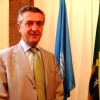
Q&A: Brazil Invited to Join U.N. Palestinian Refugee Agency
The policy of pacification of Rio de Janeiro’s violent favelas, or shantytowns, could serve as a model in some respects in Palestinian refugee camps, says Filippo Grandi, commissioner-general of the United Nations Relief and Works Agency (UNRWA) for Palestine refugees, in this interview with IPS.Banks and Politics: A Dangerous Mix
Hardly a week goes by without the disclosure of some new banking scandal. The most recent is the New York State Department of Financial Services' accusation of Britain's Standard Chartered of laundering 250 billion dollars in transactions considered potentially supportive of terrorist activities. Standard Chartered, until now believed to be one of the cleanest banks, agreed on August 14 to pay a gigantic fine of 340 million dollars to stop criminal prosecution.
Q&A: Hospitals Working to Reduce Their Ecological Footprint
Medical care is associated with images of cleanliness and good health. Today’s hospitals, however, are major sources of pollution and consume large amounts of valuable resources, like energy.Money Versus Health: the Yasuni Story
In 2007 Ecuador's president, Rafael Correa, sponsored the Yasuni Initiative to end oil prospecting in the vast Yasuni National Park, thereby preventing some 400 million tonnes of carbon emissions, if the international community or the United Nations would compensate Ecuador for half of the unrealised oil revenues (an estimated 13 billion dollars over 13 years).
Q&A: Military Action in Mali Would Be a ‘Huge Risk’
Military action by West African states against the insurrection in northern Mali would be extremely risky without diplomatic support from neighbouring Algeria and Mauritania, according to International Crisis Group researcher Gilles Yabi.OP-ED: What to Make of the Latest Iranian-Turkish Row
Turkish-Iranian relations have been rocky since the deepening of the Syrian imbroglio, but the latest row suggests a new low.
Q&A: Microcredit Bank “Incorporates Women in the Benefits of Development”
“Our raison d’etre is incorporating women in development, and especially in the benefits of development,” says Nora Castañeda, an economist who has headed the Banmujer bank in Venezuela since it was founded in 2001.
Is the Staggering Rise of the South Sustainable?
Growth in developing economies (DEs) has accelerated significantly in the new millennium.Humanity Should Not Live Under Nuclear Threat
Now that the war in Iraq is considered ‘over’, another major goal of Israel has come into view: attacking Iran on the pretext that it may possibly be working on a nuclear weapon - though Pakistan, China, and India definitely already have them.The Current Patent System Favours Corporations
A proposal has been made to initiate a debate on patent quality at the World Intellectual Property Organisation (WIPO). The expression ‘patent quality’ ambiguously alludes to a growing problem, faced in both developed and developing countries alike: the overwhelming majority of patents are applied for and granted over incremental developments on existing technologies.
OP-ED: Weapons into Ploughshares, and Crises into Opportunity
The crisis that started a few years ago with the collapse of major financial institutions in the United States is now centred in Europe and threatens other parts of the world. Many emerging countries in Asia and Latin America that had thus far avoided contamination because of their sound economic and fiscal policies and their timely adoption of domestic consumption stimulus packages are now beginning to experience secondary effects.Weapons into Ploughshares, and Crises into Opportunity
The crisis that started a few years ago with the collapse of major financial institutions in the United States is now centred in Europe and threatens other parts of the world. Many emerging countries in Asia and Latin America that had thus far avoided contamination because of their sound economic and fiscal policies and their timely adoption of domestic consumption stimulus packages are now beginning to experience secondary effects.OP-ED: U.S. Adrift on Law of the Sea
A little overshadowed by the Olympics, the Yeosu 2012 Expo is, in its own way, doing more than the London Games to promote global harmony - and without stirring up the waters the way the British did when they posted the ROK flag for the DPRK women’s soccer team.« Previous Page — Next Page »





The views expressed in these articles are those of the authors and do not necessarily represent the views of, and should not be attributed to, IPS-Inter Press Service

The Week with IPS

NEXT STOP - SDGs
Tracking global progress towards a sustainable world
Tracking global progress towards a sustainable world
