Languages
Thursday, November 12, 2026



News and Views from the Global South
Active Citizens
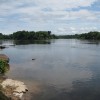
Belo Monte Dam Can No Longer Ignore Native Communities
A judicial order to halt construction of the Belo Monte dam in Brazil’s Amazon rainforest may be just one more battle in a long-drawn-out war in the courts over the controversial hydroelectric project.
Q&A: Hospitals Working to Reduce Their Ecological Footprint
Medical care is associated with images of cleanliness and good health. Today’s hospitals, however, are major sources of pollution and consume large amounts of valuable resources, like energy.
Civil Society Squeezed on All Sides
A year and a half after the international wake-up call of the Arab Spring uprisings, the room for civil society organisations is being increasingly constricted across the globe, experts in Washington warned on Tuesday.
Drug War Threatens Democracy, Mexican Peace Caravan Warns in US
"The war on drugs is endangering the best thing that the United States has given the world: democracy,” Javier Sicilia, the Mexican poet who heads the movement of victims of the violence unleashed by the war on drugs in his country, said upon reaching the United States this week.Fighting Against Soldiering
Thousands of ultra-Orthodox men, women and children have been demonstrating in Jerusalem against the Israeli government’s move to make military service mandatory for members of their community.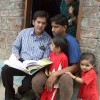
Children Treated as Lab Rats
Four-year-old Deepak Yadav, a mentally disabled boy from Indore city in the Indian state Madhya Pradesh, was being treated for stomach problems at Chacha Nehru Bal Chikitsalaya, a government hospital for children attached to the M. G. M. Medical College.Families of ‘Little Boy’ and ‘Fat Man’ Victims Still Struggling
Sachiko Masumura (79) was standing just two kilometres away from the hypocentre of Little Boy, the atomic bomb that was dropped on Hiroshima, Japan over six and a half decades ago.Mexican Victims of Violence Take Aim Against U.S. Firearms
“The United States should stop producing so many weapons, which cause us so much harm. That country also suffers from so much violence, as billions of dollars go into manufacturing guns.”
“We Are All Indigenous to Mother Earth, But We Have Forgotten”
Among Tiokasin Ghosthorse's childhood memories is the “reign of terror” that engulfed the Lakota native reservations from 1973 to 1976 following the 72-day indigenous occupation at Wounded Knee.Women Now Have a Voice in Chile’s Press
"We always dreamed of a ‘heroine’ who would not only denounce violence against women, but would also represent us in other spheres,” Kena Lorenzini, the director of Chile’s first feminist publication, told IPS.
Jeju Island Base Divides Korean, International Green Groups
As construction of a hotly contested naval base on South Korea’s Jeju Island advances, there’s a showdown underway.
Waste Issue Halts U.S. Nuclear Reactor Licensing
The U.S. Nuclear Regulatory Commission, which oversees commercial nuclear power enterprises, has halted the issuance of all new nuclear reactor licensing decisions after a court ruling citing the failure of industry and government to identify an acceptable solution for the long-term storage of nuclear waste.
Activists Score in Fight Against Nuclear Power
A new wave of anti-nuclear protests in Japan this summer, sparked by the disastrous meltdown at a power plant last year, suggests that civil society is no longer willing to allow the government to take the lead in deciding the nation’s energy policy.Humanity Should Not Live Under Nuclear Threat
Now that the war in Iraq is considered ‘over’, another major goal of Israel has come into view: attacking Iran on the pretext that it may possibly be working on a nuclear weapon - though Pakistan, China, and India definitely already have them.
Fishing Communities in Brazil Fight for Survival
His father and other fishermen fought back with sickles, hoes and other work tools against the armed men sent by the purported owner of the land where they lived in order to evict them. But then the military police came and knocked down eight of their houses.Corporate Lobbyists Threaten Democracy
Over a month has passed since the United Nations summit on sustainable development concluded in Rio de Janeiro, Brazil, but the world still appears to be unaware of one of the most important statements made during the conference that drew some 50,000 delegates from all over the world.Equal Parts Tolerance and Extremism in Indonesian Islam
Scattered across 17,000 islands on the Indian and Pacific oceans, the world's largest Muslim country has found its own blend of Islam: equal parts religion, secularism and contradictions.
Swapping Trash for Fresh Produce in Mexico City
Isabel Becerril has come with some friends to the “barter market” in the Mexican capital, to exchange 40 kgs of recyclable refuse for fresh produce, sweets and plants. “This is the first time I have come here, and I like it,” the university student tells IPS, with her ecological bag in hand.
Elderly Find Few Places to Call Home
Mr. Jayakumar (73), a philanthropic bachelor hailing from a prosperous industrial family in the southern Indian state of Karnataka, decided at the age of 70 that it was time to settle down.
Cuban Intellectuals Discuss the Transformation of the Public Sphere
On discussion panels, by email and in the blogosphere, Cuban intellectuals are speaking out to bring a critical perspective and propose roads forward to national development. And they increasingly seem to be including the transformation of public space as one of their goals.
How a Gay Rights Maverick Helped Topple Iceland’s Govt
By the time the political climate in Iceland was ripe for the Cutlery Revolution, Hörður Torfason was already well practiced at stirring things up.« Previous Page — Next Page »





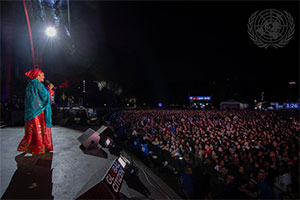 Global Citizen Festival in New York. Credit: UN Photo/Eskinder Debebe
Active citizens are committed to social change because they know that it is achievable. However, major political challenges face active citizens across the world. For example, in authoritarian regimes in Latin America where the hegemonic party has been in power for decades on end, protestors and human rights activists face enormous repression and struggle to materialize their advocacy into concrete results. The same can be said for Africans, where a shift towards elected government in recent decades has yet to translate into an effective voice in decision-making. Now, the Strengthening Citizen Demand for Good Governance, which uses evidence-based approaches – funded by DFID's Governance and Transparency Fund – seeks to raise their voices.
In 2025, the CIVICUS Monitor’s People Power Under Attack report revealed that civic freedoms are severely limited in 122 of 198 countries and territories, and only 7.2% of the global population now lives in countries where civic space is open. Through partnership with the Overseas Development Institute (ODI) and CIVICUS, IPS reporters across the continent will seek to define the extent and limits of state capability, government accountability and the responsiveness of leaders to the needs of citizens.

The Week with IPS

NEXT STOP - SDGs
Tracking global progress towards a sustainable world
Tracking global progress towards a sustainable world
