Languages
Friday, October 9, 2026



News and Views from the Global South
Active Citizens

Migrant Farm Workers, the Main Victims of Slave Labour in Mexico
"They mislead the workers, tell them that they will be paid well and pay them much less. The recruiters and the employers deceive them," complained Marilyn Gómez, a migrant farm worker in Mexico.
Rise in Cyberlaws Across Southeast Asia Spell Bad News for Human Rights & Democracy
Around the globe, cyberspace has become the new battleground in the fight for the heart and soul of democracy. And Southeast Asia is fast becoming one of the global hotspots where the screws are being tightened on freedom of expression online.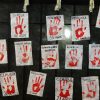
Latin America Resets Its Strategy against Femicides
Several initiatives are seeking to strengthen the fight against femicides in Latin America, a region which, despite growing popular mobilisation and pioneering legislation against gender-based murders, still has the world's worst rates in what has been described as a "silent genocide," says U.N. Women.
An Indigenous Nation Battles for Land and Justice in Bolivia
The ancient Qhara Qhara nation began a battle against the State of Bolivia in defence of its rich ancestral lands, in an open challenge to a government that came to power in 2006 on a platform founded on respect for the values and rights of indigenous peoples.
Human Rights Defenders Need to be Defended as Much as they Defend our Rights
They are ordinary people – mothers, fathers, sisters, sons, daughters, brothers, friends. But for me they are extraordinary people – the ones who have the courage to stand up for everyone else’s rights. They are the human rights defenders.
The NPT & Conditions for Nuclear Disarmament
Fifty years ago, shortly after the conclusion of the 1968 nuclear Nonproliferation Treaty (NPT), the United States and the Soviet Union launched the Strategic Arms Limitation Talks (SALT).
Monoculture Crops Threaten Community Water Projects in El Salvador
For nearly three decades, several communities in southeastern El Salvador have collectively and efficiently managed the water they consume, but monoculture production and climate change put their water at risk.
9 of the 10 Worst Global Risks are Linked to Water
Every year, the World Economic Forum asks some 1,000 decision-makers from the public sector, business, academia and civil society across the globe to assess the risks facing the world over the decade to come.
Guinea’s Returnee Migrants Harness the Strength of Unity
Elhadj Mohamed Diallo was a prisoner in Libya between October and November 2017, but he was not helpless. Far from his home in Guinea he understood the power of an organised union.
US Survey Finds Lack of Awareness on Global Warming
The U.N.’s World Water day is fast approaching as the state of the world’s consumable water supply remains dismal. Billions of people face at least the very real risk of scarcity, if they’re not facing scarcity already; and about a third of the world’s groundwater systems are in danger of becoming depleted.
Europe under Siege: Collusions, Dugin and Bannon
EU Parliament elections take place every fifth year and votes have steadily been decreasing. In the last 2014 election, the overall turnout was 42.54 percent of those entitled to vote, in some nations it was just around fifteen percent. Nevertheless, results will not only be eagerly awaited by pro- and anti-EU activists, but also by ideologist from non-member countries. Particularily vociferous among such people are Steve Bannon, who wants to “Make America Great Again” and Aleksandr Dugin who wants to “Make Russia Great Again”.
Climate Strike: Hundreds of Thousands Unite for the Planet’s Future
Friday, Mar. 15 saw hundreds of thousands of young people across the world take to the streets to join the climate strike. “We are demonstrating today for our planet and for our future. This is the place where we and those who come after us will live,” Jennifer, a 16-year-old girl from Rome, the Italian capital, who opted to join the protests, told IPS.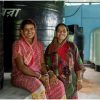
Women Take the Lead Tackling Climate Change in Bangladesh
The stakes are high for women when faced with a warming world – their livelihoods jeopardised by labour markets that tend to put men first, their family responsibilities increasing rapidly in the face of droughts and flooding, and politicians who refuse to acknowledge the challenges they face. The story of those living on the frontline of a harsher climate is simply not being heard.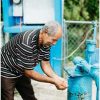
Three Takeaways from Disaster Relief in Puerto Rico
Those of us working in disaster relief know what to expect when a hurricane or earthquake strikes with devastating fury. We know that safe water, food, and shelter will be the most immediate needs for survivors. And we have a good idea of the kind of wreckage we’ll see, although we never cease to be humbled and sobered by the tragic sights.
VIDEO: “People Affected by Leprosy Suffer Severe Discrimination”
 “More than 50 countries in the world have discriminatory laws against people affected by Hansen's disease. There is also a lot of discrimination in the public administration…and in society," Alice Cruz, U.N. Special Rapporteur on the elimination of discrimination against persons affected by leprosy and their family members, said in this interview with IPS (in Spanish, with English subtitles).
People Affected by Leprosy in Latin America Unite for Their Rights and Their Voice
With the decision to found a regional coalition to promote rights and greater participation in national and international forums and decisions, the First Latin American and Caribbean Assembly of Organisations of People Affected by Hansen's disease, popularly known - and stigmatised - as leprosy, came to an end.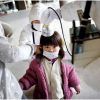
Eight Years on, Fukushima Still Poses Health Risks for Children
On March 11, we commemorate the 8th anniversary of the Fukushima nuclear disaster. To an outside observer, this anniversary passes as a technical progress report, a look at new robot, or a short story on how lives there are slowly returning to normal.
International Women’s Day in Cameroon: A Day for All Women?
On March 8, women all over Cameroon will don custom-made dresses sewn of pagne, specially printed for International Women’s Day. They will parade through cities and towns, joining women around the world in celebration of the day.
Decent Work Still a Distant Dream for Many Latin American Women
Women in Latin America earn one-fifth less than men for every hour worked, on average - one of the statistics that reflect the continuing inequality in the world of work that makes it unlikely for the region to meet the goal of equal pay by 2030.
Latin American Women Programme Their World against the Digital Divide
Designed mostly by men, many digital applications are not suitable for women, but some initiatives are beginning to include them as programmers and beneficiaries in Latin America, where the gender gap is also technological.
A Disease as Old as Time – Eliminated but Not Eradicated
As the Executive Director of Sasakawa Memorial Health Foundation (SMHF), Takahiro Nanri has been working on the issue of leprosy since 2014. Over the past few years, he has traveled across the world visiting the large number of leprosy projects that SMHF has been supporting and meeting dozens of organisations led by leprosy-affected people. « Previous Page — Next Page »





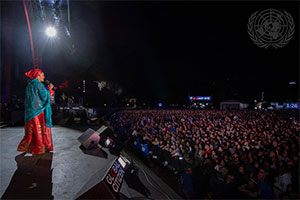 Global Citizen Festival in New York. Credit: UN Photo/Eskinder Debebe
Active citizens are committed to social change because they know that it is achievable. However, major political challenges face active citizens across the world. For example, in authoritarian regimes in Latin America where the hegemonic party has been in power for decades on end, protestors and human rights activists face enormous repression and struggle to materialize their advocacy into concrete results. The same can be said for Africans, where a shift towards elected government in recent decades has yet to translate into an effective voice in decision-making. Now, the Strengthening Citizen Demand for Good Governance, which uses evidence-based approaches – funded by DFID's Governance and Transparency Fund – seeks to raise their voices.
In 2025, the CIVICUS Monitor’s People Power Under Attack report revealed that civic freedoms are severely limited in 122 of 198 countries and territories, and only 7.2% of the global population now lives in countries where civic space is open. Through partnership with the Overseas Development Institute (ODI) and CIVICUS, IPS reporters across the continent will seek to define the extent and limits of state capability, government accountability and the responsiveness of leaders to the needs of citizens.

The Week with IPS

NEXT STOP - SDGs
Tracking global progress towards a sustainable world
Tracking global progress towards a sustainable world
