Languages
Saturday, November 14, 2026



News and Views from the Global South
Civil Society

Can Preventive Diplomacy Avert Military Conflicts?
In the paradoxical battle against military conflicts, is preventive diplomacy one of the political remedies that can help deter wars before they break out? Miroslav Lajcak, President of the UN General Assembly, points out that prevention takes many forms, and it must tackle conflict at its roots – before it can spread.
“What do you Become When you Shoot to Kill Someone who is Unarmed, & not an Immediate Threat to You?”
Appalling recent events in Gaza have called this Council into Special Session. Since the protests began on 30 March, 87 Palestinians have been killed by the Israeli security forces in the context of the demonstrations, including 12 children; 29 others, including three children, were killed in other circumstances. And over 12,000 people have been injured, more than 3,500 of them by live ammunition.
Indigenous Peoples Recover Native Languages in Mexico
Ángel Santiago is a Mexican teenager who speaks one of the variations of the Zapotec language that exists in the state of Oaxaca, in the southwest of Mexico. Standing next to the presidential candidate who is the favorite for the July elections, he calls for an educational curriculum that "respects our culture and our languages."
Chile, an Oasis for Haitians that Has Begun to Run Dry
A wave of Haitian migrants has arrived in Chile in recent years, changing the face of low-income neighbourhoods. But this oasis has begun to dry up, thanks to measures adopted by decree by the new government against the first massive immigration of people of African descent in this South American country.
Climate Finance: The Paris Agreement’s “Lifeblood”
As negotiators concluded ten days of climate talks in Bonn last week, climate finance was underlined as a key element without which the Paris Agreement’s operational guidelines would be meaningless.
We Need a Gender Shift to save Our Girls from the Jaws of Extremism
Consider this. Boko Haram, the ISIS-affiliated insurgent group has sent 80 women to their deaths in 2017 alone. The majority of suicide bombers used by terror group Boko Haram to kill innocent victims are women and children, US study reveals.
Gaza: Avoiding a Greater Blood Bath
The exit wounds are fist-size. Bone is pulverized into dust. This is the reality for half of the injured patients received in my organization’s clinics since the launch of the Great Return March in Gaza.
Protests Fuel Harassment Faced by Media in Nicaragua
Assaults on journalists, persecution of press workers' unions, direct censorship and smear campaigns are a high cost that freedom of expression has paid in Nicaragua since demonstrations against the government of Daniel Ortega began in April.
Marielle Franco Was Always There for Us and Now We’re There for Her
On May 14, 2014, my son, Johnatha de Oliveira Lima, was killed by a police officer from the Pacifying Police Unit in Manguinhos, in Rio de Janeiro. Soon after my son’s death, I got a phone call from a woman who identified herself as Marielle. I didn’t know who she was.
Optimal Use of Water Works Miracles in Brazil’s Semi-Arid Region
Cattle ranching has been severely affected by drought in Brazi's Northeast region, but it has not only survived but has made a comeback in the Jacuípe river basin thanks to an optimal use of water.
Economic & Social Costs of Gun Violence Appalling
Every day, hundreds of lives are lost due to gun violence worldwide. Guns are responsible for about half of all violent deaths – nearly a quarter million each year. But the dire consequences of gun violence are not limited to those slain by guns. For every person killed by a gun, many more are injured, maimed, and forced to flee their home and community. Still many more live under constant threats of gun violence.
How Do You Attain “Sustainable Peace” Amidst Rising Military Conflicts?
The underlying message at the fifth annual Stockholm Forum on Peace and Development was summed up in its telling title “The politics of peace.” But the task ahead was overwhelmingly difficult: How do you advance peace and development against the backdrop of political unrest in parts of Asia and Africa and continued conflicts in the Middle East— all of them amidst rising global military spending triggering arms sales running into billions of dollars.
The Role of Voting in Reviving Democratic Practice
Since the beginning of the year the world has witnessed 24 national elections in which nearly 100 million people cast their votes. All together in 2018, there will be a total of 68 planned electoral processes in 45 countries ranging from presidential and legislative to local elections. Elections remain one of the key democratic processes through which people express their opinion on the way their country and communities are managed.
From the Syrian War to Argentina – Or How to Start a New Life
Fares al Badwan moved to Buenos Aires alone, from Syria, in 2011. He was 17 years old then and the armed conflict in his country had just broken out. Since then he has managed to bring over his whole family and today he cannot imagine living outside of Argentina. "I like the people here. No one makes you feel like a foreigner," he said.
Protests, Strikes, Solidarity – France Revisits May ‘68
“It’s good to be in Paris on a sunny May day and see many universities occupied … and the strikes against neo-liberalism,” declared British Pakistani writer and activist Tariq Ali at an event in the Paris suburb of Nanterre on May 3. “That’s very pleasing.”
Time to Get Serious About Peace & Development
Four months ago UN Secretary-General Antonio Guterres issued a “red alert”, noting that instead of progressing towards greater peace, the world had moved in reverse towards deepening conflicts and new dangers: “Global anxieties about nuclear weapons are the highest since the Cold War.
FAO Releases Alarming Report on Soil Pollution
Soil pollution is posing a serious threat to our environment, to our sources of food and ultimately to our health. The Food and Agriculture Organization of the United Nations (FAO) warns that there is still a lack of awareness about the scale and severity of this threat.
Central Americans Demand to be Consulted About Mining Projects
Rosa Dávila is busy cooking ears of corn, to be eaten by the men and women who have set up a checkpoint on the side of the road to block the passage of supplies sent to a mining company that operates in the area.
Steady Old Hand of Repression Seeks to Strangle New Media in East Africa
In African countries where journalists are targeted with killings and beatings while traditional news outlets have been muzzled by governments and other actors unhappy with criticism, bloggers and social media users have become the new independent media by providing much-needed coverage, commentary and analysis.
African Governments Mark World Press Freedom Day with Crackdown Against Online Journalism
When Uganda in April ordered Internet service providers to shut down all news sites that had not been authorized by the communications regulator (pdf), it was the latest attempt by President Yoweri Museveni’s government to constrict the space for independent media.
Free Media Under Threat Globally
Buoyed on by the likes of United States’ President Donald Trump, a growing number of political leaders are encouraging hostility towards news media and journalists across the globe are finding it harder than ever to do their jobs. This is among the main findings in Reporters Without Borders’ (RSF) annual World Press Freedom Index which examines 180 countries and their relationship with the media.« Previous Page — Next Page »


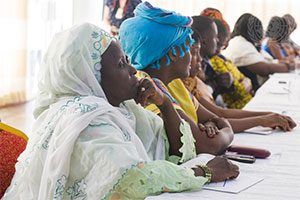 Representatives of Civil Society, Sierra Leone. Credit: UN Photo/Eskinder Debebe
Civil society faces mounting threats worldwide, even as it remains essential for democratic accountability, especially in countries struggling with economic instability and social inequality. However, at the same time, nations with weak democratic governance structures also systemically suppress the power of civil society. Human rights activists across the Global South frequently challenge issues such as political persecution and gender oppression, but in return face state-sanctioned punishment for their advocacy. Imprisonment and exile are common mechanisms of punishment that seek to erode the strength of civil society. The 2026 World Press Freedom Index has reached its lowest level in 25 years, with more than half of the world’s countries now falling into the "difficult" or “very serious” category for press freedom. IPS seeks to highlight the work of civil society across the Global South as well as the challenges that they face.
Updated by Yilan Batista and Shuli Wong August 2026


The Week with IPS

NEXT STOP - SDGs
Tracking global progress towards a sustainable world
Tracking global progress towards a sustainable world
