Languages
Tuesday, November 17, 2026



News and Views from the Global South
Civil Society

Opinion: Paris Will Be Make or Break for the Planet
December 2015 will define the course of humanity’s survival at the crunch U.N. climate conference in Paris, known in technical jargon as the 21st Conference of Parties (COP21).
Q&A: “We Must Put Everything Aside and Just Focus on Water”
Globally, more than 748 million people do not have access to safe drinking water. That is more than double the population of the entire United States.
European Residents Offer Support, Homes to Refugees
As the migration crisis in Europe continues to grow and government response remains slow, European citizens have taken it upon themselves to act by opening up their homes to those in need.
Europe Invaded Mostly by “Regime Change” Refugees
The military conflicts and political instability driving hundreds of thousands of refugees into Europe were triggered largely by U.S. and Western military interventions for regime change – specifically in Iraq, Afghanistan, Libya and Syria (a regime change in-the-making).
Opinion: Can Nuclear War be Avoided?
The Canberra Commission on the Elimination of Nuclear Weapons had as members former leading politicians or military officers, among others a British Field Marshal, an American General, an American Secretary of Defence and a French Prime Minister.
Two Indigenous Solar Engineers Changed Their Village in Chile
Liliana and Luisa Terán, two indigenous women from northern Chile who travelled to India for training in installing solar panels, have not only changed their own future but that of Caspana, their remote village nestled in a stunning valley in the Atacama desert.
Opinion: Women in the Face of Climate Change
After surviving the storm surge wreaked by Typhoon Haiyan in the Philippines in November 2013, women in evacuation centres found themselves again fighting for survival … at times from rape. Many became victims of human trafficking while many more did anything they could to feed their families before themselves.
CORRECTION/Who Will Pay the Price for Australia’s Climate Change Policies?
Rowan Foley has spent many years as a ranger and park manager, caring for Uluru–Kata Tjuta National Park Aboriginal lands in the spiritual heart of Australia’s Red Centre in the Northern Territory. He has been observing the effects of soaring temperatures and extreme weather events on his people, residing in some of the hottest regions of the country.
Latin American Scientists Call for More Human Climate Science
With the effects of global warming becoming more and more visible and the complicated socio-economic decisions indispensable to address this planetary crisis, science needs a new breed of experts: social scientists who specialise in climate change.
Impeachment Motion Stirs Political Waters in Somalia
The impeachment motion Somali parliamentarians filed against President Hassan Sheikh Mohamud on Aug. 12 has created a political standoff that might further threaten the country’s stability shortly ahead of planned elections in 2016.
Despite Treaty, Conventional Arms Fuel Ongoing Conflicts
Despite last year’s Arms Trade Treaty (ATT), the proliferation of conventional weapons, both legally and illegally, continues to help fuel military conflicts in several countries in the Middle East and Africa, including Syria, Iraq, Sudan, South Sudan, Somalia, Libya and Yemen.
Stop Food Waste – Cook It and Eat It
A new grassroots initiative born in the northern England city of Leeds has set itself the ambitious goal of ending food waste, once and for all.
Activists Criticise Offshore Drilling as Obama Prepares for Arctic Summit
A one-day summit taking place here on Aug. 31 hopes to bring Arctic nations together in support of climate action against a backdrop of criticism of offshore oil drilling in the region.
Will New Sri Lankan Government Prioritize Resettlement of War-Displaced?
The new Sri Lankan government that was voted in on Aug. 17 certainly didn’t inherit as much baggage as its predecessors did during the nearly 30 years of conflict that gripped this South Asian island nation.
Europe Squabbles While Refugees Die
As tens of thousands of refugees continue to flee conflict-ridden countries, including Afghanistan, Iraq, Libya and Syria, Western European governments and international humanitarian organisations are struggling to cope with a snowballing humanitarian crisis threatening to explode.
Disarmament Conference Ends with Ambitious Goal – But How to Get There?
A three-day landmark U.N. Conference on Disarmament Issues has ended here – one day ahead of the International Day Against Nuclear Tests – stressing the need for ushering in a world free of nuclear weapons, but without a consensus on how to move towards that goal.
Emerging Industrial Power Rises From Aid Beneficiary to Donor Nation
Back in 1996, when South Korea voluntarily quit the 132-member Group of 77 (G77) – described as the largest single coalition of developing nations -- it joined the 34-member Organisation for Economic Cooperation and Development (OECD), long known as the “rich man’s club” based in Paris.
Water, Climate, Energy Intertwined with Fight Against Poverty in Central America
Central America’s toolbox to pull 23 million people – almost half of the population – out of poverty must include three indispensable tools: universal access to water, a sustainable power supply, and adaptation to climate change.
Winning Women a Greater Say in Somaliland’s Policy-Making
Bar Seed is the only female member in Somaliland’s 82-person Parliament, but activists hope upcoming national elections may end her isolation.
Alternative Destinations Emerge as Cuba Gets Ready for Tourism Boom
Along the road to the Viñales valley, travelled by thousands of tourists to Cuba, lies the home of self-taught artist Miguel Antonio Remedios, which he has turned into a sort of museum to show visitors a wooden home typical of this mountainous area in the west of the country.
Shifting Sands: How Rural Women in India Took Mining into their Own Hands
Thirty-seven-year-old Kode Sujatha stands in front of a hut with a palm-thatched roof, surrounded by a group of men shouting angrily and jostling one another for a spot at the front of the crowd.« Previous Page — Next Page »


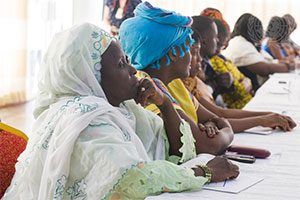 Representatives of Civil Society, Sierra Leone. Credit: UN Photo/Eskinder Debebe
Civil society faces mounting threats worldwide, even as it remains essential for democratic accountability, especially in countries struggling with economic instability and social inequality. However, at the same time, nations with weak democratic governance structures also systemically suppress the power of civil society. Human rights activists across the Global South frequently challenge issues such as political persecution and gender oppression, but in return face state-sanctioned punishment for their advocacy. Imprisonment and exile are common mechanisms of punishment that seek to erode the strength of civil society. The 2026 World Press Freedom Index has reached its lowest level in 25 years, with more than half of the world’s countries now falling into the "difficult" or “very serious” category for press freedom. IPS seeks to highlight the work of civil society across the Global South as well as the challenges that they face.
Updated by Yilan Batista and Shuli Wong August 2026

The Week with IPS

NEXT STOP - SDGs
Tracking global progress towards a sustainable world
Tracking global progress towards a sustainable world
