Languages
Thursday, November 19, 2026



News and Views from the Global South
Civil Society

OPINION: Stand in Solidarity with Courageous Women’s Human Rights Defenders
Almost two decades ago, in Beijing, 189 countries made a commitment to achieve equality for women, in practice and in law, so that all women could at last fully enjoy their rights and freedoms as equal human beings.
U.N. Chief, Under Fire, Moves Closer to Gender Parity
When Secretary-General Ban Ki-moon named an international panel to review peacekeeping operations last October, the announcement was greeted with bitter criticism because it lacked even a semblance of gender balance: only three out of 14 members were women.
The South Demands Clarity in Financing and Adaptation at COP20
At the 12-day climate summit that began Monday in the Peruvian capital, representatives of 195 countries and hundreds of members of civil society are trying to agree on the key points of a new international treaty aimed at curbing global warming.
First Phase of Global Fracking Expansion: Ensuring Friendly Legislation
Multinational oil and gas companies are engaged in a quiet but broad attempt to prepare the groundwork for a significant global expansion of shale gas development, according to a study released Monday.
As Wars Multiply, U.N. Takes a Hard Look at Peace Operations
Finding ways to better integrate the two arms of U.N. Peace Operations - Special Political Missions and Peacekeeping Operations - will be one of the priorities for a new review panel headed by Nobel Peace Laureate and former president of Timor-Leste José Ramos-Horta.
Kyrgyzstan Debates Russian-Style “Foreign Agents” Law
Kyrgyzstan must protect itself from Arab Islamists and gay-loving Americans; so say supporters of a sweeping draft law that could shutter many non-governmental organisations and, like a Russian bill adopted in 2012, label foreign-funded activists as “foreign agents.”
OPINION: Climate Justice Is the Only Way to Solve Our Climate Crisis
In November, the world's top climate scientists issued their latest warning that the climate crisis is rapidly worsening on a number of fronts, and that we must stop our climate-polluting way of producing energy if we are to stand a chance of avoiding the worst impacts of climate change.
Illegal Logging Wreaking Havoc on Impoverished Rural Communities
Rampant unsustainable logging in the southwest Pacific Island states of Papua New Guinea and Solomon Islands, where the majority of land is covered in tropical rainforest, is worsening hardship, human insecurity and conflict in rural communities.
Only a Few Drops of Water at the Lima Climate Summit
Although it is one of the victims of global warming, water will not be given a place of importance at the COP20 climate change conference to be held Dec. 1-12 in Lima, Peru.
Citizens of the World, Unite!
As politics, economies, conflicts and cultures become increasingly intertwined, will individual identities also begin to transcend national boundaries?
OPINION: People with Disabilities Must Be Counted in the Fight Against HIV
Jane is a young Zambian mother with a physical disability in Lusaka, who uses a wheelchair to get around. She does not let clinics without ramps or without wheelchair accessible toilets and equipment stop her from claiming her right to health care, including HIV prevention services.
Led by INTERPOL, U.N. Tracks Environmental Criminals
A coalition of international organisations, led by INTERPOL and backed by the United Nations, is pursuing a growing new brand of criminals - primarily accused of serious environmental crimes - who have mostly escaped the long arm of the law.
Elections Offer Little Solace to Sri Lanka’s Poor
Priyantha Wakvitta is used to seeing his adopted city, Colombo, transform into a landscape of bright sparkling lights and window dressing towards the end of the year.
Indigenous Community Beats Drought and Malnutrition in Honduras
In the heart of the Pijol mountains in the northern Honduran province of Yoro, the Tolupan indigenous community of Pueblo Nuevo has a lot to celebrate: famine is no longer a problem for them, and their youngest children were rescued from the grip of child malnutrition.
Democratising the Fight against Malnutrition
There is a new dimension to the issue of malnutrition – governments, civil society and the private sector have started to come together around a common nutrition agenda.
Rich Countries Pony Up (Some) for Climate Justice
It’s one of the oldest tricks in politics: Talk down expectations to the point that you can meet them.
Filipino Farmers Protest Government Research on Genetically Modified Rice
Jon Sarmiento, a farmer in the Cavite province in southern Manila, plants a variety of fruits and vegetables, but his main crop, rice, is under threat. He claims that approval by the Philippine government of the genetically modified ‘golden rice’ that is fortified with beta-carotene, which the body converts into vitamin A, could ruin his livelihood.
Laying the Foundations of a World Citizens Movement
Has organised civil society, bound up in internal bureaucracy, in slow, tired processes and donor accountability, become simply another layer of a global system that perpetuates injustice and inequality?
Survivors of Sexual Violence Face Increased Risks
“A recurring nightmare for me is I’m trying to tell someone something and they are not listening. I’m yelling at the top of my lungs and it feels like there is a glass wall between us.”
Central American Civil Society Calls for Protection of Local Agriculture at COP20
Worried about the effects of global warming on agriculture, water and food security in their communities, social organisations in Central America are demanding that their governments put a priority on these issues in the COP20 climate summit.
Civil Society Freedoms Merit Role in Post-2015 Development Agenda
Nabeel Rajab, president of the Bahrain Centre for Human Rights, an advocacy NGO, is facing criminal charges for sending a tweet that said: “many Bahrain men who joined terrorism and ISIS have come from the security institutions and those institutions were the first ideological incubator”.« Previous Page — Next Page »


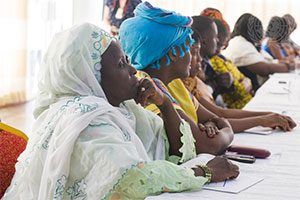 Representatives of Civil Society, Sierra Leone. Credit: UN Photo/Eskinder Debebe
Civil society faces mounting threats worldwide, even as it remains essential for democratic accountability, especially in countries struggling with economic instability and social inequality. However, at the same time, nations with weak democratic governance structures also systemically suppress the power of civil society. Human rights activists across the Global South frequently challenge issues such as political persecution and gender oppression, but in return face state-sanctioned punishment for their advocacy. Imprisonment and exile are common mechanisms of punishment that seek to erode the strength of civil society. The 2026 World Press Freedom Index has reached its lowest level in 25 years, with more than half of the world’s countries now falling into the "difficult" or “very serious” category for press freedom. IPS seeks to highlight the work of civil society across the Global South as well as the challenges that they face.
Updated by Yilan Batista and Shuli Wong August 2026

The Week with IPS

NEXT STOP - SDGs
Tracking global progress towards a sustainable world
Tracking global progress towards a sustainable world
