Languages
Friday, November 13, 2026



News and Views from the Global South
Civil Society
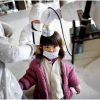
Eight Years on, Fukushima Still Poses Health Risks for Children
On March 11, we commemorate the 8th anniversary of the Fukushima nuclear disaster. To an outside observer, this anniversary passes as a technical progress report, a look at new robot, or a short story on how lives there are slowly returning to normal.
International Women’s Day in Cameroon: A Day for All Women?
On March 8, women all over Cameroon will don custom-made dresses sewn of pagne, specially printed for International Women’s Day. They will parade through cities and towns, joining women around the world in celebration of the day.
Decent Work Still a Distant Dream for Many Latin American Women
Women in Latin America earn one-fifth less than men for every hour worked, on average - one of the statistics that reflect the continuing inequality in the world of work that makes it unlikely for the region to meet the goal of equal pay by 2030.
Latin American Women Programme Their World against the Digital Divide
Designed mostly by men, many digital applications are not suitable for women, but some initiatives are beginning to include them as programmers and beneficiaries in Latin America, where the gender gap is also technological.
Women’s Feature Service: Mapping the Struggles of Feminism in India
Pamela Phillipose was editor of the Women’s Feature Service, the only syndicated news service in India with a gender perspective, for nearly six years, until she stepped down this year as editor in chief and director. She wore other hats for the publication as well, writing and photographing.
A Disease as Old as Time – Eliminated but Not Eradicated
 As the Executive Director of Sasakawa Memorial Health Foundation (SMHF), Takahiro Nanri has been working on the issue of leprosy since 2014. Over the past few years, he has traveled across the world visiting the large number of leprosy projects that SMHF has been supporting and meeting dozens of organisations led by leprosy-affected people.

Q&A: Important to Treat Anyone Suffering from Leprosy as an Equal Individual
Discrimination against women who are affected by leprosy or Hansen's Disease is a harsh reality, says Alice Cruz is the United Nations Special Rapporteur on the elimination of discrimination against persons affected by leprosy and their family members.
New Regional Secretariat to Advance Leprosy Advocacy in Asia
Organisations of people affected by leprosy in Asia have agreed to form a regional-level secretariat to support national advocacies and represent their collective agenda at a world conference to be held later this year.
Q&A: Leprosy-affected People Live Not at the Bottom, but Outside the Social Pyramid
Takahiro Nanri is the Executive Director of Sasakawa Memorial Health Foundation which has been supporting the global fight against leprosy for almost five decades. Since 2014, Nanri has been leading the foundation’s leprosy projects across the world and has deep insights into the challenges faced by the people affected by leprosy as well as the organisations that work with them.
Healthy Oceans, Healthy Societies
Over recent years, there have been shocking reports of marine endangerment and plastic pollution. The threats are clear, and now urgent action is needed more than ever.
Hope Springs Once Again for Nigeria’s Returnee Migrants
 Nigeria accounts for some of the largest number of irregular migrants trying to reach Europe from Africa.

International Women’s Day: Don’t Let Anyone Tell You How Far You Can Go
The data – with its sexism and its gaps – shows us that many of the barriers girls experience are determined merely by their gender. This inequality, present in all societies, is by far the most widespread bias. At Educo we are determined, like the women and girls we work with, to put a stop to this injustice. And not just on International Women’s Day March 8, but every day.
Individual Empowerment Still Important in Leprosy Groups’ Strategies
The tragic tale of Thobias Alexander Manas’s personal experience with leprosy is all too typical.
Living with Leprosy on the Climate-Vulnerable Kiribati Island Atolls
Kurarenga Kaitire lives in Kiribati—one of the world’s most climate-vulnerable nations. Already vulnerable to nature, the 29-year-old mother of five has faced a series of vulnerabilities over the past decade, including facing social stigma and domestic abuse.
Three Ex-UN Leaders Form Women’s Group to Save Multilateralism
As multilateralism takes a beating from President Trump amid the “new world disorder,” as one European diplomat put it, three women who know the United Nations inside and out through previous top leadership jobs have originated a Group of Women Leaders for Change and Inclusion.
Building Successful Social Enterprises
Marie Lisa Dacanay is the president of Manila–based Institute for Social Entrepreneurship in Asia. With 20 years of experience in development management, social entrepreneurship and enterprise development, Dacanay is also a university professor and an acclaimed author with several books on social entrepreneurship in Asia. 
Leprosy Survivor Creates Hope and Support for Others Affected by Disease
When Ariel Lazarte from Quezon City, Philippines, was first diagnosed with leprosy in 2014, his life seemed as if it were falling apart. But now more than four years later Lazarte’s life is a huge contrast from the poverty and isolation he experienced as a person affected by leprosy.
Q& A: We Need a Holistic Approach to Eradicate Leprosy
Dr. Maria Francia Laxamana is the Assistant Secretary in the Philippines ministry of health. With nearly two decades of work both as a senior government official and also as an expert in several non-government organisations, Laxamana has deep insight into the issue of leprosy in this Southeast Asian nation and the challenges faced by those who are affected by the disease.
A Leprosy-free Philippines by 2020?
Dr Maria Francia Laxamana, assistant secretary of health in the Department of Health, Philippines outlines her recommendations for a leprosy country by 2020. 
Capacity Building the Key to Fighting Leprosy
Strengthening the participation of persons affected by leprosy, or SPP, has proven to be an effective strategy in reaching out to often isolated sufferers in local communities throughout Asia. A significant challenge to civil society organisations, however, is finding enough management talent to maintain and expand the programmes.
Leprosy Detection With a Personal Touch
Jennifer Quimno could put anyone at ease. So when she travels across the Philippines as part of peer to peer programme that helps identify new leprosy cases, people generally allow her to examine them.« Previous Page — Next Page »


 Representatives of Civil Society, Sierra Leone. Credit: UN Photo/Eskinder Debebe
Civil society faces mounting threats worldwide, even as it remains essential for democratic accountability, especially in countries struggling with economic instability and social inequality. However, at the same time, nations with weak democratic governance structures also systemically suppress the power of civil society. Human rights activists across the Global South frequently challenge issues such as political persecution and gender oppression, but in return face state-sanctioned punishment for their advocacy. Imprisonment and exile are common mechanisms of punishment that seek to erode the strength of civil society. The 2026 World Press Freedom Index has reached its lowest level in 25 years, with more than half of the world’s countries now falling into the "difficult" or “very serious” category for press freedom. IPS seeks to highlight the work of civil society across the Global South as well as the challenges that they face.
Updated by Yilan Batista and Shuli Wong August 2026

The Week with IPS

NEXT STOP - SDGs
Tracking global progress towards a sustainable world
Tracking global progress towards a sustainable world
