Languages
Thursday, November 19, 2026



News and Views from the Global South
Food and Agriculture

Two Million People Hold their Breath Over Lake Malawi Mediation
Over two million families who solely depend on Lake Malawi for their livelihoods are anxiously putting their hopes into an upcoming mediation between Malawi and Tanzania intended to put an end to a longstanding ownership dispute.
Groups Applaud Potential Reforms to U.S. Food Aid
Advocacy groups working on global hunger and poverty are hailing rumoured proposals that would change the way the United States distributes its international food aid.
Lake Malawi Dispute Instils Fear in Fisherfolk
Since he was nine years old, Martin Mhango from Karonga village in northern Malawi has known no other livelihood than fishing. And for the last 33 years he has been fishing freely on Lake Malawi – that is, until last October when he was detained and beaten by Tanzanian security forces.
Green-Fingered Mauritian Farmers Go Green
By Kritanand Beeharry’s side are thousands of watermelon seedlings that he has grown in small pots without the use of chemical fertilisers. As the farmer prepares his half-hectare piece of land in Soreze, near Mauritius’ capital Port-Louis, to plant the two-week-old seedlings, he takes a minute to admire his achievement. “Look at these, they look solid and better grown -- it’s the compost,” he says.
Biofuels Converting U.S. Prairielands at Dust Bowl Rates
The rush for biofuels in the United States has seen farmers converting the United States' prairie lands to farms at rates comparable with deforestation levels in Brazil, Malaysia and Indonesia – rates not seen here since the Dust Bowl of the 1930s.
Mozambican Farmers Fear Foreign Land Grabs
Mozambican farmers’ unions believe that soon land will become very scarce for locals as the government leases more and more of it to foreign agribusinesses – thus displacing thousands of rural communities and smallholder farmers with no official title deeds to their land.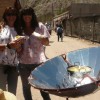
Carnival Food Carts Go Solar in Northern Argentina
It’s carnival time in sunny northwest Argentina, and as usual, food vending carts are everywhere. But some of the carts are different this year: they offer food cooked on the spot – by the sun.
Market Gardening Provides Livelihoods for Refugees in DR Congo
Standing behind her market stall in Masisu, in the Democratic Republic of Congo (DRC), which overflows with cabbages, carrots and onions, Marceline Dusabe does not fit the traditional profile of an internally displaced person. She, unlike many others displaced by the internal conflict in North Kivu, is not in need of food aid.
Agriculture on the Air
The sun is just beginning its descent as a knot of farmers gathers around a small, portable radio in the grounds of the Nachol Pilot High School in Bangladesh’s northwestern Chapainawabganj district, about 300 kilometres from the capital, Dhaka.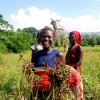
No-till Farming Holds the Key to Food Security
No-till farming is a response to climate change that fits well with the needs of the Caribbean: it increases the ability to capture water, while withstanding both drought and excessive rains, says expert Theodor Friedrich, representative of the United Nation’s Food and Agriculture Organisation (FAO) in Cuba.
Haiti-Dominican Republic Trade: Exports or Exploits?
"I get everything at the Haiti-Dominican Republic: carrots, squash, eggplant, cabbage, peppers, eggs, salami," explained a merchant at the Croix des Bossales marketplace, her stand teeming with goods. "The border is what feeds us."
Climate Change Added to U.S. Government “High Risk” List
For the first time, a U.S. government auditor has added climate change to a list of issues that pose the greatest financial risk to the government and country. It is also warning that Washington is markedly unprepared to deal with the scope of the problem.
Brazilian Ethanol in the Slow Lane to Global Market
Following a promising start, Brazil's dream of positioning ethanol in the global market on an equal standing with petroleum-based fuels is hindered by new and old challenges.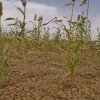
Sahel Region Learning to Reap the Benefits of Shade
In Africa's Sahel region, agroforestry techniques using traditional plantings known as "fertiliser trees" to increase soil fertility, as well as harvesting and grazing regulations, are offering new solutions to both food and human security.
Land Is Life, and It’s Slipping Away
Nean Narin, a humble man and father of three children, says his family is going hungry. Narin lives in the village of Boeung Kak, situated on the edge of Cambodia’s capital, Phnom Penh. For years, he and other villagers relied on the Boeung Kak Lake for fish and plants, which they would eat and sell.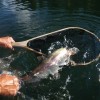
Trout Trump the Taliban
The rivers in northern Pakistan’s Khyber Pakhtunkhwa (KP) province were once thick with trout. Spanning hundreds of kilometres, these water bodies played host to the exotic fish, first introduced by the British in the early 1900s, which eventually became a staple in the diets and livelihoods of the province’s 20 million residents.
African Smallholder Farmers Need to Become Virus Detectors
Unless African smallholder farmers, who comprise the majority of food growers on the continent, are given the tools and knowledge to cope with the increased occurrences of plant virus diseases, the livelihoods of millions will be at stake, according to Nteranya Sanginga, the director general of the International Institute of Tropical Agriculture.
U.N.’s Water Agenda at Risk of Being Hijacked by Big Business
Amidst growing new threats of potential conflicts over fast-dwindling water resources in the world's arid regions, the United Nations will commemorate 2013 as the International Year of Water Cooperation (IYWC).
‘We Grow, They Bulldoze, We Re-Plant’
Tawfiq Mandil, 45, stands amongst hundreds of Palestinian farmers, activists, and international supporters in the Gaza Strip's eastern Zeitoun district, about half a kilometre from the border with Israel. They are renewing a call for the boycott of Israeli goods.
New Era of Food Scarcity Echoes Collapsed Civilisations
The world is in transition from an era of food abundance to one of scarcity. Over the last decade, world grain reserves have fallen by one third. World food prices have more than doubled, triggering a worldwide land rush and ushering in a new geopolitics of food.

Fishers Fight Over Dwindling Catch
Boats were tying up at the jetty and there was a bustle of activity as vendors cried their wares, offering shellfish to potential buyers, while young people, sharp knives in hand, filleted sea bass and red snapper. Meanwhile, on the promenade, octogenarian musicians played old-style cumbias and boleros for restaurant patrons.« Previous Page — Next Page »


 Farming on the Outskirts of Juba. Credit: UN Photo/JC McIlwaine
Promoting human and planetary health is a central focus of the United Nations, as laid out in the 2030 Sustainable Development Goals (SDGs). World hunger and unsustainable farming practices continue to be pressing concerns for the world. According to the 2025 State of Food Security and Nutrition in the World report by the Food and Agriculture Organization (FAO), 673 million people faced hunger in 2024. There are stark regional disparities, with the FAO projecting that 60% of the world population facing hunger will reside in Africa by 2030. Globally, the prevalence of food insecurity has remained consistently higher for women than men.
Sustainable and efficient national food systems are essential in preserving health, education, environmental well-being, peace, economy, and security. However, creating sustainable food systems can be a challenging endeavor, as food production takes a heavy toll on the environment. The agricultural sector accounts for a significant portion of greenhouse gases. Finding safe, sustainable, and ethical strategies to feed the world is crucial in ensuring planetary longevity. A recent initiative from 2023, the EU Regulation on Deforestation-free Products (EUDR), seeks to advocate for sustainable food systems. The main driver of deforestation is the expansion of agricultural land used to produce commodities like cattle, wood, cocoa, coffee, etc. The EUDR is part of the 2020 European Green New Deal and the EU Biodiversity Strategy for 2030 and aims to limit Europe’s consumption of products linked with deforestation by requiring that companies prove that their products are deforestation-free. Despite aiming to achieve major strides in sustainability, policies such as EUDR also raise socioeconomic concerns for targeted countries. Many emerging Latin American economies are impacted by the policy, and have raised the question of how developing countries can grapple with the tensions between economic development and advancing sustainability.
IPS has been at the forefront of providing compelling and insightful stories on communities facing hunger as well as the cost of food production. IPS uses statistics from FAO, the World Food Programme (WFP) and the International Fund for Agricultural Development (IFAD) to bring relevant and hard-hitting facts to readers. This gathering of information and data from such organizations helps bring the best stories from IPS journalists working in the different regions in consultation with experts on the ground.

The Week with IPS

NEXT STOP - SDGs
Tracking global progress towards a sustainable world
Tracking global progress towards a sustainable world

