Languages
Friday, November 20, 2026



News and Views from the Global South
Food and Agriculture
Counting the Cost at 2,600 Litres of Water a T-Shirt
The share of organic cotton is increasing in an unstable cotton market, thanks to big European retailers like H&M and C&A who've jumped on the bandwagon of offering organic clothing at a low price. But whether this benefits the farmer is another matter.
Zimbabwe’s Mopani Worms Disappearing from Rural Diets
Job Mthombeni loves traditional food. One of his favourite culinary delights is Mopani worms, referred to locally as amacimbi, which means caterpillar in Ndebele. At an early age he understood the nutritional value of the worm, which is found in his rural hometown of Plumtree, in southwestern Zimbabwe.
World Water Forums Expose Large Dams as ‘Unsustainable’
Numerous non-governmental organisations used the World Water Forum (WWF) held in Marseille last week as an opportunity to remind the international community about the serious global impacts of large dams all over the world.
Saving Kenya’s Maize Crop
While some maize farmers in Kenya’s Western Province are stilling living off the produce from last season’s harvest, Robert Oduor is counting his losses after the deadly Striga weed infested his one-hectare maize field.
Urban Chicken-Keeping Movement Spreads Its Wings
With increasing concerns about the economy and environmental sustainability on the minds of many U.S. citizens, leaders in the grassroots movement to promote urban chicken-keeping report a renewed interest in their cause.
‘Green Morocco Plan’ Fails to Confront Climate Change
An unprecedented cold spell that struck Morocco in February and continues to linger well into March has raised serious questions about the country's national agricultural development programme, which will fail to achieve its desired results if climate change continues to be mismanaged.
Argentina Responds to Climate Challenge with Transgenic Seeds
Researchers in Argentina have isolated a sunflower gene and implanted it into corn, wheat and soybean seeds to make them more resistant to drought and soil salinity, problems increasingly faced by this South American agricultural powerhouse as a result of global warming.
Gender Empowerment Still Lags Far Behind in Global Village
When the United Nations concluded a two-week session highlighting the plight of rural women last week, the meetings singled out both the achievements and shortcomings of the ongoing relentless battle for gender equality in a world still dominated - and overwhelmingly ruled - by men.
Central America Looks to Sustainable Development
Central America, a narrow tropical isthmus flanked by the Pacific Ocean and the Caribbean Sea, suffered 259 extreme weather-related events between 1930 and 2009, while the cumulative effects of innumerable smaller-scale events have not even been recorded.
U.N. Human Rights Council Exhorted to Defend Peasants’ Rights
Decades after peasants’ networks have advocated for a new legal instrument to protect the rights of small farmers to land, seeds, traditional agricultural knowledge and freedom to determine the prices of their production, the United Nations Human Rights Council (UNHRC) may decide to start drafting a declaration on peasants’ rights next week.
U.N. Chastises Mexico’s Support for Agribusiness
The United Nations criticised Mexico’s food policy, a month and a half after President Felipe Calderón launched to great fanfare an alliance of agribusiness for sustainable development, which was welcomed by giant food corporations.
Indian Farmers Hostage to Middlemen
Agriculture experts blame the crisis faced by India’s small farmers on a highly inefficient supply chain for perishable farm produce, a situation exploited by traders and middlemen.
PHILIPPINES: Women Weather Climate Change
As the world commemorates International Women’s Day today, women around the globe are speaking out on various issues that affect them. In light of recent natural disasters and calamities in the Philippines, women are increasingly citing climate change as one of their most pressing concerns.Thai Province Shows the Green Way
As fingers of morning light slip through the mango and banana orchards of his village, Suchin Utanarat heads out in a boat to net a fresh catch from the nearby canals teeming with shrimp.
KENYA: Microloans, Greenhouses Help Women Cope with Climate Change
At Gakoromone Market in Meru, in Kenya’s Eastern Province, Ruth Muriuki arrives in a pickup full of tomatoes and cabbages despite the scarcity of rainfall in the area, thanks to the greenhouse technology she uses on her farm – and microcredit.
ZIMBABWE: Farmers Tackle Water Problems Fuelled by Climate Change
Beauty Moyo’s desire for access to water has finally been met. The rains that fell in the past week after a long dry patch have awakened this small-holder farmer deep in rural Plumtree, Zimbabwe on the border with Botswana to the reality of sparse rainfall, climate change and how she and her fellow villagers can respond.
U.N. Meet Holds Governments to Account on Women’s Equality
In 2008, delegates meeting for the annual U.N. Commission on the Status of Women (CSW) agreed that much greater investments in women and gender equality were a critical – and overlooked – aspect of sustainable development.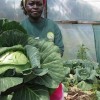
KENYA: Microloans, Greenhouses Help Women Cope with Climate Change
At Gakoromone Market in Meru, in Kenya’s Eastern Province, Ruth Muriuki arrives in a pickup full of tomatoes and cabbages despite the scarcity of rainfall in the area, thanks to the greenhouse technology she uses on her farm – and microcredit.
ZIMBABWE: Farmers Tackle Water Problems Fuelled by Climate Change
Beauty Moyo’s desire for access to water has finally been met. The rains that fell in the past week after a long dry patch have awakened this small-holder farmer deep in rural Plumtree, Zimbabwe on the border with Botswana to the reality of sparse rainfall, climate change and how she and her fellow villagers can respond.
PERU: Time to Adapt to Climate Change Impact on Women’s Lives
This year’s unusually rainy season in Peru is having a negative effect on the wellbeing and health of women in rural areas who are forced, for example, to spend three times as much time walking to collect firewood and water. But the authorities continue to turn a blind eye to the problems they face.SOUTH AFRICA: Rural School Running on Methane Bio-Gas
Tucked against the rolling hills of South Africa’s Eastern Cape province, a small rural school has been turning its kitchen scraps, and agricultural and human waste into methane gas for cooking, and nutrient-rich fertiliser, and is even recycling its water.« Previous Page — Next Page »


 Farming on the Outskirts of Juba. Credit: UN Photo/JC McIlwaine
Promoting human and planetary health is a central focus of the United Nations, as laid out in the 2030 Sustainable Development Goals (SDGs). World hunger and unsustainable farming practices continue to be pressing concerns for the world. According to the 2025 State of Food Security and Nutrition in the World report by the Food and Agriculture Organization (FAO), 673 million people faced hunger in 2024. There are stark regional disparities, with the FAO projecting that 60% of the world population facing hunger will reside in Africa by 2030. Globally, the prevalence of food insecurity has remained consistently higher for women than men.
Sustainable and efficient national food systems are essential in preserving health, education, environmental well-being, peace, economy, and security. However, creating sustainable food systems can be a challenging endeavor, as food production takes a heavy toll on the environment. The agricultural sector accounts for a significant portion of greenhouse gases. Finding safe, sustainable, and ethical strategies to feed the world is crucial in ensuring planetary longevity. A recent initiative from 2023, the EU Regulation on Deforestation-free Products (EUDR), seeks to advocate for sustainable food systems. The main driver of deforestation is the expansion of agricultural land used to produce commodities like cattle, wood, cocoa, coffee, etc. The EUDR is part of the 2020 European Green New Deal and the EU Biodiversity Strategy for 2030 and aims to limit Europe’s consumption of products linked with deforestation by requiring that companies prove that their products are deforestation-free. Despite aiming to achieve major strides in sustainability, policies such as EUDR also raise socioeconomic concerns for targeted countries. Many emerging Latin American economies are impacted by the policy, and have raised the question of how developing countries can grapple with the tensions between economic development and advancing sustainability.
IPS has been at the forefront of providing compelling and insightful stories on communities facing hunger as well as the cost of food production. IPS uses statistics from FAO, the World Food Programme (WFP) and the International Fund for Agricultural Development (IFAD) to bring relevant and hard-hitting facts to readers. This gathering of information and data from such organizations helps bring the best stories from IPS journalists working in the different regions in consultation with experts on the ground.

The Week with IPS

NEXT STOP - SDGs
Tracking global progress towards a sustainable world
Tracking global progress towards a sustainable world

