Languages
Friday, November 20, 2026



News and Views from the Global South
Food and Agriculture
CLIMATE CHANGE: Turning Agriculture From Problem to Solution
Global agriculture contributes in the region of 17 percent to the greenhouse gas emissions that cause climate change, but according to the World Bank, climate smart agriculture techniques can both reduce emissions and meet the challenge of producing enough food for a growing world population.INDIA: Brakes Applied to SUVs – ‘Socially Useless Vehicles’
Indian owners of sports utility vehicles (SUVs) and luxury cars, who have been benefiting from subsidies on diesel meant to help farmers, may soon have to pay real prices for their fuel.
Quantifying Latin American Cattle Emissions a Vital Climate Tool
Some of Latin America's major cattle-producing countries will begin working as a team in 2011 to quantify the greenhouse-effect gas emissions from their bovine industry -- and to come up with options for reducing them.COLOMBIA: Climate Science Reaching Out for Traditional Farmers’ Wisdom
The wide-ranging knowledge about climate variation possessed by native people and other small farmers, such as the people in one region of Colombia, is almost a perfect match to scientific measurements recorded on high-tech instruments.
The Roof Is Now the Field
"We grow on our roof because we are farmers but have no land now," says Moatassan Hamad, 21, from Beit Hanoun in northern Gaza Strip.
AFRICA: Food Versus Biofuels Debate Continues
"We’re going to Cancún no better off than we were in Copenhagen," said Thuli Makama, the director of Friends of the Earth Swaziland, as she prepared to leave for the climate negotiations in Mexico.
DEVELOPMENT-MOZAMBIQUE: Hunger Stalks 55 Percent of Adults
Baptista Macule is sitting on a sack of groundnuts in a dusty side-alley near the sprawling, makeshift Malanga market on the outskirts of Maputo. He squints into the sun as he tries to explain the extent of poverty in his country.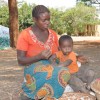
AFRICA: Threat of a Perfect Storm – AIDS and a Fresh Food Crisis
In November, the Food and Agriculture Organisation was just one of many voices warning that food prices have risen to levels last seen at the start of the 2007-2008 crisis. A majority of the countries most exposed to a repeat of that problem are in Africa, where vulnerability to food security is exacerbated by AIDS.
UGANDA: Carbon Finance May Not Benefit Forest Communities
Uganda has lost more than two million hectares of forest since 1990, mostly converted to farmland by a growing population of smallholders. Carbon finance through the REDD programme is often presented as one way to arrest this destruction, but only if the benefits clearly translate to the grassroots.
SOUTHERN AFRICA: Watchful Eye on Deadly Stock Disease
Government spokesperson Dr Mohamed Bakari says Tanzania has contained an epidemic of viral disease that had affected the northern part of the country, mainly around Arusha, since the start of the year.
DEVELOPMENT: Economic Boom Worsened De-industrialisation of LDCs
Least developed countries (LDCs) in Africa did not use the commodity export boom of the mid-2000s to diversify their economies from commodity dependence to manufacturing value-added products. Significantly, the agricultural sector has also not benefited, with the result that LDC reliance on imported food has become even worse.
MADAGASCAR: New Livelihoods to Protect A River’s Life
The Nosivolo River has the greatest concentration of freshwater fish species in Madagascar. Strengthening protection of the river's biodiversity has involved transforming the livelihoods of local people.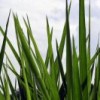
Colombia Tests Forage Crops Against Climate Change
Colombia, with 24 million head of cattle, is showcasing two advances towards reducing the 13 percent of climate-changing gas emissions attributed to livestock production around the world.U.S.: Going Hungry in the Richest Nation on Earth
While many U.S. residents prepare for their annual Thanksgiving feast Thursday, one in six are at risk of hunger – including a quarter of all children in the country.
CONGO: Beninois Fishing Community Evicted
The Autonomous Port of Pointe-Noire has evicted 8,000 residents of a fishing village to make way for expanded facilities. The move is a blow to the community's livelihoods, as well as closing down the market that supplied the city's poor with affordable protein.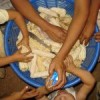
CENTRAL AMERICA: Water as a ‘Divine Gift’
"Many people still believe that water is a gift from God." This statement from a Guatemalan scientist alludes to Central America's neglect of its water resources - - and the subsequent impact on agriculture.
KENYA: A Brand New Constitution, But Can Women Enjoy Land Rights?
Mary Kimani wishes her husband were still alive. Holding her one-year-old son in one hand and a hoe in the other, she recounts with bitterness how she and her children lost their livelihood to her husband’s family.
ETHIOPIA: First Carbon Finance Spreads Green Over Highland
It has been decades since the people of the Humbo Woreda have been self-sufficient in food. A Clean Development Mechanism project - Ethiopia's first - is restoring the environment and sustaining livelihoods along with it.BRAZIL: Family Farming Matters in South-South Cooperation
Cooperation between countries of the developing South took another step forward with the recent signing of international agreements in Brazil aimed at stimulating public policies to support small farmers.
ECONOMY-ZIMBABWE: Consumers May be Happy But Workers Aren’t
South African retail giant Pick-‘n-Pay increased its stake from 25 to 49 percent in TM Supermarkets – Zimbabwe’s largest grocer – in October in a deal worth about 13 million dollars. But, while the champagne corks pop in the boardroom, employees are not upbeat.“Perfect Storm” Spurred 2007-08 Food Crisis, Study Says
Rising food prices have not yet reached crisis levels but they are expected to remain very volatile for about the next decade, researchers said Thursday.« Previous Page — Next Page »


 Farming on the Outskirts of Juba. Credit: UN Photo/JC McIlwaine
Promoting human and planetary health is a central focus of the United Nations, as laid out in the 2030 Sustainable Development Goals (SDGs). World hunger and unsustainable farming practices continue to be pressing concerns for the world. According to the 2025 State of Food Security and Nutrition in the World report by the Food and Agriculture Organization (FAO), 673 million people faced hunger in 2024. There are stark regional disparities, with the FAO projecting that 60% of the world population facing hunger will reside in Africa by 2030. Globally, the prevalence of food insecurity has remained consistently higher for women than men.
Sustainable and efficient national food systems are essential in preserving health, education, environmental well-being, peace, economy, and security. However, creating sustainable food systems can be a challenging endeavor, as food production takes a heavy toll on the environment. The agricultural sector accounts for a significant portion of greenhouse gases. Finding safe, sustainable, and ethical strategies to feed the world is crucial in ensuring planetary longevity. A recent initiative from 2023, the EU Regulation on Deforestation-free Products (EUDR), seeks to advocate for sustainable food systems. The main driver of deforestation is the expansion of agricultural land used to produce commodities like cattle, wood, cocoa, coffee, etc. The EUDR is part of the 2020 European Green New Deal and the EU Biodiversity Strategy for 2030 and aims to limit Europe’s consumption of products linked with deforestation by requiring that companies prove that their products are deforestation-free. Despite aiming to achieve major strides in sustainability, policies such as EUDR also raise socioeconomic concerns for targeted countries. Many emerging Latin American economies are impacted by the policy, and have raised the question of how developing countries can grapple with the tensions between economic development and advancing sustainability.
IPS has been at the forefront of providing compelling and insightful stories on communities facing hunger as well as the cost of food production. IPS uses statistics from FAO, the World Food Programme (WFP) and the International Fund for Agricultural Development (IFAD) to bring relevant and hard-hitting facts to readers. This gathering of information and data from such organizations helps bring the best stories from IPS journalists working in the different regions in consultation with experts on the ground.

The Week with IPS

NEXT STOP - SDGs
Tracking global progress towards a sustainable world
Tracking global progress towards a sustainable world

