Languages
Sunday, November 22, 2026



News and Views from the Global South
Food and Agriculture

The Unseen Link Between Clean Cooking and the COVID-19 Pandemic
The COVID-19 pandemic has exacerbated inequalities and revealed to what extent current economic models are not sustainable. It has also shown that most countries are not equipped to cope with a health crisis.
Africa’s Youth Scholars Harvest Ideas on the Business of Agriculture
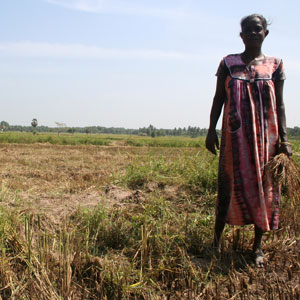
In Rwanda, Benimana Uwera Gilberthe, a scholar and pepper producer, experienced first-hand the challenges of breaking into agribusiness. While in Nigeria, Ayoola Adewale is trying to understand if poultry egg farming will prove a profitable and viable business opportunity to the youth of the continent’s most populous nation. Also in Nigeria, Esther Alleluyanatha is understanding the link between young people leaving their villages for larger cities, the remittances they send home, and the implications on rural livelihoods and agriculture productivity.
Pandemic Lays Bare Africa’s Deficits, but Youth Will Grow the Future
Africa’s frailties have been brutally exposed by the coronavirus pandemic. The virus has reached nearly every country on this continent of 1.3 billion people and the World Health Organization warns there could be 10 million cases within six months. Ten countries have no ventilators at all.
Understanding the Hunger Surge Caused by the COVID-19 Recession to Mitigate It Before It Is Too Late
Many uncertainties haunt the world’s campaign to counter the COVID-19 pandemic, but one thing is now sure: Global economic activity will suffer greatly, with large-scale consequences for the incomes and welfare of all, but especially for the most vulnerable food import-dependent countries.
COVID-19 – How Eswatini’s Garden Farmers are Keeping the Vegetable Supply Flowing
Nobukhosi Cebekhulu (68) and Khetsiwe Tofile (64) are small-scale vegetable farmers who are producing from their permaculture home gardens in Malkerns, Eswatini.
COVID-19: India’s Harvests also Locked Down
Heartbreaking images of Indian farmers standing amidst swathes of rotting vegetables, fruits and grain have been flooding newspapers and TV screens lately. Crashing prices and transport bottlenecks due to the 40-day coronavirus lockdown in India, on till May 3, have driven some to set their unsold produce ablaze.
UN’s Development Goals Threatened by a World Economy Facing Recession
The UN’s 17 Sustainable Development Goals (SDGs), described as an integral part of its highly-ambitious development agenda, may be in deep trouble.
What Does Covid-19 Crisis Mean for Rural Development?
The implications and consequences of the Covid-19 pandemic are playing out before us. Much of the news coverage of the to date in both the Global North and the Global South has understandably focused on the horrifying impact of the disease on urban communities, where it is clearly hitting people, and economies, hardest.
Q&A: Continued Social Distancing and Hundreds of Millions More in Poverty – A New Normal for the World?
With much of the global economy stalled amid an unprecedented lockdown of nations grappling to contain the COVID-19 pandemic, the author of a new United Nations report on the disease’s impact on poverty told IPS that hundreds of millions more could be pushed into poverty and we can expect to see social unrest.
Coronavirus, New Threat for Mexican Migrant Workers in the U.S.
As the high season for agricultural labour in the United States approaches, tens of thousands of migrant workers from Mexico are getting ready to head to the fields in their northern neighbour to carry out the work that ensures that food makes it to people's tables.
COVID-19: Maintaining Food Security in Asia Pacific
COVID-19 has disrupted supply chains that are essential to assure food security in the Asia Pacific region, yet countries overall seem to have managed, so far, to keep supermarkets stocked with food and feed those who can afford it. The Asia Pacific region is home to over 60% of humanity and also contains sub-regions with among the highest frequencies of severe weather events and some of the most challenging environments for agriculture. As a region it is characterized by diverse food systems and a multiplex of supply chains. Under normal circumstances, food security is already threatened by a multitude of factors.
COVID-19. No school meals, millions of kids at risk of food insecurity
For millions of children around the world, the COVID-19 outbreak means not getting the most important, if not the only, meal of the day.
Bridging the Gap between Hunger & Food Waste During a Pandemic
On March 12, the first email came in. An email from a boutique hotel that said they needed to postpone their apron order. The hotel had decided to put a hold on all non-essential spending until everything was, according to them, back to normal.
Ag4Dev, Spring 2020: Journal of the Tropical Agriculture Association
No. 39, Spring 2020, Agriculture for Development: open edition 14th Hugh Bunting Memorial Lecture: Smarter foods | Agricultural hazard management in Bangladesh |IPPC special report Climate change and land: extended review | Getting more, much more, from tropical agriculture | Sir George Stapledon | Agriculture and rural roads | TAA 2019 AGM report | TAA 2019 Honours |Moving coastlines: farming the mudflats of Bangladesh | Digital farming and tropical agriculture.

Green Counter-Revolution in Africa?
In 2006, the Bill and Melinda Gates Foundation and the Rockefeller Foundation jointly launched the Alliance for a Green Revolution in Africa (AGRA). The African Green Revolution Forum claims AGRA is the “world’s most important and impactful forum for African agriculture”.
Reimagining Farming Post-Covid Pandemic
Together with medical services and transportation, farming and food production have been correctly identified as ‘essential services’ by all countries under lockdown. The Covid-19 pandemic has not yet made a dent in the food supply and so far, there are no reports of shortage of essential food and agricultural goods. All cities and towns are actively coordinating with government agencies, farms, businesses and transport companies to maintain the supply chain and ensure full availability of food for the population,
Growing Youth Activism for Environmental Protection in Africa
The mining sector in Africa is facing radical change as youth activists take action against the environmental degradation caused by mining industries. Tensions between activists and the mining industry have raised, however, concerns over human rights abuses.
Fisherfolk Fix Both Food and Climate by Closing Fishing Grounds
Samsul sounded very happy last Monday (Mar. 16) when recounting his experience of catching crabs worth more than $60 in a single day.
Creating Opportunities to Nurture Agripreneurship among Africa’s Youth
“It is not easy to be in agriculture but you must have the perseverance and you must have the passion for it,” Ngozi Okeke (30), the director of operations at Frotchery Farms, tells IPS during a tour of the company’s factory in Ibadan, Nigeria. For Okeke, passion and patience are pivotal to business success. But she also recognises the need to create opportunities to nurture agripreneurship among Africa’s growing ranks of unemployed youth.
Changing Weather Patterns Spell Doom for Unprepared Pakistan Farmers
Unpredictable weather patterns in the form of excessive or prolonged rainfall are wreaking havoc for farmers across Pakistan as sowing and harvesting periods are severely affected.
Brazil: Low on FSI but Much to Offer the South
Brazil is one of the world’s largest producers and exporters of coffee, sugar, beef, soya, cotton, and ethanol but due to its environmental and water footprint it ranks low on sustainability. Brazilian agriculture’s contribution to the loss of rainforest is a case in point – the Amazon lost as much as 3,465 square miles of forest due to fires last year – triggering widespread international outrage over the lax environment policies that allowed all of this to happen. Its large commercial cattle herd is also a source of greenhouse gas emissions. Brazil’s challenge is to make its model of agricultural development more environment-friendly.« Previous Page — Next Page »


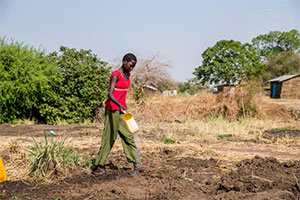 Farming on the Outskirts of Juba. Credit: UN Photo/JC McIlwaine
Promoting human and planetary health is a central focus of the United Nations, as laid out in the 2030 Sustainable Development Goals (SDGs). World hunger and unsustainable farming practices continue to be pressing concerns for the world. According to the 2025 State of Food Security and Nutrition in the World report by the Food and Agriculture Organization (FAO), 673 million people faced hunger in 2024. There are stark regional disparities, with the FAO projecting that 60% of the world population facing hunger will reside in Africa by 2030. Globally, the prevalence of food insecurity has remained consistently higher for women than men.
Sustainable and efficient national food systems are essential in preserving health, education, environmental well-being, peace, economy, and security. However, creating sustainable food systems can be a challenging endeavor, as food production takes a heavy toll on the environment. The agricultural sector accounts for a significant portion of greenhouse gases. Finding safe, sustainable, and ethical strategies to feed the world is crucial in ensuring planetary longevity. A recent initiative from 2023, the EU Regulation on Deforestation-free Products (EUDR), seeks to advocate for sustainable food systems. The main driver of deforestation is the expansion of agricultural land used to produce commodities like cattle, wood, cocoa, coffee, etc. The EUDR is part of the 2020 European Green New Deal and the EU Biodiversity Strategy for 2030 and aims to limit Europe’s consumption of products linked with deforestation by requiring that companies prove that their products are deforestation-free. Despite aiming to achieve major strides in sustainability, policies such as EUDR also raise socioeconomic concerns for targeted countries. Many emerging Latin American economies are impacted by the policy, and have raised the question of how developing countries can grapple with the tensions between economic development and advancing sustainability.
IPS has been at the forefront of providing compelling and insightful stories on communities facing hunger as well as the cost of food production. IPS uses statistics from FAO, the World Food Programme (WFP) and the International Fund for Agricultural Development (IFAD) to bring relevant and hard-hitting facts to readers. This gathering of information and data from such organizations helps bring the best stories from IPS journalists working in the different regions in consultation with experts on the ground.

The Week with IPS

NEXT STOP - SDGs
Tracking global progress towards a sustainable world
Tracking global progress towards a sustainable world