Languages
Wednesday, November 11, 2026



News and Views from the Global South
Food and Agriculture

Money Grows on Trees–Don’t Uproot Them
Jennifer Handondo, a small scale farmer of Choma district in southern Zambia, plants food crops such as maize mostly for her family’s needs. Because of uncharacteristically high temperatures and low rainfall during the rainy season in March, the divorced mother who single-handedly supports her three children, has not been able to harvest as much as she usually does. So she has diversified into selling seedlings of neem, Moringa and other medicinal trees.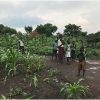
Malnutrition in Humanitarian Settings
As the rain hammers down, Aparo Dorin sits on the damp floor of her one-room hut in zone 12, block 5A, of the Palabek refugee camp in northern Uganda.
How China’s Africa Alliance is Shifting World Order
When the United Nations General Assembly met in 2007 to vote on North Korea’s human rights record, only 10 of the 56 African countries voted with the U.S.-led western coalition.
Parts of Kenya are Already Above 1.5˚C
Kenya’s getting hotter. Much hotter than the 1.5˚C increase that has been deemed acceptable by global leaders, and it is too hot for livestock, wildlife and plants to survive. Thousands of households, dependent on farming and livestock, are at risk too.
The Road to Zero Hunger
Over 820 million people across the globe are currently undernourished, according to a new report released here.
Growing African Agriculture One Byte at a Time
Ella Mazani is a mobile phone farmer. “My mobile phone is part of my farming. It supports my farming and my family’s welfare through the services I get via the phone,” the smallholder maize farmer from Shurugwi in central Zimbabwe quips.
Avoiding the Mistakes of the Asian Green Revolution in Africa
Research scientists are studying groundwater resources in three African countries in order to understand the renewability of the source and how people can use it sustainably towards a green revolution in Africa.
Drought, Disease and War Hit Global Agriculture, Says U.N.
The United Nations has warned of drought, disease and war preventing farmers from producing enough food for millions of people across Africa and other regions, leading to the need for major aid operations.
Today’s Menu: Pesticide Salad, Leaded Fish with Plastic, Chemical Fruit
In case you were not aware or just do not remember: all you eat, drink, breathe, wear, take as a medicine, the cosmetics you use, the walls of your house, among others, is full of chemicals. And all is really ALL.
What Should FAO’s New Director General Focus on?
On 23 June 2019 Mr Qu Dongyu of China was elected as the new Director General of the Food and Agriculture Organization. FAO is one of the largest UN specialized agencies with a budget for 2018-19 of US$2.5 billion, offices in over 130 countries and more than 11,000 employees.
Paraguay Moves Towards Sustainable Commodities
The statistics are alarming. By 2050, the world will require an estimated 60 percent growth in agricultural production to meet the food demand of a population of close to 9 billion people.
Food From Thought
As the weather continues to change and land becomes degraded, the socio-economic security implications are vast. In an effort to tackle these issues, climate-smart agriculture is quickly gaining traction around the world.
Could the Election of Qu Dongyu as FAO´s General-Director be a Turning-point for Sustainable Agricultural Development?
Agriculture is the bedrock of sedentary human civilization, without it we would have no governments or nations. It was food surplus generated by agriculture that enabled people to live in cities and form regimes able to organize food production in such a manner that some community members could engage in other activities than direct food production and thus give rise to the ideologies, techniques and goods which now constitute and govern our existence.
Is there a Co-Relation Between Human Development & SDGs?
“People are the real wealth of nations,” began the first Human Development Report (HDR). That 1990 report marked a turning point in the global development debate.
Fighting Food Insecurity in Africa – Lessons from the United States
The U.S Agency for International Development (USAID) Administrator Mark Green recently concluded a one-week visit to USAID-funded programs at several African countries, including the Democratic Republic of Congo, Rwanda, Kenya and Mozambique. His goal was to promote sustainable paths to self-reliance, including in the context of food security programs.
Blockchain Releases Farmers From the Collateral Trap
A Jamaican start-up has an innovative solution to help smallholder farmers—many of whom do not have the collateral demanded by financial institutions to access loans—build a track record of their production that is proving better than collateral.
The Importance of the Upcoming FAO Election
With each passing day, the world gets just a little smaller as the internet and cell phones bring our communities together, reveal our shared challenges, and lay bare our failures. As global citizens, we are all concerned about the growing number of hungry people around the world and the threats to food security. The simple fact is that more than 800 million people go hungry every day, and if that number shocks you, know that experts predict the number to grow significantly over the next ten years.
South Africa’s First Carbon Farm
Land restoration could attract large private investments in the fight against climate change over the coming decades, if Governments and the United Nations put the right incentives and conditions in place.
Zimbabwe’s Resettled Farmers Hawking Cigarettes to Survive
For subsistence farmer Rogers Hove—who proudly brandishes a worn out letter for his five hectare piece of land he obtained from government following the chaotic land seizures from white commercial farmers over two decades ago—what matters most to him, “is to see my piece of land in my possession”.
Report Reveals Mounting Pressure on Zambia’s Environmental Resources
There is a strong link between provision of basic social services and the use of natural resources in a country. Thus, with increased population comes additional pressure on natural resources. This is a key finding in the latest Zambia Environment Outlook (ZEO) Report 4, published by the Zambia Environmental Management Agency (ZEMA).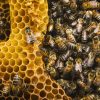
Long Life to Their Majesties, the Bees!
Amazingly organised social communities, bees ensure food chain. ‘Bee’ grateful to them… at least on their World Day!« Previous Page — Next Page »





 Farming on the Outskirts of Juba. Credit: UN Photo/JC McIlwaine
Promoting human and planetary health is a central focus of the United Nations, as laid out in the 2030 Sustainable Development Goals (SDGs). World hunger and unsustainable farming practices continue to be pressing concerns for the world. According to the 2025 State of Food Security and Nutrition in the World report by the Food and Agriculture Organization (FAO), 673 million people faced hunger in 2024. There are stark regional disparities, with the FAO projecting that 60% of the world population facing hunger will reside in Africa by 2030. Globally, the prevalence of food insecurity has remained consistently higher for women than men.
Sustainable and efficient national food systems are essential in preserving health, education, environmental well-being, peace, economy, and security. However, creating sustainable food systems can be a challenging endeavor, as food production takes a heavy toll on the environment. The agricultural sector accounts for a significant portion of greenhouse gases. Finding safe, sustainable, and ethical strategies to feed the world is crucial in ensuring planetary longevity. A recent initiative from 2023, the EU Regulation on Deforestation-free Products (EUDR), seeks to advocate for sustainable food systems. The main driver of deforestation is the expansion of agricultural land used to produce commodities like cattle, wood, cocoa, coffee, etc. The EUDR is part of the 2020 European Green New Deal and the EU Biodiversity Strategy for 2030 and aims to limit Europe’s consumption of products linked with deforestation by requiring that companies prove that their products are deforestation-free. Despite aiming to achieve major strides in sustainability, policies such as EUDR also raise socioeconomic concerns for targeted countries. Many emerging Latin American economies are impacted by the policy, and have raised the question of how developing countries can grapple with the tensions between economic development and advancing sustainability.
IPS has been at the forefront of providing compelling and insightful stories on communities facing hunger as well as the cost of food production. IPS uses statistics from FAO, the World Food Programme (WFP) and the International Fund for Agricultural Development (IFAD) to bring relevant and hard-hitting facts to readers. This gathering of information and data from such organizations helps bring the best stories from IPS journalists working in the different regions in consultation with experts on the ground.

The Week with IPS

NEXT STOP - SDGs
Tracking global progress towards a sustainable world
Tracking global progress towards a sustainable world

