Languages
Saturday, November 14, 2026



News and Views from the Global South
Food and Agriculture

Alert Over Lethal Virus Affecting Popular Tilapia Fish
A highly contagious disease is spreading among farmed and wild tilapia, one of the world's most important fish for human consumption, the United Nations warns, adding that though not a human health risk, Tilapia Lake Virus has large potential impact on global food security and nutrition.
Brazil Drives New School Feeding Model in the Region
“I am going back to Panama with many ideas,” said Gilda Montenegro, a nutritionist with the Panamanian Education Ministry, after getting to know the school feeding system in the city of Vitoria, in central-eastern Brazil.
Asia: 260 Million Indigenous Peoples Marginalised, Discriminated
Asia is home to the largest number of indigenous peoples on Earth, with an estimated 260 million of a total of 370 million original inhabitants worldwide. In spite of their huge number-equaling half of the combined population of Europe-- they are often victims of discrimination and denial of their rights.
Time To Focus On ‘Hidden Hunger’
As World Hunger Day May 28 approaches, it is time for us all to redouble our efforts to reach the goal of Zero Hunger by prioritizing the battle against micronutrient deficiency. If the international community pulls together this year to incorporate proven solutions such as biofortifying crops into the UN framework for sustainable development, we could reduce malnutrition on a truly global scale.
Formalising Informal Trade – Good for African Women?
Women constitute the largest share of informal traders in Africa–about 70 per cent in Southern Africa and more than half in other parts of this vast continent made up of 54 states, home to over 1,200 billion people.
Africa – More than Just Conflicts, Corruption, Disasters
Natural and man-made disasters, armed conflicts, widespread corruption and deep social inequalities have been so far a dramatic source for most news coverage when it comes to Africa, the world's second-largest and second-most-populous continent on Earth, which hosts 54 states spreading over 30 million square kilometres that are home to over 1.2 billion people.
Q&A: “It’s a Crime” that 35 Million Latin Americans Still Suffer from Hunger
The fight against hunger has been “remarkably successful” in Latin America and the Caribbean, but “it is a crime” that 35 million people still go to bed hungry every day, FAO regional representative Julio Berdegué told IPS.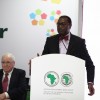
Nutrition Key to Developing Africa’s “Grey Matter Infrastructure”
Developing Africa’s ‘grey matter infrastructure’ through multi-sector investments in nutrition has been identified as a game changer for Africa’s sustainable development.
Mideast: Growing Urbanisation Worsens Water Scarcity, Food Imports
Conflict and insecurity remain the key barriers to development progress in the Middle East and North Africa. In Iraq, Libya, Syria, and Yemen, about half the population—around 40 million people—require humanitarian assistance. Across the region, countries depend heavily on food imports. As their populations urbanise and grow, the need for imports will increase.
Community Seed Banks: Securing Diversity for Climate Change Adaptation
For thousands of years, farmers have used genetic diversity to cope with weather variability and changing climate conditions. They have stored, planted, selected and improved seeds to continue producing food in a dynamic environment.
Agony of Mother Earth (II) World’s Forests Depleted for Fuel
Humankind is the biggest ever predator of natural resources. Just take the case of forests, the real lungs of Mother Earth, and learn that every 60 seconds humans cut down 15 hectares of trees primarily for food or energy production. And that as much as 45,000 hectares of rainforest are cleared for every million kilos of beef exported from South America.
Agony of Mother Earth (I) The Unstoppable Destruction of Forests
The world’s forests are being degraded and lost at a staggering rate of 3.3 million hectares per year. While their steady destruction in many Asian countries continues apace, deforestation of the world's largest tropical forest - the Amazon - increased 29 per cent from last year’s numbers. And some of the most precious ecosystems in Africa are threatened by oil, gas and mineral exploration and exploitation.
Defence of Right to Water Drives Call for Land Reform in Chile
Water at high prices, sold as a market good, and small farmers almost a species in extinction, replaced by seasonal workers, are the visible effects of the crisis in rural Chile, 50 years after a land reform which postulated that “the land is for those who work it.”
Genetically Engineered Disappointments
Advocates of genetically engineered (GE) crops have long claimed that genetic engineering is necessary to raise crop yields and reduce human exposure to agrochemicals. Genetic engineering promised two major improvements: improving yields affordably to feed the world, and making crops resistant to pests to reduce the use of commercial chemical herbicides and insecticides.
Kenya’s Drought: Response Must Be Sustainable, Not Piecemeal
A malnutrition emergency Food security in Kenya has deteriorated significantly since the end of 2016. UNICEF reports a significant increase in severe acute malnutrition. Nearly 110,000 children under-five need treatment, up from 75,300 in August 2016.

World Lags on Clean Energy Goals
It may be the 21st century but more than three billion people still use fire for cooking and heating. Of those, one billion people have no access to electricity despite a global effort launched at the 2011 Vienna Energy Forum to bring electricity to everyone on the planet.
Using Agriculture and Agribusiness to Bring About Industrialisation in Africa
No region of the world has ever moved to industrialised economy status without a transformation of the agricultural sector. Agriculture, which contributes 16.2% of the GDP of Africa, and gives some form of employment to over 60% of the population, holds the key to accelerated growth, diversification and job creation for African economies.
Poor Rural Communities in Mexico Receive a Boost to Support Themselves
Jilder Morales, a small farmer in Mexico, looks proudly at the young avocado trees that are already over one metre high on her ejido - or communal - land, which already have small green fruit.
Who Are the Best ‘Eaters’ and How to Use Eggplants as a Toothbrush
The news is this: Japan is a global model for healthy diets and it currently has the lowest rate of obesity among developed countries--below four per cent. This is on the one hand. On the other, African eggplant gorongo is often used as toothbrush.
SLIDESHOW: Drought Highlights Ethiopia’s IDP Dilemma
 Displaced pastoralists gather around newly arrived drums of brown water as a water truck speeds off to make further deliveries to settlements that have sprung up along the main road running out of Gode, one of the major urban centers in Ethiopia’s Somali region.

Falling Between the Sun-Scorched Gaps: Drought Highlights Ethiopia’s IDP Dilemma
Displaced pastoralists gather around newly arrived drums of brown water as a water truck speeds off to make further deliveries to settlements that have sprung up along the main road running out of Gode, one of the major urban centers in Ethiopia’s Somali region.« Previous Page — Next Page »


 Farming on the Outskirts of Juba. Credit: UN Photo/JC McIlwaine
Promoting human and planetary health is a central focus of the United Nations, as laid out in the 2030 Sustainable Development Goals (SDGs). World hunger and unsustainable farming practices continue to be pressing concerns for the world. According to the 2025 State of Food Security and Nutrition in the World report by the Food and Agriculture Organization (FAO), 673 million people faced hunger in 2024. There are stark regional disparities, with the FAO projecting that 60% of the world population facing hunger will reside in Africa by 2030. Globally, the prevalence of food insecurity has remained consistently higher for women than men.
Sustainable and efficient national food systems are essential in preserving health, education, environmental well-being, peace, economy, and security. However, creating sustainable food systems can be a challenging endeavor, as food production takes a heavy toll on the environment. The agricultural sector accounts for a significant portion of greenhouse gases. Finding safe, sustainable, and ethical strategies to feed the world is crucial in ensuring planetary longevity. A recent initiative from 2023, the EU Regulation on Deforestation-free Products (EUDR), seeks to advocate for sustainable food systems. The main driver of deforestation is the expansion of agricultural land used to produce commodities like cattle, wood, cocoa, coffee, etc. The EUDR is part of the 2020 European Green New Deal and the EU Biodiversity Strategy for 2030 and aims to limit Europe’s consumption of products linked with deforestation by requiring that companies prove that their products are deforestation-free. Despite aiming to achieve major strides in sustainability, policies such as EUDR also raise socioeconomic concerns for targeted countries. Many emerging Latin American economies are impacted by the policy, and have raised the question of how developing countries can grapple with the tensions between economic development and advancing sustainability.
IPS has been at the forefront of providing compelling and insightful stories on communities facing hunger as well as the cost of food production. IPS uses statistics from FAO, the World Food Programme (WFP) and the International Fund for Agricultural Development (IFAD) to bring relevant and hard-hitting facts to readers. This gathering of information and data from such organizations helps bring the best stories from IPS journalists working in the different regions in consultation with experts on the ground.

The Week with IPS

NEXT STOP - SDGs
Tracking global progress towards a sustainable world
Tracking global progress towards a sustainable world

