Languages
Thursday, November 19, 2026



News and Views from the Global South
Health
Keeping Healthy Veggies from Turning Deadly
Fatal outbreaks of food poisoning in the United States, Mexico and Europe expose the failure of regional and global initiatives to ensure that fruits and vegetables are safe and healthy.
UGANDA: In Search of Better Medical Care
Even though government health services are free, Grace Nafungo Kutosi doesn’t mind paying the two thousand shillings (about one dollar) when she visits the non-governmental Beatrice Tierney Clinic in Bumwalukani village. In fact, paying the fee at the clinic, which is a 20-minute walk from her home, is cheaper than her having to travel to the nearest government clinic almost seven kilometres away.INDIA: Sex Selection on the Rise Despite Stricter Law
When Sujatha’s husband learned that she had conceived just five months after they got married, he became agitated over what he called her "ill-timed pregnancy". To worsen her husband’s anxiety, a test to determine the sex of the foetus showed she was carrying a girl.
NEPAL: Sex Workers Demand a Place in the Constitution
Every time Bijaya Dhakal goes out to meet people and tell them what she does for a living, the simple task becomes an act of courage requiring nerves of steel. Dhakal is the founder of Nepal’s first and only organisation of women sex workers now trying to make the state and society listen to a community long hushed by poverty and discrimination.
KENYA: Strategy to Counter Counterfeit Medicine
In Kenya buying medicine from any unregistered pharmacy outlet means that you are running a higher risk of buying either substandard or counterfeit drugs that form 30 percent of all drugs sold in the country.“BRICS Can Ensure Affordable Drugs”
While ‘data exclusivity’ clauses will not feature in the India-European Union free trade agreement (FTA), the threat posed by the impending deal to the world’s supply of cheap generic drugs is far from over.SOUTH SUDAN: Women Hope Independence Means Less Maternal Deaths
Mother of eight, Jessicah Foni, 36, hopes that independence will mean a hospital will soon be built in her village. Foni, who has travelled from a remote village in South Sudan to the state’s capital to celebrate independence, lost two babies at birth because of the lack of medical facilities in her area.
UGANDA: Maternal Deaths Against Constitutional Rights
When Valente Inziku’s wife, Jennifer Anguko, went into labour they had decided she would go to the local referral hospital just to ensure a safe delivery.Second-Hand Smoke Still a Major Killer
This year, tobacco use will kill nearly six million people. Of that number, 600,000 will die because of exposure to second- hand tobacco smoke.
KENYA: People Dying Because of Lack of Anaesthetics
One person dies weekly in Kenya due to a shortage of anaesthetics and the situation is worse in slums and rural areas across the country.
MIDEAST: Israel Denies Healthcare to Refugees
Medication and pillboxes fill two white bookcases, lining the wall behind a volunteer Israeli doctor. He talks to a patient in Hebrew about the man’s medical condition, as another man is examined behind a curtain that divides the small office. In the next room, at least 40 people – mainly of Eritrean and Sudanese origin – sit quietly on plastic chairs, waiting for their turn to be seen.U.S.: Floods and Wildfires Trigger New Fears over Nuke Safety
Just 100 days after a deadly earthquake and tsunami devastated the Fukushima Daiichi nuclear power plant in Japan, concerns are being raised about several U.S. nuclear stations that are facing natural disasters of their own.
ZAMBIA: “Every Year Flooding Makes This Place a Little Hell”
During the rainy season, and many weeks afterwards, home is never the best place to be for Miriam Banda. Until the end of 2008, she enjoyed living at her house in Kanyama, a high-density settlement bordering the central business district in Lusaka, Zambia's capital.
NAMIBIA: Investing in the Health of Farm Workers
In one of the most sparsely populated countries on the planet, people travel up to 200 kilometres in the simmering heat to see a nurse or get basic medication.OP-ED: The Good News About Coal
During the years when governments and the media were focused on preparations for the 2009 Copenhagen climate negotiations, a powerful climate movement was emerging in the United States: the movement opposing the construction of new coal-fired power plants.
UGANDA-HEALTH: When Women Go Without Needed Contraceptives
When the monthly contraceptive injection that Bernadette Asiimwe, a mother of four, got from government health centres in western Uganda was out of stock for weeks, she fell pregnant with her fifth child.World Heading to Slow Motion Health Crisis
Sixty percent of all global deaths are now caused by non- communicable diseases (NCDs) such as cancer, diabetes and lung disease, according to a report by the U.N. Secretary-General's office.Iran Executing Hundreds in “War on Drugs”
Iran is drawing international criticism for its continued mass executions of people convicted of violating its drug laws. The Islamic Republic's judiciary reported that 300 people were on death row as of May 30.On the Road to Green Energy for All
Like our cave-dwelling ancestors of 200,000 years ago, nearly three billion people still use fire for cooking and heating. Of those, some 1.5 billion people have no access to electricity. For a billion more, their only access is to sporadic and unreliable electricity networks.Navigating Challenges, Brazil Steps Up AIDS Response
Long heralded as a model for the global response to HIV/AIDS, Brazil is intensifying its actions, at home and abroad, in the face of potential setbacks including an arising need for new treatment regimens, the resultant increase in drug prices and the debate over intellectual property rights.U.S.: Brain Injuries Especially Invisible Among Homeless – Part II
James Smith is a 53-year-old Portland veteran who used to have a job he loved. After a car accident left him with traumatic brain and neck injuries in 2005, Smith lost his job, ran out of money and wound up on the streets.« Previous Page — Next Page »


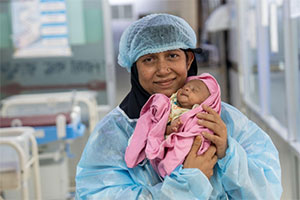 Bangladesh: Sarid, born one month early, receives specialized newborn care and grows stronger every day. Credit: UNICEF/UNI944397/Mojumder
Since the onset of the 2000s, global life expectancy has seen an overall rise, attributed to significant technological and scientific innovations in healthcare. Due to an increased understanding of different conditions as well as a rise in cooperation among healthcare experts around the world, there have been major strides made in ensuring that as few people die from chronic illnesses as possible. Despite the belief that healthcare is a fundamental human right, people from low- or middle-class backgrounds, marginalized groups, and underdeveloped countries have far more limited access to basic healthcare services.
The COVID-19 pandemic showed how marginalized communities are disproportionately affected by health crises, proving that we have much work to do in ensuring that no one dies of terminal conditions. While the global response to the coronavirus saw significant strides in immunization and vaccine development, the global outbreak of mpox in 2022 and its upsurge in parts of Africa in 2024 must remind us to remain vigilant.
Other major disease outbreaks in recent years have been linked to the destruction of infrastructure during warfare. Notably, in 2024, the Gaza Strip witnessed a return of the poliovirus since its eradication in the region 25 years ago. Israel’s blockade on Gaza has resulted in the collapse of the region’s sewage plants and desalination plants, and also destroyed healthcare capacities. The UN stated that this lack of clean water and sanitation would lead to an outbreak of cholera and other deadly infectious diseases. The 2026 OCHA Humanitarian Situation Report confirmed that the over two years of conflict in Gaza has produced a catastrophic health emergency, with millions remaining dependent on relief aid amid tight restrictions and no functioning public health system.
IPS is committed to providing full and comprehensive coverage on healthcare challenges around the world. IPS seeks to address the multifaceted causes of such challenges, including unprecedented pandemics, conflict-driven disease outbreaks, as well as socioeconomic barriers to equal healthcare access. IPS is also dedicated to reporting on innovations in the healthcare industry.

The Week with IPS

NEXT STOP - SDGs
Tracking global progress towards a sustainable world
Tracking global progress towards a sustainable world
