Languages
Thursday, November 19, 2026



News and Views from the Global South
Health
JAPAN: Workers Bear Brunt of Nuke Clean-up
Twenty-eight-year-old Yushi Sato washes cars for a living, but they are no ordinary cars. Every day, Sato hoses down vehicles contaminated with radiation from the Fukushima Nuclear Power plant that was damaged by the earthquake and tsunami that hit north-east Japan Mar 11.Thai Campaign Tempers Use of Antibiotics
Every month, Buddhist monk Phra Patarapong visits this village of mostly wooden houses on stilts and draws crowds, but not just for his regular sermons on spiritualism. People come to see him also for his tips on health, in particular his warnings about the excessive use of antibiotics.Prescription Drug Abuse on the Rise
Some 13 million people across Europe, Russia, and other parts of the world remain largely dependent on Afghanistan's poppy production to fuel their addiction to heroin, according to a new U.N. report on global use of illicit drugs.
U.S.: Brain Injuries May Push Victims into Homelessness – Part I
You might say Nick Patton was born to fish. Literally born on a boat, Nick spent his earliest years living in orphanages along the Alaskan coastline. He ran away at the age of eight and quickly learned how to take care of himself and to rely on others - traveling in groups around the Pacific Northwest, picking apples and doing day labour.
KENYA: No Longer Forced to Buy Ineffective Anti-Malarial Drugs
People in Western Kenya are now able to buy effective anti-malarial drugs at low prices thanks to the success of the Global Fund’s subsidy programme, and thanks to honest pharmacists who are reselling the drugs at the recommended low prices.
EGYPT: Solar Energy Projects Picking up Again After Uprising
On a blazingly hot summer’s day in Cairo, it’s 36 degrees Celsius in the shade. Air-conditioners and fans whirr across the city, burdening the national electricity grid. Last summer, the populous city experienced frequent water and power cuts, causing a furore. Consumption had grown by 2,600 megawatts, an increase of 13,5 percent from 2009.
Hidden Poisons in Mexican Meat
Serious concerns about industrial livestock production in Mexico have been raised once again by recent controversies over the use of the non-steroidal anabolic clenbuterol and a feed medicine for poultry containing aresenic.UGANDA: Distribution Policy Means Not Enough Drugs for Clinics
The nurse at Najembe Health Centre in Buikwe district says the centre’s supply of malaria drugs will be finished in two days. A malaria epidemic has hit the area and the demand for the drugs is high. But the centre, which serves the entire sub-county, will have to wait up to six weeks before their supply will be replenished.Building Vaccines for the “Bottom Billion”
As the world marks 30 years since HIV/AIDS was first identified, vaccine researcher Dr. Peter Hotez hopes intervention programmes can begin to incorporate treatment for some lesser-known ailments called neglected tropical diseases, or NTDs.SIERRA LEONE-HEALTH: Free Health Care Not Really Free
There is a brief bustle and then a woman wails as the small body is wrapped in cloth and set on a cot by the door of the paediatric ward. Nurses in pristine white uniforms continue to pad quietly around the large room at Ola During Children's Hospital in Freetown, Sierra Leone's capital city.
ICELAND: New Energy Stinks, And Worse
Public health authorities in Reykjavik have criticised plans for the expansion of the Hellisheidi geothermal power plant. They say that levels of the gas hydrogen sulphide could increase by 40 percent if a new geothermal field, Grauhnukur, is developed and nothing is done to ensure that the levels of the gas remain below maximum permitted levels.
MIDEAST: Medical Crisis Worsening in Gaza
"During the first years of the siege, we could still manage, but nowadays we have no alternatives," says Dr. Hassan Khalaf, Deputy Health Minister in Gaza. "It is a major crisis: many health services have stopped, and I'm afraid this will spiral out of control, because Gaza doesn't have the essential medicines and supplies needed."Another Push for Reproductive Rights
By 2015, women demanding family planning products and services in the developing world will likely reach 933 million, a terrific increase from the current 818 million women demanding access to these basic reproductive commodities.
HEALTH: High Drug Prices Hamper Drug-Resistant TB Treatment
Access to treatment for drug-resistant tuberculosis (DR-TB) remains compromised, especially in developing countries, because too few pharmaceutical companies manufacture quality-assured drugs. Lack of competition has led to skyrocketing prices and this means that public health budgets are quickly spent.
SIERRA LEONE: Substandard and Counterfeit Drugs Flood the Market
Bubble-wrapped pills are scattered across the crude table in a busy market beside crumpled boxes of lubricant, paracetamol and anti-fungal powder.
SRI LANKA: Onset of Rains Tests Anti-Dengue Campaign
With the monsoon season upon it, Sri Lanka’s war against the deadly dengue- carrying mosquito faces its toughest test yet, but early signs show that the mosquitoes are not quite ready to give up.Mental Health Work in Humanitarian Crises
When the devastating ‘Boxing Day' tsunami hit Sri Lanka in December 2004, claiming over 35,000 lives and rendering 1.5 million people homeless, the World Health Organization (WHO) was confronted by a second disaster soon after it arrived to begin relief efforts in early January.OP-ED: G20 Ministers of Agriculture Must Focus on Smallholder Farmers
The first-ever official meeting of Ministers of Agriculture from G20 countries, to be held in Paris Jun. 22-23, presents an extraordinary opportunity. Tasked with developing an action plan to address price volatility in food and agricultural markets and its impact on the poor, the ministers are uniquely positioned to not only tackle the immediate price volatility problems, but also to take on a more fundamental and long-term challenge - extreme poverty and hunger.
RIGHTS-UGANDA: Government Needs to Prioritise Maternal Health
Just a week after a group of civil society organisations petitioned Uganda’s constitutional court demanding that the government’s non-provision of essential services for pregnant mothers was a violation of the right to life; Margaret Nabirye lost her baby in childbirth.
SIERRA LEONE: A Quarter of Vital Donated Drugs Missing or Stolen
Three-year-old David bolts up from his feverish stooper as a needle pricks his thumb, producing a tiny bead of blood. He looks down horrified but is too exhausted to cry and falls back into his mother's lap as the blood is wiped awaySWAZILAND: Girls Leave School Because of No Sanitary Wear
After a newspaper that Prudence* (16) used as sanitary wear fell from her while she played with friends at school, she left and never returned.« Previous Page — Next Page »


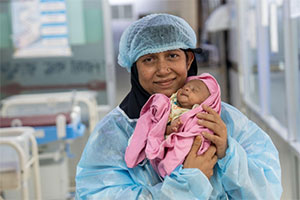 Bangladesh: Sarid, born one month early, receives specialized newborn care and grows stronger every day. Credit: UNICEF/UNI944397/Mojumder
Since the onset of the 2000s, global life expectancy has seen an overall rise, attributed to significant technological and scientific innovations in healthcare. Due to an increased understanding of different conditions as well as a rise in cooperation among healthcare experts around the world, there have been major strides made in ensuring that as few people die from chronic illnesses as possible. Despite the belief that healthcare is a fundamental human right, people from low- or middle-class backgrounds, marginalized groups, and underdeveloped countries have far more limited access to basic healthcare services.
The COVID-19 pandemic showed how marginalized communities are disproportionately affected by health crises, proving that we have much work to do in ensuring that no one dies of terminal conditions. While the global response to the coronavirus saw significant strides in immunization and vaccine development, the global outbreak of mpox in 2022 and its upsurge in parts of Africa in 2024 must remind us to remain vigilant.
Other major disease outbreaks in recent years have been linked to the destruction of infrastructure during warfare. Notably, in 2024, the Gaza Strip witnessed a return of the poliovirus since its eradication in the region 25 years ago. Israel’s blockade on Gaza has resulted in the collapse of the region’s sewage plants and desalination plants, and also destroyed healthcare capacities. The UN stated that this lack of clean water and sanitation would lead to an outbreak of cholera and other deadly infectious diseases. The 2026 OCHA Humanitarian Situation Report confirmed that the over two years of conflict in Gaza has produced a catastrophic health emergency, with millions remaining dependent on relief aid amid tight restrictions and no functioning public health system.
IPS is committed to providing full and comprehensive coverage on healthcare challenges around the world. IPS seeks to address the multifaceted causes of such challenges, including unprecedented pandemics, conflict-driven disease outbreaks, as well as socioeconomic barriers to equal healthcare access. IPS is also dedicated to reporting on innovations in the healthcare industry.

The Week with IPS

NEXT STOP - SDGs
Tracking global progress towards a sustainable world
Tracking global progress towards a sustainable world
