Languages
Thursday, November 19, 2026



News and Views from the Global South
Health
IBSA: Pro-Western Mindset Hinders India-Brazil Pharma Deals
Cooperation between India and Brazil in pharmaceuticals and medical biotechnology has begun to falter, because Indian authorities would rather collaborate with western counterparts than those in developing countries, new research shows.JAPAN: HIV Cases Rise as Awareness Wanes
Slackening awareness and deep-rooted social discrimination are behind the latest figures that show Japan with a record number of HIV-positive and AIDS patients, officials and experts say.
BANGLADESH: Ship Breakers Defy Court Ruling on Toxic Vessels
The ship breaking companies of Bangladesh continue to import highly toxic foreign vessels despite a two-year-old ban, and are also defying a court order to ensure workers’ safety and implement environmentally sound practices, a group of lawyers says.UGANDA: The Value of Immunisation Programmes
GAVI, the Global Alliance for Vaccinations and Immunisation, secured pledges of 4.3 billion dollars from donors in London on Jun. 13 with the aim of securing funding to ensure life-saving vaccinations for every child on the planet.Corporate Influence Clouds Vaccine Pledging Conference
Between 2011 and 2012, 6.4 million children could die of preventable diseases, a number greater than the total population of Denmark or Norway.JAPAN: Aid Cut to Hit Health Campaigns
International campaigns against AIDS, tuberculosis and malaria are headed for cuts in funding assistance, now that Japan is reducing its Overseas Development Assistance (ODA) budget in the wake of the disaster that hit the country in March.PAKISTAN: Women Shield Children From Extremism
When Farah’s 16-year-old son began to disappear for several nights a week without saying where he went, she was naturally worried. After he returned one day and shattered the television screen in their Peshawar home, the mother of three decided it was time to quit her job as a teacher and to find out what was making her youngest child so angry.
Industrial Food Production Fuels Spread of E. Coli
In the 1998 medical thriller "Toxin" by U.S. novelist Robin Cook, the ground beef in hamburgers is contaminated with a deadly strain of the Escherichia coli or E. coli bacterium, unleashing a massive epidemic. The novel was inspired by a real outbreak that had taken place several years earlier.Fresh Vegetables Endangering Health Again
The deadly epidemic of escherichia coli (EHEC) in Germany, that broke out in mid May, and which has killed 29 people so far, is the latest in a series of food and hygiene emergencies that have shaken European households for more than a decade.AIDS Funding Gap Threatens Treatment Targets
A staggering nine million people are still awaiting HIV treatment, yet the 22 billion dollars the Joint United Nations Programme on HIV/AIDS (UNAIDS) says is needed to give them access to medicine and care has far from materialised.
As Britain Sees a Needy Child
The British Home Office has ruled that a severely disabled five-year-old girl should be returned to Algeria. The ruling demonstrates just how tough some European governments are getting on immigration.
Thirty Years On, AIDS Epidemic a Women’s Battle
As world leaders gather in New York for a high-level conference on HIV/AIDS, United Nations agency heads, goodwill ambassadors and activists alike hope they will remember the virus's most vulnerable victims: women and girls.
MALAWI: Fears of Sustainability of New ART Regime
As government prepares to roll out the expensive new antiretroviral treatment regime recommended by the World Health Organisation (WHO) this month, there are fears about the programme’s sustainability after two recent proposals for funding were rejected by the Global Fund.
PAKISTAN: Blood Donors Save Lives in Peshawar
If there’s one thing positive that has come out of the violence in this part of Pakistan, it is that people have developed a culture of donating blood that helps save lives, say doctors in the northeastern city of Peshawar.
HEALTH: A Phone Call Could Provide HIV/AIDS Treatment
Soon chatting to ones friends or family over a mobile phone could mean that an HIV positive person will receive sustainable antiretroviral treatment (ART) that could prolong their life. That is if civil society in Kenya has its way.Rich Nations Wage Assault on Generic AIDS Drugs
Moves by developed nations such as the United States to tighten intellectual property laws are threatening to limit production and distribution of generic drugs, which experts say have been and will remain key in the prevention and treatment of HIV/AIDS and currently account for 80 percent of HIV/AIDS treatment.
SENEGAL: Making Hand Washing Easy
Think hand washing can't be fun? Think again. In Senegal, a unique water system offers people an easy, cheap and environmentally friendly way to wash their hands frequently, reducing the spread of hand-borne transmittable diseases.
ARGENTINA: Avoidable Maternal Deaths on the Rise
Argentina is moving backwards in terms of maternal mortality, with a rate three times higher than those of its neighbours Chile and Uruguay. Maternal deaths, which are actually increasing, are often the result of unsafe abortions, in a country where the practice is illegal.ENVIRONMENT DAY: Radioactive Oil, Fertilisers and Tobacco
Emissions of radioactive materials from the burning of fossil fuels and the production of chemical fertilisers are another reason to come up with sustainable alternatives, experts say.Reimagining Food Systems in the Midst of a Hunger Crisis
Today one billion people are living in hunger, not because of scarcity of production or a shortage of food on shelves in the global marketplace, but because they "lack the most basic purchasing power needed to acquire it", Olivier De Schutter, the United Nations Special Rapporteur on the Right to Food, said Thursday.HIV Infections Down, but Treatment Access Still Uneven
Officials underscored the importance of stepped-up action Friday to combat HIV/AIDS, the worst epidemic the world has seen since it began 30 years ago, ahead of a high-level meeting on the disease at the United Nations next week.« Previous Page — Next Page »


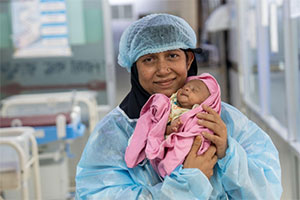 Bangladesh: Sarid, born one month early, receives specialized newborn care and grows stronger every day. Credit: UNICEF/UNI944397/Mojumder
Since the onset of the 2000s, global life expectancy has seen an overall rise, attributed to significant technological and scientific innovations in healthcare. Due to an increased understanding of different conditions as well as a rise in cooperation among healthcare experts around the world, there have been major strides made in ensuring that as few people die from chronic illnesses as possible. Despite the belief that healthcare is a fundamental human right, people from low- or middle-class backgrounds, marginalized groups, and underdeveloped countries have far more limited access to basic healthcare services.
The COVID-19 pandemic showed how marginalized communities are disproportionately affected by health crises, proving that we have much work to do in ensuring that no one dies of terminal conditions. While the global response to the coronavirus saw significant strides in immunization and vaccine development, the global outbreak of mpox in 2022 and its upsurge in parts of Africa in 2024 must remind us to remain vigilant.
Other major disease outbreaks in recent years have been linked to the destruction of infrastructure during warfare. Notably, in 2024, the Gaza Strip witnessed a return of the poliovirus since its eradication in the region 25 years ago. Israel’s blockade on Gaza has resulted in the collapse of the region’s sewage plants and desalination plants, and also destroyed healthcare capacities. The UN stated that this lack of clean water and sanitation would lead to an outbreak of cholera and other deadly infectious diseases. The 2026 OCHA Humanitarian Situation Report confirmed that the over two years of conflict in Gaza has produced a catastrophic health emergency, with millions remaining dependent on relief aid amid tight restrictions and no functioning public health system.
IPS is committed to providing full and comprehensive coverage on healthcare challenges around the world. IPS seeks to address the multifaceted causes of such challenges, including unprecedented pandemics, conflict-driven disease outbreaks, as well as socioeconomic barriers to equal healthcare access. IPS is also dedicated to reporting on innovations in the healthcare industry.

The Week with IPS

NEXT STOP - SDGs
Tracking global progress towards a sustainable world
Tracking global progress towards a sustainable world
