Languages
Thursday, November 19, 2026



News and Views from the Global South
Health

PAKISTAN: When Men Fear Telling Their Wives About HIV
As a peer educator at a local HIV/AIDS organisation, Ahmad (not his real name) has taken care to teach his own wife anything and everything he knows about the disease.
HEALTH-INDIA: Vitamin A Doses Keep Child Malnutrition Away
With three small children to raise in a dirt-poor village in eastern India’s Bihar state, farm labourer Renu Devi is an unsung rural supermom who shuttles between home and field every day.CAMBODIA: Aid Dependence May Hurt Successes in HIV, AIDS
Thanks to a healthy cocktail of foreign aid and a pragmatic condom policy, one of South-east Asia’s poorest countries is well on course to meeting an international target aimed at reversing the spread of HIV and AIDS.
PAKISTAN: Scientists Turn Sights on Childhood Meningitis
She is already eight months old, but Aiman Azam can neither sit up nor clutch anything with her tiny hands. She cannot even hold her neck up or roll on her back. All she does is moan.WIKILEAKS: Africa Offers Easy Uranium
Wikileaks cables have revealed a disturbing development in the African uranium mining industry: abysmal safety and security standards in the mines, nuclear research centres, and border customs are enabling international companies to exploit the mines and smuggle dangerous radioactive material across continents.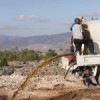
Cholera Forces Haiti to Face Sewage Dilemma
The cholera crisis is forcing Haitian authorities to address an unpleasant and now life-threatening problem – untreated feces.
Q&A: “Transparency Helps Ensure Donors’ Promises Are Met”
This past September, world leaders meeting at the United Nations vowed to spend $40 billion over the next five years to save the lives of more than 16 million women and children dying of deadly diseases or lack of medical care, particularly during and after pregnancy.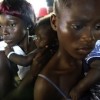
KENYA: Mobile Phones to the Rescue for Pregnant Women
Pumwani Maternity Hospital, in the impoverished Nairobi neighbourhood of Eastlands, is the site of a trial project using mobile phones to help HIV-positive mothers avoid passing the virus on to their children.CHINA: Quest for Beauty Becomes A Health Risk
After her run to the finals of the 2005 "Super Girl" talent contest, Wang Bei, from central China’s Hubei province, lived on the cusp of pop stardom. In November, Wang opted for cosmetic surgery in an effort to improve her chances of success.
JAMAICA: Priceless Native Plants Vanishing in the Wind
The recent successes of local medicinal researchers have turned the spotlight on local laws that fail to protect Jamaica's rich biological diversity.
HEALTH: Scientists Focus on Male Mosquitoes in Bid to Control Malaria
After successfully suppressing scourges of fruit, tsetse and screwworm flies in the Americas, researchers are exploring whether the same sterilised insect technique can be used to control malaria, which kills some one million people every year, many of them in Africa.MIDEAST: Where to Park a Hospital
At the Rambam medical centre here in Israel’s third largest city just 30 odd kilometres from Lebanon, they are working around the clock, racing against time.COSTA RICA: Infertile Controversy over Right to Form a Family
Costa Rica is one of the few countries in the world where in vitro fertilisation (IVF) is illegal. And the Vatican wants it to stay that way: Pope Benedict XVI himself recently urged the government not to pass a law that would make it legal.
NEPAL: For Maternal Health, Go Door to Door
For the last 17 years, Keshari Maharjan has been going door to door in the outskirts of the Nepali capital to tell people about the services available at health centres in their communities, as well as about how to prevent certain diseases.
Q&A: “Child Marriage Is a Form of Violence Against Women”
At the start of this month, the U.S. Senate unanimously adopted the 'International Protecting Girls by Preventing Child Marriage Act'. Women's rights groups are now urging the Congress's lower chamber to pass it before adjourning at the end of the year.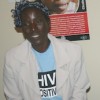
TB Care Moves to the Community in Swaziland
Ntombikayise Mabelesa (36) is a recovering multi-drug-resistant (MDR) TB patient from Hoseya in the southern part of Swaziland.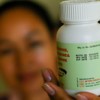
CAMBODIA: EU, India Trade Deal Could Hurt Access to Anti-Retrovirals
Every day, twice a day for the last seven years, Men Thol has swallowed a set of pills that gives him the strength to lead a normal life.
ENVIRONMENT-INDIA: Waste-to-Energy Plants Face Public Heat
A plan to establish waste-to-energy plants in New Delhi as part of a carbon- trading programme has run into fierce opposition over hazards posed by toxic chemical byproducts.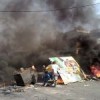
HAITI: Envoys and Poll Officials Try to Defuse Tensions
After almost a week of violent protests over preliminary elections results that left at least five dead, Haiti awoke to an eerie and tense calm Monday after a well-coordinated trial balloon was launched late Sunday night.
ETHIOPIA: Saving Rural Mothers’ Lives
Nigist Abebe has grown in confidence over five years on the job. Today she is one of 34,000 rural health extension workers at the heart of Ethiopia's primary health care strategy.EUROPE: Legally, and Dangerously High
Eastern European youths have been getting high on "plant feed" or "bath salt" for over two years, catching up fast with Western European trends in drug abuse. Governments in the region are now scrambling to control use.« Previous Page — Next Page »


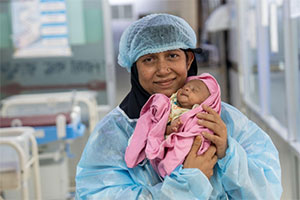 Bangladesh: Sarid, born one month early, receives specialized newborn care and grows stronger every day. Credit: UNICEF/UNI944397/Mojumder
Since the onset of the 2000s, global life expectancy has seen an overall rise, attributed to significant technological and scientific innovations in healthcare. Due to an increased understanding of different conditions as well as a rise in cooperation among healthcare experts around the world, there have been major strides made in ensuring that as few people die from chronic illnesses as possible. Despite the belief that healthcare is a fundamental human right, people from low- or middle-class backgrounds, marginalized groups, and underdeveloped countries have far more limited access to basic healthcare services.
The COVID-19 pandemic showed how marginalized communities are disproportionately affected by health crises, proving that we have much work to do in ensuring that no one dies of terminal conditions. While the global response to the coronavirus saw significant strides in immunization and vaccine development, the global outbreak of mpox in 2022 and its upsurge in parts of Africa in 2024 must remind us to remain vigilant.
Other major disease outbreaks in recent years have been linked to the destruction of infrastructure during warfare. Notably, in 2024, the Gaza Strip witnessed a return of the poliovirus since its eradication in the region 25 years ago. Israel’s blockade on Gaza has resulted in the collapse of the region’s sewage plants and desalination plants, and also destroyed healthcare capacities. The UN stated that this lack of clean water and sanitation would lead to an outbreak of cholera and other deadly infectious diseases. The 2026 OCHA Humanitarian Situation Report confirmed that the over two years of conflict in Gaza has produced a catastrophic health emergency, with millions remaining dependent on relief aid amid tight restrictions and no functioning public health system.
IPS is committed to providing full and comprehensive coverage on healthcare challenges around the world. IPS seeks to address the multifaceted causes of such challenges, including unprecedented pandemics, conflict-driven disease outbreaks, as well as socioeconomic barriers to equal healthcare access. IPS is also dedicated to reporting on innovations in the healthcare industry.

The Week with IPS

NEXT STOP - SDGs
Tracking global progress towards a sustainable world
Tracking global progress towards a sustainable world
