Languages
Tuesday, November 24, 2026



News and Views from the Global South
Development & Aid
All-Out War in Libya Predicted without Further Peace Talks
Libya is teetering on the edge of all-out war, with a brutal stalemate and misery for civilians predicted unless a recent minor diplomatic breakthrough can be built upon.
Despite U.N. Treaties, War Against Drugs a Losing Battle
As the call for the decriminalisation of drugs steadily picks up steam worldwide, a new study by a British charity concludes there has been no significant reduction in the global use of illicit drugs since the creation of three key U.N. anti-drug conventions, the first of which came into force over half a century ago.
Sometimes a Single Tree Is More Effective than a Government
Every morning, Raj Kumari Chaudhari walks from her home to the other end of Padnaha village, located in the Bardiya district of mid-west Nepal, to a big mango tree to offer prayers.
Families of ‘Desaparecidos’ Take Search into Their Own Hands
Carlos Trujillo refuses to give up, after years of tirelessly searching hospitals, morgues, prisons, cemeteries and clandestine graves in Mexico, looking for his four missing brothers.
Mobile Technology a Lever for Women’s Empowerment
Providing women with greater access to mobile technology could increase literacy, advance development and open up much-needed educational and employment opportunities, according to experts at the fourth United Nations’ Mobile Learning Week conference here.
Indigenous Storytelling in the Limelight
In recent years, the Berlin International Film Festival, known as the Berlinale, has established a European hub for indigenous voices across a number of platforms, including its NATIVe – A Journey into Indigenous Cinema series and Storytelling-Slams in which indigenous storytelling artists share their stories before opening the floor to contributions from the audience.Natural Disasters Cost Asia-Pacific 60 Billion Dollars, 6,000 Lives in 2014
Natural disasters in Asian and Pacific nations cost almost 60 billion dollars and killed 6,000 people in 2014.
Human Rights in Asia and the Pacific: A “Regressive” Trend, Says Amnesty International
The cradle of some of the world’s most ancient civilizations, home to four out of the planet’s six billion people, and a battleground for the earth’s remaining resources, Asia and the Pacific are poised to play a defining role in international affairs in the coming decade.
A New Forensic Weapon to Track Illegal Ivory Trade
The wildlife trade monitoring network, TRAFFIC, is deploying a new forensic weapon - DNA testing - to track illegal ivory products responsible for the slaughter of hundreds of endangered elephants in Asia and Africa.
Opinion: Water and the World We Want
We have entered a watershed year, a moment critical for humanity.
Better to Die at Sea, than Languish in Poverty
Weerasinghearachilage Ruwan Rangana had it all planned out last year in September: the big break that would change his life and those of his extended family had finally arrived.
Mega-Cities, Mortality and Migration
As the international community marks the 70th anniversary of the founding of the United Nations, one question worthy of some reflection is: Is world population better or worse off demographically since the establishment of the U.N.?
Falling Oil Prices Won’t Derail St. Lucia’s Push for Clean Energy
At Plas Kassav, a roadside outlet in Canaries, a rural community in western St. Lucia, a busload of visitors from other Caribbean countries, along with tourists from North America and Europe, sample the 12 flavours of freshly baked cassava bread on sale.
Big Trouble in the Air in India
Like many others of her age, 15-year-old Aastha Sharma, a Class 10 student at a private school in India’s capital, New Delhi, loves being outdoors, going for walks with her friends and enjoying an occasional ice-cream. But the young girl can't indulge in any of these activities.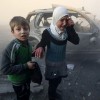
Syria’s “Barrel Bombs” Cause Human Devastation, Says Rights Group
The warring parties in the brutal four-year-old military conflict in Syria, which has claimed the lives of over 200,000 civilians and triggered “the greatest refugee crisis in modern times,” continue to break every single pledge held out to the United Nations.
Analysis: Collaboration Key for a Clean India
Prime Minister Narendra Modi’s call to action for a 100 percent Open Defecation Free (ODF) India by 2019 was announced as part of the Swachh Bharat Mission (SBM) or Clean India Campaign last year.
Tackling Corruption at its Root in Papua New Guinea
Corruption, the single largest obstacle to socioeconomic development worldwide, has had a grave impact on the southwest Pacific Island nation of Papua New Guinea. While mineral resource wealth drove high gross domestic product (GDP) growth of eight percent in 2012, the country is today ranked 157th out of 187 countries in terms of human development.
At the Margins of a Hot War, Somalis Are ‘Hanging on by a Thread’
After twin suicide bombings at a popular Mogadishu hotel last week that killed 25 and wounded 40, news reporters were seen swarming through the city, spotlighting the victims, the assassins, the motives and the official response.
Argentina Moves Towards Marriage of Convenience with China
The government of Argentina is building a marriage of convenience with China, which some see as uneven and others see as an indispensable alliance for a new level of insertion in the global economy.
Analysis: Economic Growth Is Not Enough
Recent new data show a worrying picture of Latin America and the Caribbean. Income poverty reduction has stagnated and the number of poor has risen — for the first time in a decade — according to recent figures from the Economic Commission for Latin America and the Caribbean.
Indigenous Food Systems Should Be on the Development Menu
Overcoming hunger and malnutrition in the 21st century no longer means simply increasing the quantity of available food but also the quality.« Previous Page — Next Page »


 2026 High-level Political Forum on Sustainable Development. Credit: UN Photo/Eskinder Debebe
In 2015, the United Nations and its Member States adopted the Sustainable Development Goals (SDGs) in an effort to make the world a more sustainable and peaceful place for future generations. Progress on the 17 SDGs has been uneven, and inequality persists across the globe. 10 years after adoption, the 2025 UN SDGs Report revealed that only 35% of the SDG targets are on track, with more than half moving too slowly, and 18% moving backwards from the 2015 baseline. Poverty remains one of the world’s most pressing issues, with hunger, violence, and inequality impeding the opportunities for all people to achieve success. In September 2024, the United Nations Summit of the Future introduced a new goal: to eradicate global poverty by 2030, ensure universal rights to basic services, and increase the overall standard of living in terms of industrialization, economic well-being, citizen health, and literacy. Furthermore, recent shifts in United States foreign aid policy – notably, major budget cuts to USAID and the termination of thousands of development programmes– have severely threatened vital lifelines of financial aid to impoverished communities around the world. Additionally, the United States’ withdrawal from the Paris Climate Agreement has undercut international efforts at sustainable development. With the upcoming 2030 deadline, the UN Secretary-General has called for urgent multilateralism across six priority areas: food systems, energy, digital connectivity, education, jobs and social protection, and climate and biodiversity. IPS sheds light on marginalized communities that struggle on a daily basis to survive and have their stories heard and respected.
Updated by Yilan Batista and Shuli Wong August 2026

The Week with IPS

NEXT STOP - SDGs
Tracking global progress towards a sustainable world
