Languages
Saturday, November 28, 2026



News and Views from the Global South
Development & Aid

Cuban Families Grapple with Migration Reform
Her voice is calm. She no longer has any question that her “destiny” is to live outside of Cuba. “My father is getting older every day. It’s time for me to help him,” the 27-year-old woman tells IPS, commenting on her plans to emigrate and become her family’s provider.
Injured Struggle in the Sahara
Safia’s six-year-old body is riddled with scars from the rocket that hit her home in February. With her immediate family all killed in the violent attack, this sole survivor smiles shyly as she visits the medics that fought to save her life.
The Face of Food Security Is Female
In a major endorsement for investment in women - the bulk of food growers in the developing world - United Nations Secretary General Ban Ki-moon said food security could not be achieved without women, and that the world's hungry also needed leaders to prioritise actions.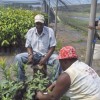
Amid Food Crisis, Caribbean Agriculture Going to Seed
With the average age of a farmer in the Caribbean now 62 years old, there is growing concern that commercial agriculture is on a path to extinction – a dire scenario for a region already shouldering a massive food import bill.
Brazil Frustrated with European “Backtracking” on IMF Reforms
In the aftermath of last week’s elections to the International Monetary Fund (IMF)’s executive board, Brazil and others are expressing frustration that a reforms process aimed at increasing the representation of developing countries is being stymied by European countries.Argentina – Fighting the Worst Child Obesity Rate in the Region
Pediatricians and nutritionists stress that there is no single factor explaining why Argentina is the country in Latin America with the highest rate of obese and overweight children.
Cooperatives Help Women Farmers Tighten Ranks
It is a tried and tested truth that when women come together in groups they can address their issues more powerfully than they can as individuals.
‘Urban Planning Must Factor in Biodiversity’
“With more than 60 percent of the world projected to be urban by 2030 why not prepare for it and build cities that include biodiversity preservation into planning?” asks Kobie Brand of ICLEI Local Governments for Sustainability in Cape Town, South Africa.
Tibetan Exiles Report High Rates of Hepatitis B
As the Central Tibetan Administration (CTA) works to address some of its more immediate political problems, long-term public health issues have emerged, including high rates of hepatitis B among the exiled community.
Violence Against Women Surging in India
As gender-based violence across India becomes more frequent, and more savage, increasing numbers of women are speaking out against the cruelty.Shale Gas Extraction Brings Local Health Impacts
Shale gas extraction is putting some U.S. communities at risk of health issues, new research released here Thursday warns.
Shadow Over Aichi Biodiversity Targets
With negotiations to mobilise resources for preservation of biodiversity at a major United Nations conference going nowhere, the Group of 77 and China have hinted at possible suspension of the ‘Aichi targets’ under the Nagoya Protocol.AZERBAIJAN: Baku Mulls “Green Tax” on Corporate Polluters
Azerbaijani officials appear to buy into the idea that taxation policy can be an effective way of managing the environment.
Agricultural Waste Boosts Energy Production in Argentina
A joint project by the energy and agriculture authorities in Argentina is seeking to boost electricity generation from forestry waste and other rural products which have enormous potential, according to experts.
Senegal Finds the Cooperative Way to More Food
Over the past two years, millet production has reached record levels in Dya, a rural community in the Kaolack region of central Senegal, where the Agricultural Value Chains Support Project (PAFA) is supporting two farmers' collectives.
Three Years of Peace But No Sign of Prosperity
Mamaduwa, a remote village in Sri Lanka’s northern Vavuniya district where scorching winds blow across parched earth, is trying to forget the past.
Poverty Sparks New Unrest in Egypt
Ahmed Hassanein works in a modern factory in an industrial enclave west of Cairo. He wears a neatly pressed uniform and operates precision calibrated machinery on a line that produces components for foreign-brand passenger vehicles.
Women’s Groups Say Uruguay’s New Abortion Law Falls Short
The Uruguayan Congress passed a law Wednesday decriminalising abortion, making it one of the few countries in the region where abortion is allowed in cases other than rape, incest, malformation of the fetus or danger to the mother’s life. But activists who backed the bill are not pleased with modifications introduced in the final version.
India to Conserve Biodiversity at Grassroots
India’s National Biodiversity Authority (NBA) is actively promoting decentralised grassroots livelihoods as the best way to conserve biodiversity as mandated by the Nagoya Protocol on access and benefit sharing (ABS).
In TB Fight, It’s ‘Pay Now or Pay Later’
The next several years could see either the elimination of tuberculosis in some regions or millions of otherwise preventable deaths, according to new research released in Washington Wednesday by the World health Organisation (WHO).U.N. Envoy Warns of Syria Crisis Spillover
Syria's 19-month conflict can set the entire region ablaze, international peace envoy Lakhdar Brahimi has told reporters in Lebanon.« Previous Page — Next Page »


 2026 High-level Political Forum on Sustainable Development. Credit: UN Photo/Eskinder Debebe
In 2015, the United Nations and its Member States adopted the Sustainable Development Goals (SDGs) in an effort to make the world a more sustainable and peaceful place for future generations. Progress on the 17 SDGs has been uneven, and inequality persists across the globe. 10 years after adoption, the 2025 UN SDGs Report revealed that only 35% of the SDG targets are on track, with more than half moving too slowly, and 18% moving backwards from the 2015 baseline. Poverty remains one of the world’s most pressing issues, with hunger, violence, and inequality impeding the opportunities for all people to achieve success. In September 2024, the United Nations Summit of the Future introduced a new goal: to eradicate global poverty by 2030, ensure universal rights to basic services, and increase the overall standard of living in terms of industrialization, economic well-being, citizen health, and literacy. Furthermore, recent shifts in United States foreign aid policy – notably, major budget cuts to USAID and the termination of thousands of development programmes– have severely threatened vital lifelines of financial aid to impoverished communities around the world. Additionally, the United States’ withdrawal from the Paris Climate Agreement has undercut international efforts at sustainable development. With the upcoming 2030 deadline, the UN Secretary-General has called for urgent multilateralism across six priority areas: food systems, energy, digital connectivity, education, jobs and social protection, and climate and biodiversity. IPS sheds light on marginalized communities that struggle on a daily basis to survive and have their stories heard and respected.
Updated by Yilan Batista and Shuli Wong August 2026

The Week with IPS

NEXT STOP - SDGs
Tracking global progress towards a sustainable world
