Languages
Sunday, November 29, 2026



News and Views from the Global South
Development & Aid

Acid Survivors Fight Back: A Story of Hope Amidst Despair
When the Oscar-nominated film "Saving Face" won an Academy Award in Hollywood for Best Documentary (Short Subject), it was the triumph of several "firsts": the first time ever that a Pakistani filmmaker had won an Oscar; Pakistan's first Oscar winner was a woman; and it was the first time that an American and a Pakistani had co-directed an Oscar-winning film.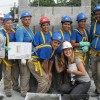
Brazilian Women Are the World’s Happiest
Money may not buy happiness – but it has helped make women in Brazil become the happiest, most optimistic women in the world, according to a study.
Q&A: How to Analyse a Budget’s Impact on Female Empowerment
Tools such as "gender markers", which screen budgets and resources dedicated to promoting gender equality, are proving critical to improving the effectiveness of monetary support that seeks to empower women and girls.
PHILIPPINES: Women Weather Climate Change
As the world commemorates International Women’s Day today, women around the globe are speaking out on various issues that affect them. In light of recent natural disasters and calamities in the Philippines, women are increasingly citing climate change as one of their most pressing concerns.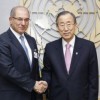
Syria’s Chemical Weapons Trigger New Threats in War Zone
As the besieged government of President Bashar al-Assad continues to violently suppress the warring political opposition in Syria, the United Nations has expressed "concern" over reports "on the possible existence of chemical weapons" in the embattled Middle Eastern country.
CHILE: Promoting Women’s Empowerment on Two Wheels
What does riding a bike have to do with women’s rights? According to the Chilean feminist group Macleta, which promotes cycling and a gender perspective on public transport, a bicycle is a powerful tool for social change.Thai Province Shows the Green Way
As fingers of morning light slip through the mango and banana orchards of his village, Suchin Utanarat heads out in a boat to net a fresh catch from the nearby canals teeming with shrimp.
Following the Money Trail in Gender Financing
Promising methods of tracking aid funding intended to improve women's and girls' livelihoods also offer the possibility of revealing whether donors and policymakers are walking the walk when it comes to gender financing.
French Alternative Water Forum Says ‘No’ to Privatisation
Back in 2001, Gérard Mestrallet, CEO of the transnational water giant GDF- Suez, highlighted his company’s "commitment to fight for better access" to safe water and sanitation throughout the world, in order to put an end to all deadly water-borne diseases, from children’s diarrhoea to parasitic diseases to dysentery.
Protesters Lift Roadblocks in Southern Chile
Leaders of the protests in Aysén decided to end the roadblocks that had paralysed this southern region of Chile for more than three weeks, and the government promised to "immediately" resume talks to defuse the conflict.
Temporary Toilets Threaten Permanent Damage in Haiti – Part 2
Complete with gallery and garden, the 534 wood and plasterboard houses are arranged in neat rows on a gravel plot of former sugarcane land northwest of the capital.
Money for Cleaning Toilets in Haiti Down the Drain? – Part 1
The drawdown of hundreds of non-governmental organisations which have been in Haiti since the disastrous 2010 earthquake was inevitable. But with their departure, so too goes their purse and the millions earmarked for cleaning latrines.
Brazil to Open Doors to Skilled Immigrants, Slam Shut to Others
In designing a new immigration policy, Brazil is caught between the need to attract skilled workers and professionals in order to meet the challenges posed by economic growth, and its tradition of taking in immigrants for humanitarian reasons.
Green Economy Seeks to Maintain Growth Threatened by Disasters
There is every indication that major disasters could be the new midwives of history. Seeking to prevent them, the green economy aims to reduce "environmental risks" and "ecological scarcities" while improving human well-being and social equity.Japanese Women Empowered By Tohoku Quake
Devastating as the Tohoku earthquake was it gave the local women of the remote region an opportunity to come into their own and take on leadership roles in an essentially patriarchal country.Green Credit Scarce in Latin America
In Latin America, where bank loans for environmentally sustainable activities are rare, the United Nations Environment Programme (UNEP) is seeking to foment green credit.Green Credit Scarce in Latin America
In Latin America, where bank loans for environmentally sustainable activities are rare, the United Nations Environment Programme (UNEP) is seeking to foment green credit.Poverty Encourages Early Marriages in Tajikistan
When she was 16, Kibriyo Khaitova’s parents told her that if she didn’t marry, she’d soon be a spinster. So, like many girls from Tajikistan, Khaitova married a man her family found for her. Now 20, she has two children, no husband and is fending for herself.Malaysians Fight Radioactive Waste From Oz
Malaysians protesting against an Australian-owned rare earth refinery, that will generate radioactive waste, are determined to agitate until the project is abandoned.Could Europe’s Anti-Counterfeiting Pact be a “Pandora’s Box” of Rights Violations?
Foggy details surrounding Europe’s anti-counterfeiting trade agreement (ACTA) have divided pubic opinion, with activists on one end of the spectrum claiming it to be the end of Internet freedom and the generic drug market, while proponents continue to defend the act as a "modest" agreement to protect Europe’s intellectual property.
Mesoamerican Coral Reef on the Way to Becoming a Marine Desert
Scientific studies show that global warming is causing irreversible damage to the Mesoamerican Barrier Reef System, the world’s second largest coral reef, yet efforts to protect this biologically and economically vital ecosystem remain insufficient.« Previous Page — Next Page »


 2026 High-level Political Forum on Sustainable Development. Credit: UN Photo/Eskinder Debebe
In 2015, the United Nations and its Member States adopted the Sustainable Development Goals (SDGs) in an effort to make the world a more sustainable and peaceful place for future generations. Progress on the 17 SDGs has been uneven, and inequality persists across the globe. 10 years after adoption, the 2025 UN SDGs Report revealed that only 35% of the SDG targets are on track, with more than half moving too slowly, and 18% moving backwards from the 2015 baseline. Poverty remains one of the world’s most pressing issues, with hunger, violence, and inequality impeding the opportunities for all people to achieve success. In September 2024, the United Nations Summit of the Future introduced a new goal: to eradicate global poverty by 2030, ensure universal rights to basic services, and increase the overall standard of living in terms of industrialization, economic well-being, citizen health, and literacy. Furthermore, recent shifts in United States foreign aid policy – notably, major budget cuts to USAID and the termination of thousands of development programmes– have severely threatened vital lifelines of financial aid to impoverished communities around the world. Additionally, the United States’ withdrawal from the Paris Climate Agreement has undercut international efforts at sustainable development. With the upcoming 2030 deadline, the UN Secretary-General has called for urgent multilateralism across six priority areas: food systems, energy, digital connectivity, education, jobs and social protection, and climate and biodiversity. IPS sheds light on marginalized communities that struggle on a daily basis to survive and have their stories heard and respected.
Updated by Yilan Batista and Shuli Wong August 2026

The Week with IPS

NEXT STOP - SDGs
Tracking global progress towards a sustainable world
