Languages
Thursday, October 22, 2026



News and Views from the Global South
Population

Concern over Profit-Oriented Approach to Biodiversity in Latin America
In July 2015, the Mexican government granted a U.S. corporation permission for the use of genetic material obtained in Mexican territory for commercial and non-commercial purposes, in one of the cases that has fuelled concern in Latin America about the profit-oriented approach to biodiversity.
India’s New Maternity Benefits Act Criticised as Elitist
The passage of the landmark Maternity Benefits Act 1961 by the Indian Parliament, which mandates 26 weeks of paid leave for mothers as against the existing 12, has generated more heartburn than hurrahs due to its skewed nature.
The Time is Ripe to Act against Drought
Let us start with some good news. Sort of. The strongest El Niño in 35 years is coming to an end. [1]
Olympic Games – More Media Show than Sports Event
Brazil’s first gold medal of the Rio de Janeiro Olympics gave it a new multipurpose heroine, Rafaela Silva, whose defeat of the favourites in judo has made her a strong voice against racism and homophobia. Not only is she black and poor, but she just came out as gay.
Humanitarian Crises: Business Called to Take a Lead
With more than 65 million people forced to flee their homes due to violence and armed conflicts, this year’s Wold Humanitarian Day on August 19 will call on all governments and social sectors to work together to tackle this unprecedented human crisis.
Dhaka Could Be Underwater in a Decade
Like many other fast-growing megacities, the Bangladeshi capital of Dhaka faces severe water and sanitation problems, chiefly the annual flooding during monsoon season due to unplanned urbanisation, destruction of wetlands and poor city governance.
Arable Lands Lost at Unprecedented Rate: 33,000 Hectares… a Day!
Humankind is a witness every single day to a new, unprecedented challenge. One of them is the very fact that the world's arable lands are being lost at 30 to 35 times the historical rate. Each year, 12 million hectares are lost. That means 33,000 hectares a day!
Peruvians Say “No!” to Violence Against Women
Peruvians took to the streets en masse to reject violence against women, in what was seen as a major new step in awareness-raising in the country that ranks third in the world in terms of domestic sexual violence.
One Humanity? Millions of Children Tortured, Smuggled, Abused, Enslaved
Children are being smuggled, sexually abused, maimed, killed for their vital organs, recruited as soldiers or otherwise enslaved. Not only: 69 million children under five will die from mostly preventable causes, 167 million will live in poverty, and 263 million are out of school. And 750 million women will have been married as children by 2030.
Women’s Inclusion in Sports Competes in Rio Games
At the age of 14, Kaillana de Oliveira of Brazil knows she won’t be as tall as most professional basketball players, because of family genetics. But she is not letting that get in the way of her dream of standing out in the sport.
War on Climate Terror (II): Fleeing Disasters, Escaping Drought, Migrating
"No one can deny the terrible similarities between those running from the threat of guns and those fleeing creeping desertification, water shortages, floods and hurricanes.”
False Promises: Avoid ‘Miracle’ Rice and Just Eat a Carrot
Norman Borlaug, father of the Green Revolution, died on September 9, 2009. Alfred G. Gilman died on December 23, 2015. Both were Nobel laureates and now both dead. Gilman was a signatory to a recent letter condemning Greenpeace and its opposition to genetic engineering.
The UN Steps up Efforts to End Child Marriage
Barely 17 years old and from the Gajapati district in Odisha, India, Susmita has never gone to school. She rears the few animals her family owns, and this is her primary duty besides attending to household chores.
Native Plants Boost Local Diets in El Salvador
Juana Morales is cooking one of the most popular dishes in El Salvador: pupusas, corn tortillas with different fillings. But hers are unique: they are not made with the traditional corn tortillas, but use Maya nuts, a highly nutritional seed that has fallen out of use but whose consumption is being encouraged in rural communities.
War on Climate Terror (I): Deserts Bury Two Thirds of African Lands
Two-thirds of the African continent is already desert or dry-lands. But while this vast extension of the second largest continent on Earth after Asia is “vital” for agriculture and food production, nearly three-fourths of it is estimated to be degraded to varying degrees.
African Farmers Can Feed the World, If Only…
Can African farmers feed the world?. Apparently the answer is “yes.” Bold as it may sound, this statement is based on specific facts: Africa is home to 60-65 per cent of the world’s uncultivated arable land and 10 per cent of renewable freshwater resources, and it has registered a 160 per cent increase in agricultural output over the past 30 years.
The Historic Reversal of Populations
It first happened in Italy in 1995. Five years later it happened in six additional countries, Bulgaria, Germany, Greece, Japan, Portugal and Spain. Today the total number of countries where it has occurred stands at 30, including most members of the European Union. In fifteen years that number is expected to nearly double and include Australia, Canada, China, Russia, South Korea and the United States (Table 1).
Pan African Parliament Endorses Ban on FGM
After years of wrangling and debates among African leaders, the movement to end female genital mutilation (FGM) is gaining real momentum, with a new action plan signed this week by Pan African Parliament (PAP) representatives and the U.N. Population Fund (UNFPA) to end FGM as well as underage marriage.
“Non-lethal” Pellet Guns Maim Hundreds in Kashmiri Protests
Hospitals in Kashmir’s summer capital are packed to capacity these days, their wards overflowing with pellet gun victims injured during violent clashes with government forces.
Right to Education Still Elusive for Native People in Latin America
Education, the most powerful instrument in the struggle against exclusion and discrimination, is still elusive for indigenous people in Latin America who remain the most disadvantaged segment of the population despite their wide presence in the region.
Climate-Smart Agriculture for Drought-Stricken Madagascar
Mirantsoa Faniry Rakotomalala is different from most farmers in the Greater South of Madagascar, who are devastated after losing an estimated 80 percent of their crops during the recent May/June harvesting season to the ongoing drought here, said to be the most severe in 35 years.« Previous Page — Next Page »





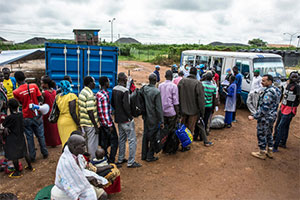 One Thousand Internally Displaced Persons (IDPs) Relocated from Tomping Camp in South Sudan. Credit: UN Photo/Isaac Billy
It took hundreds of thousands of years for the world’s human population to cross one billion in 1804. Approximately 200 years later, the population has multiplied sevenfold. In 2023, the global population crossed 8 billion, and is expected to reach 9 billion before 2050. With the planet more crowded than ever, it is essential to keep track of population trends, urbanization, migration, and reproduction across the world.
Life expectancy has seen significant strides in the past century, largely due to economic development and increased standards of living. On the contrary, trends in global fertility are shifting, with certain regions in Africa and Asia reporting higher rates, while parts of Europe and North America report stagnant or lower rates. This is in part due to differences in sexual and reproductive healthcare, as well as societal and economic conditions around the world. For example, child marriage is prevalent in certain societies, where childbearing is also considered a familial duty. Meanwhile, stagnating economies frequently experience lower marriage and childbearing rates.
The increase in migration and urban development around the world is also linked to global population trends. By 2050, it is expected that approximately 66 percent of all people will live in cities. Furthermore, global crises such as warfare and natural disasters also prompt transnational migration. Transnational migration is linked to a variety of socioeconomic issues in both host and receiving countries: migrants often leave developing countries with less access to educational and economic opportunities and arrive in developed countries where they are frequently the targets of ethnic, racial, and cultural discrimination, and economic exploitation. Recent crises in Europe and the United States demonstrate the importance of advocating for migrants worldwide. As migrants from the Global South are increasingly stripped of their legal and civic rights in unlawful deportations, or targeted in acts of identity-based violence, it is essential to keep track of population trends and protect the human rights of migrant populations. Climate-related disasters are now a major driver of displacement, with nearly half of all new internal displacements in 2025 being disaster-related.
IPS is devoted to covering issues surrounding population trends, migration, and reproduction through its compelling articles, which use both statistics and human stories to provide readers with robust and informative viewpoints.

The Week with IPS

NEXT STOP - SDGs
Tracking global progress towards a sustainable world
Tracking global progress towards a sustainable world
