Languages
Monday, November 9, 2026



News and Views from the Global South
Poverty & SDGs

1 in 4 Children Worldwide Facing Extremely Scarce Water by 2040
Warning that as many as 600 million children – one in four worldwide – will be living in areas with extremely scarce water by 2040, the United Nations children's agency has called on governments to take immediate measures to curb the impact on the lives of children.
Menstrual Hygiene Project Keeps Girls in School
Breaking taboos surrounding menstruation, a project to distribute sanitary napkins to girls in one district of Bangladesh has had a positive impact on school dropout rates – and should be replicated in other parts of the country, experts say.
Local Solutions to Rebuild Oldest Cuban City in Hurricane Matthew’s Wake
Clearings with fallen trees in the surrounding forests, houses still covered with tarpaulins and workers repairing the damage on the steep La Farola highway are lingering evidence of the impact of Hurricane Matthew four months ago, in the first city built by the Spanish conquistadors in Cuba.
Disabled Caribbeans Find Freedom in Technology
Visually impaired Kerryn Gunness is excited about the possibilities offered by a new free app that would serve as his eyes and enable people like him to enjoy greater independence.
New Approach Needed for Peace in Afghanistan
When the United States went to war in Afghanistan in 2001, the Taliban’s despicable treatment of women was cited by First Lady Laura Bush as one of the main reasons for going to war. Yet, since that regime fell 15 years ago, the Afghan government has neither included women in the peacebuilding process, nor has it stemmed the endemic rate of violence against them.
Civil Society Representatives: “Water is the Foundation of our Life”
“Water is life”—a slogan that arose from the anti-Dakota Access Pipeline movement is one that resonates not only in the U.S., but around the world as millions still lack access to clean, safe water.
Climate Breaks All Records: Hottest Year, Lowest Ice, Highest Sea Level
Climate has, once more, broken all records, with the year 2016 making history-highest-ever global temperature, exceptionally low sea ice, unabated sea level rise and ocean heat. And what is even worse-- extreme and unusual trends continue in 2017.
Sanitation ‘Revolution’: A New Pay-Monthly Poop Removal System
Developing countries struggling to cope with huge volumes of human waste may finally get some relief, and a new business opportunity.
Don’t Understand Clouds? But You Should!
Obviously, there are so many issues and phenomena that have been brought up by growing impact of climate change that one would likely not think about. Some of them, however, are essential and would be good to learn about. For instance, the fact that clouds play a "pivotal role" in weather forecasts and warnings.
Investing in Zimbabwe’s Smallholder Farmers
To take his mangoes to Shurugwi, 230 kms south of Harare, requires Edward Madzokere to hire a cart and wake up at dawn. The fruit farmer sells his produce at the nearest “growth point” at Tongogara (the term for areas targeted for development) where the prices are not stable.
Discrimination Compounds Global Inequality: UN Report
Despite 25 years of impressive global development, many people are not benefiting from progress due to persistent discrimination, according to a UN report released Tuesday.
Water, the Great Enabler
I listened to a Haitian farmer share solutions with neighbouring water users on how best to allocate scarce water resources. I learned about the resolution of inter-village water conflicts after sitting in a longboat for hours on the Ganges Delta in Bangladesh. On the dry floodplains of Ethiopia, I heard how local solutions benefitted women and outperformed ‘imported’ ones.
Cities: a Hub for Wastewater Innovation
Water is a finite resource. With a growing population, an expanding global middle class and a rise in energy and industrial production, the demand for water is reaching new levels. According to the OECD, global demand for freshwater will increase by 55 percent between 2000 and 2050. By 2050 it is expected that roughly 6.4 billion people will live in cities, making urban water management an essential building block for resilience and sustainable growth.
No Water, No Life – Don’t Waste It!
During the final exams of Spanish official high school of journalists, a student was asked by the panel of professors-examiners: If scientists discover that there is water in Planet Mars, how would you announce this news, what would be your title? The student did not hesitate a second: “There is life in Mars!” The student was graduated with the highest score.
Asia’s Water Politics Near the Boiling Point
In Asia, it likely will not be straightforward water wars.
Three Times as Many Mobile Phones as Toilets in Africa
Though key to good health and economic wellbeing, water and sanitation remain less of a development priority in Africa, where high costs and poor policy implementation constrain getting clean water and flush toilets to millions.
Fishing Villages Work for Food Security in El Salvador
After an exhausting morning digging clams out of the mud of the mangroves, Rosa Herrera, her face tanned by the sun, arrives at this beach in southeastern El Salvador on board the motorboat Topacio, carrying her yield on her shoulders.
Smiling Towards Development
Previous indications of national prosperity have focused on income, poverty, health and, above all, Gross Domestic Product, but on March 20th, World Happiness Day commemorates what is perhaps becoming the new way to measure welfare: happiness.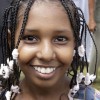
Oh Happy Day!
Once a year, there is a day when the seven billion inhabitants of Planet Earth should feel happy or at least are encouraged to do so--the World Happiness Day, which is marked every year on March 20. So far, so good.
From Barriers to Bridges: Transformation of the Kenya-Ethiopia Border Region
Consider this. The communities around the Kenya-Ethiopia border in Moyale-Borona area, have long been associated with internecine violence, extreme poverty, and environmental stress. These have led to disastrous societal consequences, including displacement, criminality and violent extremism.
Caribbean Stakes Future on Climate-Smart Agriculture
As Caribbean Community (CARICOM) countries continue to build on the momentum of the 2015 Paris Climate Agreement and the 22nd Conference of the Parties (COP22) of the United Nations Framework Convention on Climate Change (UNFCCC) in Marrakech in 2016, special emphasis is being placed on agriculture as outlined in their Intended Nationally Determined Contributions (INDCs).« Previous Page — Next Page »





 Romani people in Cairo, Egypt, forage through trash. Credit: UN Photo/Armineh Johannes
In 2015, the United Nations adopted the Sustainable Development Goals (SDGs) in an effort to promote “peace and prosperity for people and the planet.” To achieve that goal, it is essential to provide equal opportunities and access to basic services to all people. The 2025 UN SDG Report found that 35% of the 169 SDG targets are on track or making moderate progress, while 18% have reversed compared to the 2025 baseline. One in ten people still live in extreme poverty, one in eleven experience food insecurity, and over 1.1 billion people live in slums without access to clean water and sanitation. It is imperative to acknowledge the societal, technological, economic, and political issues that sustain poverty in countries around the world. Eradicating poverty will require significant frameworks in policy and governance on a national and international scale to ensure that all people will have equal access to basic services and economic opportunities by 2030. Furthermore, a dramatic reduction of United States foreign aid in 2025, including the termination of 83% of USAID programmes, threatens to erode years of fragile development gains.
Throughout the world, violent conflict and natural disasters also contribute to extreme poverty. The complete destruction of infrastructure and blockage of aid has significantly impoverished Palestine since October 7th. The destructive impact of Hurricane Maria in Puerto Rico left $91 billion in damage. An inadequate US government response also revealed significant and enduring questions within the issue of mitigating poverty: how do we rebuild infrastructure after its destruction? How do we restimulate economic development and bring in financial aid after disasters? Similar questions have been raised in the realm of regional cooperation, as devastating floods have wrecked hundreds of thousands of homes across multiple Southeast Asian nations in the past few years. Furthermore, the COVID-19 pandemic has greatly exacerbated the global poverty crisis, particularly in developing countries, setting back the United Nations goal of eradicating poverty by 2030.
IPS is committed to providing comprehensive features that focus on the persisting environmental, sociopolitical, and systemic issues that sustain poverty, and the steps taken worldwide towards poverty eradication.

The Week with IPS

NEXT STOP - SDGs
Tracking global progress towards a sustainable world
Tracking global progress towards a sustainable world

