Languages
Tuesday, October 20, 2026



News and Views from the Global South
Poverty & SDGs
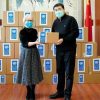
Omicron-led Surge Tests China’s Zero Covid Policy
When the Covid- 19 pandemic first broke out in Wuhan in 2020, no one imagined that it would wreak havoc on such a large scale. With over 6.2 million lives lost, countless infected and new variants emerging, the pandemic is still raging all around the world.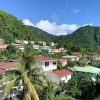
English and Dutch Caribbean Rally Around UN Sustainable Development Framework
When Dominica signed on to the United Nations Multicountry Sustainable Development Framework for the English and Dutch Speaking Caribbean (MSDCF) in March, the country joined others like Saint Lucia, St. Vincent, and the Grenadines, Suriname, and Aruba as part of a 5-year framework to plan and implement UN development initiatives.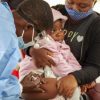
Commitment to African Medicines Agency Needs More Than Words
Across Africa, local manufacturing and pharmaceutical companies are responding to the urgent need for locally produced medical products and technologies despite the existing regulatory challenges. We can support manufacturing capacity by expediting the establishment and operationalisation of the African Medicines Agency (AMA).
INDIA: Healthcare Inequities Exposed by COVID-19 Pandemic
Public health specialists say that an ongoing wrangle between the Indian government and the World Health Organization (WHO) over the COVID-19 death toll in this country is symptomatic of a long-ailing public health delivery system.
Breaking Vicious Cycle of Trafficking for Sexual Exploitation
Desperate to escape the rural area where she was engaged in the informal economy in Kayonza, a district in Eastern Rwanda, Sharon* made a long and arduous journey to Kenya in the hope of a well-paid job.
Government Ministries Must Collaborate to End Teenage Pregnancy Crisis in Kenya
The Ministry of Health in Kenya recently reported there were 45,754 cases of adolescent pregnancies between January and February this year - that translates to 700 cases a day. Of the total number, at least 2000 of these cases resulted from sexual and gender based violence (SGBV), a figure which is likely lower than the reality.
Biodiversity: Indigenous Peoples, the Last Custodians
Every now and then, experts remind that the Indigenous Peoples are the best (and last?) custodians of the essential web of life: biodiversity.
UN Aims at People-Centered Governance in a Post-Pandemic World
The recently disseminated Zero Draft Ministerial Declaration of the High-Level Political Forum on Sustainable Development (HLPF)-- the main UN event to track the member states’ progress to achieve the Agenda 2030 slated to be held in the first half of July-- is a disappointment.
Boosting Food Security and Education in Schools in Brazil
"I like lettuce, but not tomatoes and cucumbers," said nine-year-old Paulo Henrique da Silva de Jesus, a third grader at the João Baptista Caffaro Municipal School in the southeastern Brazilian city of Itaboraí.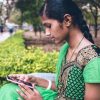
Digital Mentorship: The Key to Women’s Labour Force Participation in India?
Today, approximately 19 million young women are accessing post-secondary or tertiary education in India. Yet, such education has not translated into expected gains in female labour force participation. Only 34 percent of women in India with post-secondary education are active in the labour force, compared to 81 percent of men.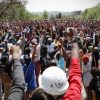
Democracy Loses Its Glow for South Africans Amid Persistent Inequality
South Africans believed that the introduction of democracy in 1994 would transform their lives for the better through equality of opportunities. This hasn’t happened.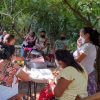
Indigenous Women in Mexico Take United Stance Against Inequality
Every other Tuesday at 5:00 p.m. sharp, a group of 26 Mexican women meet for an hour to discuss the progress of their work and immediate tasks. Anyone who arrives late must pay a fine of about 25 cents on the dollar.
Earth Day to Earth Disaster
Since the first Earth Day observed on 22 April 1970, world conditions have worsened greatly across three critically interrelated global dimensions that portend a disastrous future for life on planet Earth.
Earth Day is a Time to Reflect on What It Means to Invest in Our Planet
Around the world, Earth Day 2022 is being celebrated. The theme this year is “Invest in Our Planet”. To mark the day, activities such as planting trees, protests, marches, cleaning up litter, and conferences will be held to highlight the importance of investing and taking care of our planet.
Europe Sweeps Away More Refugees, Asylum Seekers – Part II: Hungary, Poland
Part I of this two-part series focused on the cases of the United Kingdom and Greece. This article will deal with how Hungary has been criminalising organisations that provide humanitarian assistance to migrants, and how Poland 'arbitrarily’ detains thousands of asylum seekers.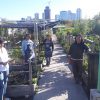
Women in Argentina Cultivate Dignity in Cooperative Vegetable Garden
The space consists of just 300 square meters full of green where there is an agro-ecological vegetable garden and nursery, which are the work and dream of 14 women. Behind it can be seen the imposing silhouettes of the high rises that are a symbol of the most modern and sought-after part of Argentina's capital city.
Europe Sweeps Away More Refugees, Asylum Seekers – Part I: UK, Greece
In what looks pretty much like an ‘operation clean sweep’ aiming at getting rid of more and more migrants, refugees and asylum seekers by shipping them far away, the process of ‘externalisation’ of millions of victims of wars, poverty, climate crisis and political persecution, is now growing fast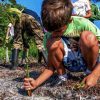
The Suicidal War on Nature Continues Unabated – International Mother Earth Day
The gloomy picture is drawn from indisputable scientific conclusions and should be already known by everybody, in particular by decision-makers, whether they are politicians… or rather not.
The Myth of Development by Privatisation
Oxfam’s report ‘Inequality Kills 2022’ and its India supplement (hereafter referred to as the report) revealed some shocking facts about the growing gap between the rich and poor. India, which has the third highest number of billionaires in the world, endured one of the longest-lasting COVID-induced lockdowns in 2020. Yet, the same year, the top 10 percent of India held close to 45 percent of the country’s total national wealth.
High Cost of Debt is Crippling Developing Nations: How can we Bridge the Finance Divide?
As the world is rocked by a confluence of crises, the global economic outlook for 2022 is becoming ever more uncertain and fragile. Prospects for sustainable development for all and achieving the Sustainable Development Goals (SDGs) by 2030 are bleak, particularly for developing countries.
War in Ukraine & Rise in Arms Spending Undermine Development Aid to the World’s Poor
The unprecedented flow of arms to Ukraine, and the rising miliary spending by European nations to strengthen their defenses, are threatening to undermine development aid to the world’s poorer nations.« Previous Page — Next Page »





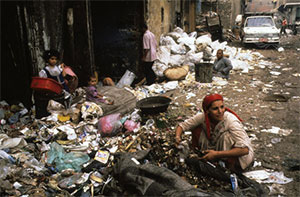 Romani people in Cairo, Egypt, forage through trash. Credit: UN Photo/Armineh Johannes
In 2015, the United Nations adopted the Sustainable Development Goals (SDGs) in an effort to promote “peace and prosperity for people and the planet.” To achieve that goal, it is essential to provide equal opportunities and access to basic services to all people. The 2025 UN SDG Report found that 35% of the 169 SDG targets are on track or making moderate progress, while 18% have reversed compared to the 2025 baseline. One in ten people still live in extreme poverty, one in eleven experience food insecurity, and over 1.1 billion people live in slums without access to clean water and sanitation. It is imperative to acknowledge the societal, technological, economic, and political issues that sustain poverty in countries around the world. Eradicating poverty will require significant frameworks in policy and governance on a national and international scale to ensure that all people will have equal access to basic services and economic opportunities by 2030. Furthermore, a dramatic reduction of United States foreign aid in 2025, including the termination of 83% of USAID programmes, threatens to erode years of fragile development gains.
Throughout the world, violent conflict and natural disasters also contribute to extreme poverty. The complete destruction of infrastructure and blockage of aid has significantly impoverished Palestine since October 7th. The destructive impact of Hurricane Maria in Puerto Rico left $91 billion in damage. An inadequate US government response also revealed significant and enduring questions within the issue of mitigating poverty: how do we rebuild infrastructure after its destruction? How do we restimulate economic development and bring in financial aid after disasters? Similar questions have been raised in the realm of regional cooperation, as devastating floods have wrecked hundreds of thousands of homes across multiple Southeast Asian nations in the past few years. Furthermore, the COVID-19 pandemic has greatly exacerbated the global poverty crisis, particularly in developing countries, setting back the United Nations goal of eradicating poverty by 2030.
IPS is committed to providing comprehensive features that focus on the persisting environmental, sociopolitical, and systemic issues that sustain poverty, and the steps taken worldwide towards poverty eradication.

The Week with IPS

NEXT STOP - SDGs
Tracking global progress towards a sustainable world
Tracking global progress towards a sustainable world

