Languages
Wednesday, October 14, 2026



News and Views from the Global South
Poverty & SDGs

Africa Expected to Strongly Support Durban Call to Action on Child Labour
Global goals to eradicate child labour will not be achieved without a breakthrough in Africa, where most of the world’s 160 million children entrapped in child labour work in rural regions, mostly in agriculture with their families.
From Child Laborer to Activist, Tara Banjara Asks World to Pledge to End the Scourge
Tara Banjara was four and a half years old when her parents put her to work on the roads, cleaning the garbage and rubble out of potholes to prepare for construction in Nemdi village, Rajasthan, India. She worked in the wind, cold, and rain with her mother, day in and day out, year in and year out. She would return home shattered, too exhausted to eat before falling asleep each night.
Child Labour: No Quick End to Children Trapped in Tobacco Production
Despite World Day Against Child Labour launched in 2002 by the International Labour Organization (ILO), little has changed over the past two decades for the millions of children who remain trapped.
It’s Time To Globalise Compassion, Says Nobel Laureate Kailash Satyarthi
A mere 53 billion US dollars per annum – equivalent to 10 days of military spending – would ensure all children in all countries benefit from social protection, Nobel Laureate Kailash Satyarthi told the 5th Global Conference on the Elimination of Child Labour.
Massive Deforestation in the Congo Basin Will Lead to Poverty
Growing up amid under the leafy canopy of the Congo Basin rainforest, the woodland was more than our home. It was our playground, our medicine cabinet, our teacher, our therapist. And it was a source of livelihood with its rich biodiversity and helped shield us from the effects of climate change.
Inequality Tightens Its Grip on the Most Vulnerable
Please do not say you were not aware that the world produces enough food to feed all human beings on Earth, while nearly double the combined European Union’s population go to bed hungry… every single night.
Call to Freedom for Millions of Children Trapped in Child Labour as Global Conference Comes to Africa
Children washing clothes in rivers, begging on the streets, hawking, walking for kilometres in search of water and firewood, their tiny hands competing with older, experienced hands to pick coffee or tea, or as child soldiers are familiar sights in Africa and Asia.
Russian Invasion Blamed for 44 Million People Marching Towards Hunger & Starvation
The Russian invasion of Ukraine last February has triggered multiple crises in several fronts: the deaths of thousands of civilians, the destruction of heavily populated cities, the rise in military spending in Europe, a projected decline in development assistance to the world’s poorer nations; the demolition of schools and health-care facilities — and now the threat of hunger and starvation.
Projections for a Pandemic Future: in Whose Interest?
In what has been defined a historic consensus decision aimed at protecting the world from future infectious diseases crises, on 1st December 2021, the special session of the World Health Assembly agreed to kickstart a global process to draft and negotiate a convention, agreement or other international instrument to strengthen pandemic prevention, preparedness and response.
Plants: Up to 80% of Food and 98% of Oxygen, Endangered
It is as simple –and as horrifying– as that: both human health and the health of Planet Earth depend on plants. However, plants that make up 80% of the food and 98% of the oxygen, are under growing dangerous threats.
Most Maternal Deaths Are Preventable: How To Improve Outcomes in South Africa
The past 20 years have seen a significant decline in maternal mortality rates from 342 deaths to 211 per 100,000 globally . But every day, more than 800 women around the world die from complications of pregnancy and childbirth, up to 42 days after delivery. Most of these deaths are preventable.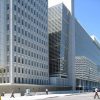
Sri Lanka: Debt Crisis, Neocolonialism and Geopolitical Rivalry
Sri Lanka is in the throes of an unprecedented economic crisis. Faced with a shortage of foreign exchange and defaulting on its foreign debt repayment, the country is unable to pay for its food, fuel, medicine, and other basic necessities. Notwithstanding the austerities that would be entailed, a bail out by the International Monetary Fund (IMF) has been accepted as the only way out of the dire economic situation.
Those Who Dare: Voices of Women in the MENA Region
 When it comes to gender equality and development, the Middle East, North Africa (MENA) and the Arab States region continues to be in a paradoxical situation. While within the region, several laws, policies and programming focused on gender equality are growing, women’s representation in government jobs, corporate roles, and national programming seem to be dismissed. Healthcare, education have seen improvement, most countries have become tech inclusive as well, but access to hospitals and educational institutions –at times due to social programming or gender-related policies continues to prevent women from accessing them and using them.

Soil Microbes Derived Products Could Be an Alternative to Expensive Agricultural Fertilizers
Around the world, commercial fertilizer prices are soaring, pushing farmers and countries into a frenzy. In addition, soaring fertilizer prices are sparking fears of inflation, food supply shortages and food insecurity. There are several reasons that have contributed to the rising fertilizer prices including the Russian-Ukrainian war and the global pandemic.
Food and People
People require food, with more people requiring more food and less people requiring less food. Despite that self-evident relationship, most governments appear reluctant to accept the intimate link between the supplies of food and the numbers of people and continue calling for the further growth of their populations.
Revealed: The Shocking Extent of Exploitative Baby Formula Milk Marketing
The world's leading health and children specialised organisations have once again sounded the alarm bell about what they classify as “shocking, insidious, exploitative, aggressive, misleading and pervasive” marketing tricks used by the baby formula milk business with the sole aim of increasing, even more, their already high profits.
Give Edible Insects a Chance as an Alternative High-Quality Protein Source, say Scientists
Growing up in Samoya Village of Bungoma County in the Western part of Kenya, Elvis Wanjala has fond childhood memories of the rainy season, chasing and catching black-bellied winged termites in the rain.
The Sun Illuminates the Nights of Rural Families in El Salvador
After working on the family farm, Carlos Salama comes home and plugs his cell phone into a socket via a solar-powered electrical system, a rarity in this rural village in southern El Salvador.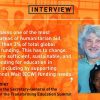
Education Cannot Wait Interviews Leonardo Garnier, Special Adviser of the UN Secretary-General for the Transforming Education Summit
ECW: Congratulations on your appointment by United Nations Secretary-General António Guterres as the Special Adviser for the Transforming Education Summit. What do you hope to achieve through the Summit and why is it so critical that the world comes together to address the global education crisis around this September’s UN General Assembly?

More Students on the Move in an Increasingly Complex World: Podcast
 This is our third episode on the ongoing movements of people around the world. You can listen to the previous ones, the first about climate migrants and the second on remittances, on any podcast app.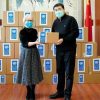
Omicron-led Surge Tests China’s Zero Covid Policy
When the Covid- 19 pandemic first broke out in Wuhan in 2020, no one imagined that it would wreak havoc on such a large scale. With over 6.2 million lives lost, countless infected and new variants emerging, the pandemic is still raging all around the world.« Previous Page — Next Page »





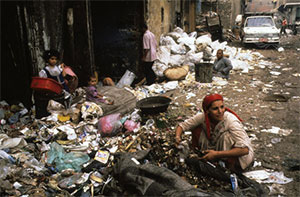 Romani people in Cairo, Egypt, forage through trash. Credit: UN Photo/Armineh Johannes
In 2015, the United Nations adopted the Sustainable Development Goals (SDGs) in an effort to promote “peace and prosperity for people and the planet.” To achieve that goal, it is essential to provide equal opportunities and access to basic services to all people. The 2025 UN SDG Report found that 35% of the 169 SDG targets are on track or making moderate progress, while 18% have reversed compared to the 2025 baseline. One in ten people still live in extreme poverty, one in eleven experience food insecurity, and over 1.1 billion people live in slums without access to clean water and sanitation. It is imperative to acknowledge the societal, technological, economic, and political issues that sustain poverty in countries around the world. Eradicating poverty will require significant frameworks in policy and governance on a national and international scale to ensure that all people will have equal access to basic services and economic opportunities by 2030. Furthermore, a dramatic reduction of United States foreign aid in 2025, including the termination of 83% of USAID programmes, threatens to erode years of fragile development gains.
Throughout the world, violent conflict and natural disasters also contribute to extreme poverty. The complete destruction of infrastructure and blockage of aid has significantly impoverished Palestine since October 7th. The destructive impact of Hurricane Maria in Puerto Rico left $91 billion in damage. An inadequate US government response also revealed significant and enduring questions within the issue of mitigating poverty: how do we rebuild infrastructure after its destruction? How do we restimulate economic development and bring in financial aid after disasters? Similar questions have been raised in the realm of regional cooperation, as devastating floods have wrecked hundreds of thousands of homes across multiple Southeast Asian nations in the past few years. Furthermore, the COVID-19 pandemic has greatly exacerbated the global poverty crisis, particularly in developing countries, setting back the United Nations goal of eradicating poverty by 2030.
IPS is committed to providing comprehensive features that focus on the persisting environmental, sociopolitical, and systemic issues that sustain poverty, and the steps taken worldwide towards poverty eradication.

The Week with IPS

NEXT STOP - SDGs
Tracking global progress towards a sustainable world
Tracking global progress towards a sustainable world

