Languages
Saturday, November 21, 2026



News and Views from the Global South
Economy & Trade

Down With Sustainable Development! Long Live Convivial Degrowth!
For anyone who recently attended the Fourth International Conference on Degrowth in Leipzig, Germany, listening in on conference talk, surrounded by the ecologically savvy, one quickly noticed that no one was singing the praises of sustainable development.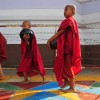
Will Myanmar’s ‘Triple Transition’ Help Eradicate Crushing Poverty?
Myanmar is never out of the news for long. This has been the case since a popular uprising challenged military rule in 1988. For over two decades, the country was featured in mainstream media primarily as one unable to cope with its own internal contradictions, a nation crippled by violence.
The Future of the Planet and the Irresponsibility of Governments
Less than a week after everybody celebrated the historical agreement on Nov. 17 between the United States and China on reduction of CO2 emissions, a very cold shower has come from India.Proposal for International Anti-Corruption Court Seeing “Significant” Momentum
The key U.S. advocate of a proposal to create a multilateral body mandated to investigate allegations of political corruption says the idea is receiving significant interest from civil society, politicians and major business leaders.
Inequality in Mexico Is All About Wages
Sandra G. works Monday through Saturday in a beauty salon on the south side of Mexico City, where she earns slightly more than the minimum wage, which in this country is just five dollars a day.
Pakistani Sikhs Back in the ‘Dark Ages’ of Religious Persecution
Balwan Singh, an 84-year-old shopkeeper living in Pakistan’s northern Khyber Pakhtunkhwa province, is well past retirement age, but any illusions he may have had about living out his golden years in peace and security have long since been dashed.
True Gender Equality for Both Women and Men
Numerous international and national efforts have focused on gender equality and the empowerment of women. The United Nations, for example, has convened four world conferences on women - Beijing in 1995, Nairobi in 1985, Copenhagen in 1980 and Mexico City in 1975 - and Member States have adopted various international agreements, such as the Beijing Declaration and Platform for Action and the Convention on the Elimination of All Forms of Discrimination against Women (CEDAW).
Can China’s Silk Road Vision Coexist with a Eurasian Union?
There is a good chance that economic jockeying between China and Russia in Central Asia will intensify in the coming months. For Russia, Chinese economic expansion could put a crimp in President Vladimir Putin’s grand plan for the Eurasian Economic Union.
Depression Casts Cloak of Infertility Over Kashmir Valley
It was almost midnight when Mushtaq Margoob woke up to the incessant ringing of his phone. It was his patient, a young woman whom Margoob, a renowned Kashmiri psychiatrist and head of the department of psychiatry at the only psychiatric hospital in Kashmir, had been treating for depression for many years.
A Game-Changing Week on Climate Change
- In recent days, two major developments have injected new life into international action on climate change.
Shale Oil Fuels Indigenous Conflict in Argentina
The boom in unconventional fossil fuels has revived indigenous conflicts in southwest Argentina. Twenty-two Mapuche communities who live on top of Vaca Muerta, the geological formation where the reserves are located, complain that they were not consulted about the use of their ancestral lands, both “above and below ground.”
Iranians Keep Hope Alive for Final Nuclear Deal
In the United States, the negotiations aimed at a final deal between world powers and Iran over its nuclear programme—in a crucial phase this week—are far from the minds of average people. But for many Iranians, the talks hold the promise of a better future.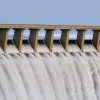
G20 Seeks to Streamline Private Investment in Infrastructure
Industrialised countries have agreed to collaborate on a new programme aimed at funnelling significant private-sector investment into global infrastructure projects, particularly in developing countries.
Will New Climate Treaty Be a Thriller, or Shaggy Dog Story?
This December, 195 nations plus the European Union will meet in Lima for two weeks for the crucial U.N. Conference of the Parties on Climate Change, known as COP 20. The hope in Lima is to produce the first complete draft of a new global climate agreement.
Building Disaster Resilience Amidst Rampant Poverty
Of the thousands of landslide-prone villages he has visited and worked with, R M S Bandara, a high-ranking official from Sri Lanka’s National Building Resources Organisation (NBRO), says only one has made him sit up and take note.
25 Years After Rights Convention, Children Still Need More Protection
Next week marks 25 years since the adoption of the Convention on the Rights of the Child, a historic commitment to children and the most widely accepted human rights treaty in history.
Latin America Moves Towards Decarbonising the Economy
When the advances made towards curbing global warming are analysed in the first 12 days of December in Lima, during the 20th climate conference, Latin America will present some achievements, as well as the many challenges it faces in “decarbonising development”.
U.S. Proposes Major Debt Relief for Ebola-Hit Countries
The United States proposed Tuesday that the international community write off 100 million dollars in debt owed by West African countries hit hardest by the current Ebola outbreak. The money would be re-invested in health and other public programming.
High Expectations At the World Parks Congress
 Conserving the world's most valuable natural resources is the focus of the sixth World Parks Congress 2014, taking place Sydney, Australia. The congress, which takes place once every 10 years, is convened by the International Union for Conservation of Nature (IUCN).

OPINION: Now Is the Time to Tackle Malnutrition and Its Massive Human Costs
The scourge of malnutrition affects the most vulnerable in society, and it hurts most in the earliest stages of life. Today, more than 800 million people are chronically hungry, about 11 percent of the global population.
How a Small Tribe Turned Tragedy into Opportunity
When the Asian tsunami washed over several Indian Ocean Rim countries on Boxing Day 2004, it left a trail of destruction in its wake, including a death toll that touched 230,000.« Previous Page — Next Page »


 UN Commission on International Trade Law Holds Colloquium on Harmonizing Law in Age of Digital Trade and Finance. Credit: UN Photo/Manuel Elías
Trade has historically been a geopolitical tool that can both be used to propel development as well as entrench inequalities. In various nations in East Asia and Latin America, increased trade, as often seen in export booms, has allowed them to achieve influential standings within the global economy. On the other hand, many low-income countries in Sub-Saharan Africa, Asia, and Latin America struggle to maintain a robust trade performance, and oftentimes are subjugated to exploitative trade dynamics through intense extraction of their natural resources. In recent decades, international trade has reached a new era as emerging economies across the world are rising in economic preeminence. Stable international trade is crucial to world peace as global interconnectedness facilitates reliable diplomacy. Nevertheless, significant challenges are on the rise. Notably, a major wave of United States tariff escalations in January 2025 lifted US import taxes to their highest level since the 1930s, changing market dynamics and forcing renegotiations with global trading partners.These articles are aimed at informing readers about the complexities of trade and its varying effects on development, with a special focus on the consequences of the global economic crisis, the potential of fair trade and the gender implications of trade policies.
Updated by Yilan Batista and Shuli Wong August 2026

The Week with IPS

NEXT STOP - SDGs
Tracking global progress towards a sustainable world
Tracking global progress towards a sustainable world
