Languages
Wednesday, October 21, 2026



News and Views from the Global South
Trade & Investment

Oil Palm Expands on Deforested Land in Brazil’s Rainforest
The green of the oil palm plantations is unbroken along kilometre after kilometre of red soil, devastated in the past by loggers and ranchers. The oil palm, a sign of alarm for some and of hope for others, is here to stay in the Amazon rainforest state of Pará in the extreme north of this country.
Middle East Women Mean Business
Evidence is mounting to suggest women entrepreneurs are more common in the Middle East than in startup capital Silicon Valley, and some even say it’s a more supportive place for them to start a business.
Rwandans Poised to Take on African Fashion
When Rwandan designer Colombe Ituze Ndutiye began drawing at the age of six, she thought she would grow up to be a cartoonist.
Opportunity Knocking
A sense of urgency brought on in recent years by food price volatility inspired collective action to reduce the likelihood of further price spikes and food supply shocks.
Ethiopia’s Indigenous Excluded from Rapid Growth
As the construction of a major transmission line to export electricity generated from one of Ethiopia’s major hydropower projects gets underway, there are growing concerns that pastoralist communities living in the region are under threat.
Libya’s Berbers Close the Tap
"Oil tankers won´t get crude from this port until Tripoli finally meets our demands," says Younis, one of the Amazigh rebels today blocking one of Libya´s largest gas and crude oil plants.U.S. a Favourite Roost of Vulture Funds
Aggressive creditors and investors are seriously undermining the ability of poor countries to deal sustainably with debt issues, academics and anti-poverty campaigners told a briefing at the U.S. Capitol on Wednesday.
Dwindling Aid Slows Sri Lanka
When the first trains in almost two and a half decades started running through this war-ravaged town in Sri Lanka in mid-September, Sinngamuththu Jesudasan could not resist the temptation to go and have a look - repeatedly.
Uruguay Keen to Become Regional Logistics Hub
The small South American country of Uruguay could become a major logistics hub in the Southern Cone due to the deepwater port that the government is planning to build in a tourist area on the Atlantic ocean.
Cuba, a Window to the Outside
For the Cuban economy, the year 2014 is set to start with the opening of the first installations in the Special Economic Development Zone in the upgraded Mariel port, 70 km west of Havana.
South America – From Granary to Megaprojects for the World
South America has gone from the world’s granary to the site of innumerable international infrastructure, energy and mining megaprojects. It is now facing a new dilemma: bolstering the economy with the promise of reducing inequality, in exchange for social and environmental costs that are taking their toll.
New Policies Beyond Austerity and Stimulus
It is time to move the global policy debate beyond the binary options of “austerity” versus “stimulus.” Both these macroeconomic policies have caused untold harm to millions and produced dangerous policy stalemates in Europe and the U.S., Japan and other countries.
South of the Border, Mining Is King
Civil society groups from throughout Latin America are urging “home countries” to take greater responsibility for the actions of their companies abroad, particularly those in the extractives industry.
Energy Integration Runs into Short Circuits
Energy integration efforts in Latin America have been made in fits and starts, even though many clearly understand that the only way to solve the region’s energy shortages and high costs is by working together.
Critics Question Impact of ‘Pay for Success’ Bonds
Standing in contrast to government social protection programmes implemented over the past decade by progressive governments in Latin America and the Caribbean, a new initiative appeals to private investment and uses non-profit service providers.
Bangladesh Workers Short of Compensation
Six months after the worst man-made disaster in Bangladesh’s history, safety conditions in garment factories have a chance to improve. But not the lives of survivors or the victims' next of kin.
Major New Andes Tunnel Turns Back on Volcano
A new system of tunnels at the Alto de La Línea mountain pass in Colombia’s central Cordillera mountain range will open up a key logistics route for this country and neighbouring Venezuela. But it could be overcome by disaster if the Machín volcano erupts.
Cuba’s Dual Currency System: A Death Foretold
An end to the country’s dual-currency system is one of the reforms most anxiously-awaited by Cubans, who nevertheless reacted with scepticism and doubt to the announcement of a timeline for eliminating the system, blamed for exacerbating social inequalities in the country.
India Illegal Mining Enquiry Cut Short
A nationwide enquiry into illegal mining in India was aborted before it completed its investigation into the failings of the country’s mining industry. The study had prompted the government to ban mining in two states and arrest high-ranking politicians.
The Uncertain Future of the World Economy
Five years into the crisis, growth in the U.S. is still below potential, Europe is struggling to pull out of recession and major emerging economies are slowing rapidly after an initial resilience during 2010-2011.With Obama Away, the Chinese Play
As the U.S. struggles with a weeks-long government shutdown which has threatened the country’s economic recovery and forced President Barack Obama to cancel a series of high-stakes visits to Asia, China has instead taken the centre-stage, boosting ties with Asian neighbours and promising multi-billion trade and investment deals.« Previous Page — Next Page »





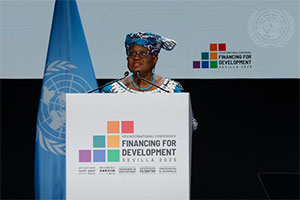 Opening of 4th International Conference on Financing for Development. Credit: UN Photo/Mariscal
International trade and investment are crucial elements of the world economy. While they can be powerful stimulators of development, they can also lead to global imbalances and dynamics of exploitation. In 2025, international trade entered a period of immense disruption, driven in part by a new wave of United States tariffs that reshaped global supply chains and investment flows. The increase in the US tariff rate, the highest since the 1930s, has forced bilateral renegotiations with global trading partners. Furthermore, the debt crisis in developing nations has accelerated while Official Development Assistance (ODA) has substantially dropped 7.3% in 2024.
In the 21st century, advancements in economic diversification in formerly colonized nations have propelled them into more central roles in the global economy. For example, both China and Mexico were able to develop their manufacturing sector and channel this development into booming export flows, thus advancing into the position of emerging economies. Foreign investment also plays an essential role in providing capital for developing countries, although they are oftentimes accompanied by social and environmental exploitation. For example, rising Chinese investments in natural resources in Latin America have often been met with tension as these investment projects fail to properly mitigate environmental risks and protect workers’ rights. In a more multifaceted vein, Sino-African relations have led to infrastructure development in Sub-Saharan Africa while also heightening the region’s economic dependency on China. IPS reports on global news in trade and investment, while shining a light on the nuanced nature of these endeavors.

The Week with IPS

NEXT STOP - SDGs
Tracking global progress towards a sustainable world
Tracking global progress towards a sustainable world
