Languages
Monday, November 9, 2026



News and Views from the Global South
Editors' Choice
UN’s Development Goals Remain Largely Elusive
The United Nations, in a new report to be released next month, has warned “there is no escaping the fact that the global landscape for the implementation of the 17 Sustainable Development Goals (SDGs) has generally deteriorated since 2015, hindering the efforts of governments and other partners”
There’s No Continent, No Country Not Impacted by Land Degradation
The coming decades will be crucial in shaping and implementing a transformative land agenda, according to a scientist at the United Nations Convention to Combat Desertification (UNCCD) framework for Land Degradation Neutrality (LDN).
Dignity & Strength for Venezuelan Refugees & Migrants in Colombia
Not long ago, 15-year-old Nelsmar attended a middle-class school in central Venezuela. That was before her family was uprooted by the economic and humanitarian crisis in her country, which has pushed nearly 3.9 million persons to migrate or flee, according to recent estimates of the Coordination Platform for Refugees and Migrants from Venezuela.
The Forgotten Migrants of Central America
Rural and indigenous populations in countries like Guatemala and Honduras are increasingly on the move – either migrating internally or to neighbouring countries.
Uganda’s Rare Tree Climbing Lions and Endangered Primates Threatened By Climate Change
As climate change leads to increased temperatures in East Africa, a thicket of invasive thorny trees with the ability to withstand harsh climatic conditions have begun threatening Uganda’s second-largest park, home to a rare breed of tree climbing lions and one of the highest concentrations of primates in the world.
We Must do More to Speed up Ending Fossil Fuel Subsidies
Fossil fuels—oil, gas, coal and their derivatives—pollute the atmosphere and emit the greenhouse gases that are ramping up global heating to dangerous levels. But did you know that governments around the world are subsidizing this pollution?
Modi Cruises with Ease as Prime Minister of India for a Second Term
The boy who sold tea at railway platforms for a living has become the Prime Minister of world’s largest democracy for the second time. Narendra Dhamodaradas Modi, incumbent Prime Minister and leader of the BJP secured a second chance to be the Prime Minister at Indian elections which took place recently. The election was perhaps the largest held in any part of the world with 39 days of polling and involving as many as 900 million voters.
A Call for Concrete Changes to Achieve a More Gender Equal World
On the eve of the Women Deliver conference in Vancouver June 3-6, Princess Sarah Zeid of Jordan interviewed Dr. Olfat Mahmoud, a Palestinian refugee and women’s rights advocate.
Zimbabwe’s Resettled Farmers Hawking Cigarettes to Survive
For subsistence farmer Rogers Hove—who proudly brandishes a worn out letter for his five hectare piece of land he obtained from government following the chaotic land seizures from white commercial farmers over two decades ago—what matters most to him, “is to see my piece of land in my possession”.
Modernity Triumphs over Feudalism in India
“We worked for the poor and they voted us back to power,” was the explanation that Prime Minister Narendra Modi made to newly-elected legislators on Saturday, May 25, on the spectacular win scored by his nationalist Bharatiya Janata Party (BJP) in India’s just concluded general elections.
Report Reveals Mounting Pressure on Zambia’s Environmental Resources
There is a strong link between provision of basic social services and the use of natural resources in a country. Thus, with increased population comes additional pressure on natural resources. This is a key finding in the latest Zambia Environment Outlook (ZEO) Report 4, published by the Zambia Environmental Management Agency (ZEMA).
Class Analyst: Global Income Inequality
As a child growing up in Communist Yugoslavia, Branko Milanovic witnessed the protests of 1968, when students occupied the campus of the University of Belgrade and hoisted banners reading “Down with the Red bourgeoisie!”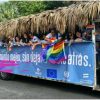
Partnerships to Promote Equality for LGBTI People
As states and civil society organizations are increasingly acting to address stigma, discrimination and human rights violations targeting lesbian, gay, bisexual, transgender and intersex (LGBTI) people, dialogues and alliances jointly tackle these challenges.
Cyclones and Struggling Economy Could Impact Mozambique’s Elections
Mozambique, which was affected by an unprecedented two tropical cyclones over a matter of weeks, is still reeling from the impact a month after the latest disaster. But resultant devastation caused by the cyclones could impact the country’s elections as concerns are raised over whether the southern African nation can properly hold the ballot scheduled for later this year.
Women Human Rights Defenders Face Greater Risks Because of their Gender
Does the name Ihsan Al Fagiri ring a bell? How about Heba Omer or Adeela Al Zaebaq? It’s likely that these names, among countless others, are not known to the average news consumer. But their tireless and dangerous work, however, has made news headlines as protests led to historic political change in Sudan.
Citizenship & Growth: Inclusive Citizenship Laws Tend to Foster Economic Development
The notion of citizenship has evolved over time. Historically, allegiance was typically to an ethnic group or a feudal lord. With the birth of the nation-state in the 19th century came the need to distinguish between those who belonged to the state and those who didn’t, and therefore to create a legal distinction between nationals and foreigners.
Bulgaria’s Press Navigates Harassment & Threats in Pursuit of Stories
Crammed in the small studio of TVN, a regional station in Ruse, north eastern Bulgaria, journalists share stories about their colleague, Viktoria Marinova. Barely six months ago, Marinova was raped and murdered not far from the station, while jogging on the banks of the Danube.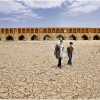
Urgent Action Vital to Stop Twin Crises of Nature’s Destruction & Climate Change
The Intergovernmental Platform on Biodiversity and Ecosystem Services’ report on the global state of biodiversity is shocking but not entirely surprising. The question is, how much more evidence and repeated warnings will it take for governments, companies and financial institutions to wake up to the urgency and act?
South Africans Look to Re-elected Government to Rebuild a Stagnant Economy
Millions of South Africans headed out in large numbers, some braving cold and wet weather to cast their ballot in the country's sixth democratic elections this week. The 2019 election was one of the most competitive and contested elections that also saw a whopping 48 parties on the national ballot—up 300 percent from a mere 10 years ago.
As Fathers Die, Kashmir’s Children Become Breadwinners
Mubeen Ahmad was nine years old when his mother sold him into service to a mechanic for the petty sum of few thousand Indian rupees. His mother had found it hard to support the family after his father, a labourer, was killed during one of the anti-India protests in Jammu and Kashmir in 2008.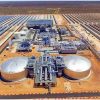
Is UAE Leading the Way for Concentrated Solar Power in GCC?
In April 2019, the International Renewable Energy Agency (IRENA) published a report on a “roadmap to 2050” in terms of renewable energy.« Previous Page — Next Page »





The Week with IPS

NEXT STOP - SDGs
Tracking global progress towards a sustainable world
Tracking global progress towards a sustainable world
