Languages
Sunday, November 8, 2026



News and Views from the Global South
Editors' Choice

Betting on Green Hydrogen in Chile, a Road Fraught with Obstacles
Chile is in a privileged position in the world to produce green hydrogen and boost the development of the new fuel thanks to the country’s optimal conditions for generating solar and wind energy, but the large investment required and the scarcity of water are two of the biggest obstacles to overcome.
Charcoal Production Risks Future of Zimbabwe’s Native Forests
Once a week a tonnage of fresh charcoal is dropped off at Sibangani Tshobe's rugged, pit-stop stall by a hired, battered old Bedford lorry. Small, makeshift trolleys — nicknamed Scania's — quickly cart off small loads and disappear into Old Pumula, the oldest suburb in the country’s second-largest city of Bulawayo.
UN Scientists: Climate Change and Biodiversity Loss. Two Parts. One Problem.
Earth is in the throes of multiple environmental crises, with climate change and the loss of biodiversity the most pressing. The urgency to confront the two challenges has been marked by policies that tackle the issues separately. Now, a report by a team of scientists has warned that success on either front is hinged on a combined approach to the dual crises.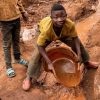
A Staggering 160 Million Are Victims of Child Labour
Among the many daunting issues leaders of the G7 will have to discuss in their upcoming summit in idyllic Cornwall on June 11-13, child labour won’t be on the official agenda.
Global Progress Against Child Labour “Ground to a Halt” – UN Report
Malleshwar Rao, 27, spent his early years as a child labourer in the southern Indian city of Hyderabad. Soon after finishing school at a local ashram, where the children of poor parents, sex workers and orphans studied, the 9-year-old would rush to a local construction site to join his parents who would be toiling in the harsh tropical sun to construct buildings as daily wage earners. The supervisor would assign Rao simpler tasks and his extra income would help his parents feed him and his younger brother.
Damage to Coral Reefs Hurts Fishing Communities in Central America
As fisherman Luis Morán walked towards his small boat, which was floating in the water a few meters from the Salvadoran coast, he asked "How can the coral reefs not be damaged with such a warm sea?”
Education Cannot Wait Investments Transform Children’s Lives in Somalia
Ten-year-old Sabah Abdi from Ali Isse, a small rural village on the Somaliland-Ethiopian border, scored well in her recent exams, placing third overall in her local village school of 400 students. Yet is was just three years ago Sabah spent her days helping with household chores and herding goats, rather than studying because her pastoralist family could not afford her school fees.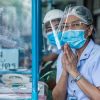
G7 Summit: Time to put Women Front & Centre of the Global Economic Recovery
The leaders of the G7 group of nations will soon gather in Cornwall, United Kingdom, (June 11-13) to devise plans to ‘build back better’ from the COVID-19 pandemic. The summit takes place in the wake of a crisis that has both revealed and further exacerbated existing economic and social inequalities, including gender inequalities.
Infrastructure Expands in Brazil Despite Crises
Health, fiscal, environmental and political crises have not prevented Brazil from attracting private capital to expand infrastructure, according to the sector's minister, Tarcísio de Freitas.
On World Environment Day — Pakistan Showcases Ecosystem Restoration
Pakistan's Prime Minister Imran Khan has been making sure that all foreign dignitaries visiting the country get their hands dirty. With a shovel and a watering can, they are invited to plant a tree for one of the largest reforestation initiatives in the world — the Ten Billion Tree Tsunami Programme or TBTTP.
Sowing Water by Restoring Ancient Ditches in the Peruvian Highlands
In the highlands near the capital of Peru, more than 3,000 metres above sea level, ageold water recovery techniques are being used to improve access to water for 1,400 families, for household consumption and for crops and livestock.
Is Sharing More than Water the Key to Transboundary Governance in the Meghna River Basin?
Kajol Miah is a rice farmer from the Bangladesh side of the Meghna River Basin. And in towns on the Indian side of the river basin, Bangladeshi rice is in great demand.
– Youth Demand Action on Nature, Following IUCN’s First-Ever Global Youth Summit –
On the occasion of World Environment Day, 5 June 2021, drawing from IPS’s bank of features and opinion editorials published this year, we are re-publishing one article a day, for the next two weeks. The original article was published on April 23 2021

COVID-19 Widens Learning Gap For Girls In Rural Ghana
Seventeen-year-old Muniratu Adams, a form two student of the Jeyiri D/A Junior High School at Funsi in the Wa East District of the Upper West Region of Ghana, is fortunate to have returned to school this January after the long COVID-19 shutdown.
Q&A: If China had a Free Press COVID-19 Pandemic ‘May not Have been so Severe’
China is one of the worst places in the world for media freedom, according to the global media watchdog Reporters Without Borders (RSF) which ranked the country 177 out of 180 in its latest World Press Freedom Index. In the report, the group warned that Beijing is taking “internet censorship, surveillance and propaganda to unprecedented level,” and had “taken advantage of the Covid-19 pandemic to enhance its control over online information even more”. China is also the world’s biggest jailers of journalists with more than 120 journalists and what the group calls “defenders of press freedom” currently detained.
– Indonesia’s Climate Villages Where Communities Work Together to Mitigate Climate Change –
On the occasion of World Environment Day, 5 June 2021, drawing from IPS’s bank of features and opinion editorials published this year, we are re-publishing one article a day, for the next two weeks. The original article was published on April 7 2021

India’s Second COVID-19 Wave Shatters Livelihood Hopes of Poor Migrant Labourers
Last month, in the midst of New Delhi’s coronavirus lockdown, 37- year-old labourer Prakash Kumar wanted to return to his rural home in India’s northern state of Uttar Pradesh. But instead of travelling the usual few hours by bus, Kumar had to journey for three days.
– Conserving Tigers, Elephants and Bison, One LPG Stove at a Time –
On the occasion of World Environment Day, 5 June 2021, drawing from IPS’s bank of features and opinion editorials published this year, we are re-publishing one article a day, for the next two weeks. The original article was published on April 1 2021
– A Growing Shift in the Narrative about Climate Action –
On the occasion of World Environment Day, 5 June 2021, drawing from IPS’s bank of features and opinion editorials published this year, we are re-publishing one article a day, for the next two weeks. The original article was published on February 25 2021
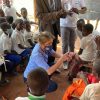
Q&A: Reflecting on Five Years of Educating Children in the Throes of Crises, Emergencies and Displacement
Education Cannot Wait (ECW), the global fund that brings teaching and learning to children in emergencies and protracted crises, is observing five years of reaching boys and girls in some of the world’s hardest-hit conflict and disaster zones.
Tired with Tokenism, Youth Launch ‘Stronger Campaign’ for UN Biodiversity Day
The Global Youth Biodiversity Network (GYBN) has put leaders and policymakers on notice that they are not willing to listen to the same conversations, suggestions and unmet promises, as the world faces a biodiversity crisis.
« Previous Page — Next Page »





The Week with IPS

NEXT STOP - SDGs
Tracking global progress towards a sustainable world
Tracking global progress towards a sustainable world
