Languages
Sunday, November 8, 2026



News and Views from the Global South
Editors' Choice

Exclusive: Mauritius’ First Female President on Why We Need Science Diplomacy to Address Major Challenges
If we want to address the great challenges this world is facing, we have to factor in science into all our narratives, according to Dr. Ameenah Gurib-Fakim, the first woman president of Mauritius and renowned biodiversity scientist.
– UN Blueprint that Could Urgently Solve Earth’s Triple Climate Emergencies –
On the occasion of World Environment Day, 5 June 2021, drawing from IPS’s bank of features and opinion editorials published this year, we are re-publishing one article a day, for the next two weeks. The original article was published on February 19 2021
County Climate Risk Profiles Critical and Timely for Kenya’s Struggling Smallholders
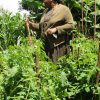
Peris Wanjiku, a smallholder farmer in Othaya, Nyeri County, which lies approximately 152 kilometres from Kenya's capital, Nairobi, has watched as her fellow farmers have slowly started to sell off their land in the face of increasingly erratic weather patterns.
International Cooperation Gives Biogas a Boost in Rural Cuba
Yunia Cancio cooked with firewood until a few years ago, when a biodigester was built on her family’s El Renacer farm in Cabaiguán, a municipality in the central Cuban province of Sancti Spíritus, under the Biomass Cuba project. That change meant a lot for her family’s quality of life, but it was not the only one.
When Battling Covid-19 Becomes a National Policy Disaster
We went to the Kanatte cemetery, Sri Lanka’s largest, where most of us, residents of the capital city, would end up sooner or later. But it was deserted, and so we had time for a leisurely chat with some of the helpful staff there, albeit after admiring some of the grave sites and remaining beautiful trees.
Large Corporations Cash in on COVID-19 Relief Funds
Poverty and income inequality are being deepened as COVID-19 relief funds are handed out to large corporations instead of social protection programmes in developing countries, groups involved in a new study of COVID-19 bailouts have said.
COVID-19 Brings Fresh Challenges to Nigeria’s Leprosy-affected
 People affected by leprosy, also known as Hansen’s disease, are often stigmatised. In countries like Nigeria, many of them end up as beggars due to the psycho- and socio-economic problems they face. The COVID-19 pandemic has brought fresh challenges for them and life is getting increasingly difficult. Sam Olukoya in Lagos takes a look at how people affected by leprosy in Nigeria are faring in the face of the COVID-19 pandemic.

Biogas in Argentina: Turning an Environmental Problem into a Solution
"Until five years ago, we didn't know about the circular economy, but today our waste generates environmentally neutral products that also offer a return,” says José Luis Barrinat, manager of a cooperative that brings together some 550 small farmers in Monje, Argentina.
Kenya’s Dryland Farmers Embrace Regenerative Farming to Brave Tough Climate
It is an uncommon occurrence to see farms with flourishing healthy crops in Kenya’s semi-arid Makueni County. But in Kithiani village, Justus Kimeu’s two-acre piece of land stands out from the rest. After embracing the regenerative agriculture (RA) technique, the 52-year-old farmer is looking forward to a bumper harvest of maize as all his neighbours count their losses following this year’s failed season.
Equipped by US & Israeli Firms, Police in Botswana Search Phones for Sources
Oratile Dikologang was naked when police officers pulled black plastic over his head during his detention in April 2020. It was difficult to breathe, but the interrogation continued, he told CPJ in a recent phone interview.
Brazil Relies on Rainfall that Depends on the Forests
"Rainfall is fundamental; the streams and rivers we have would not suffice for irrigation, even if they were the Amazon River," said Dirceu Dezem, referring to the amount of water required for the extensive crops in Brazil’s midwest.
Refugee Children Explain How Education Helped Put Their Trauma Behind Them
Eighteen-year-old Chuol Nyakoach lives in the Nguenyyiel Refugee Camp in Gambella, Ethiopia. Chuol is grateful that despite the trauma she has already experienced in her young life, she is able to continue her education in the refugee camp. Learning has given her a reason to wake up every day.
Is Press Freedom Incompatible with Gender Empowerment?
In the contemporary world of journalism, female reporters face a double jeopardy: they are increasingly targeted both as journalists and as women-- particularly in repressive regimes and misogynistic societies.
Internet Restrictions Harm the Press & Public Alike
When Myanmar’s military seized power from the elected government in February, one of its first actions was to further squeeze the already restricted free flow of information in the country. It obstructed news stations, temporarily shuttered phone and internet access, and blocked social media platforms.
UN Banks on Water as the ‘Game Changer’ in Food Production and Consumption
As the United Nations prepares for its solutions-based Global Food Systems Summit in September, officials say resolving issues around water scarcity, pollution and wastage is crucial transforming food production and consumption.
Press Freedom Vital in the Fight Against the Pandemic
Access to accurate information is vitally important during the pandemic, so that people can understand how to protect themselves and their families, and to hold their governments to account for their response to the health emergency.
Spyware Threatens Press Freedom’s Privacy Imperative
Spyware’s repeated use to target journalists and those close to them poses an existential threat to the privacy required for press freedom to flourish. Without the ability to privately communicate with sources, conduct research, and compile information, journalists are hampered in their ability to keep the public informed and hold the powerful to account.
Q&A: Drawing Attention to the Crisis in the DRC’s Education Sector
Yasmine Sherif, Director of Education Cannot Wait (ECW), has sounded the alarm on the need for Central African Republic refugee children and youth to access quality education during her visit to a refugee site in the Democratic Republic of the Congo (DRC) from Apr. 20-23.
Youth Demand Action on Nature, Following IUCN’s First-Ever Global Youth Summit
Following almost two weeks of talks on issues such as climate change, innovation, marine conservation and social justice, thousands of young people from across the globe concluded the first-ever International Union for Conservation of Nature’s (IUCN) One Nature One Future Global Youth Summit with a list of demands for action on nature.
Press Freedom under Lockdown Across Two-Thirds of the Globe
Independent journalism is facing a growing crackdown one year into the COVID-19 pandemic as governments around the world restrict access to information and muzzle critical reporting, media and rights watchdogs have warned.
COVID-19 Locks Down Therapy Support for Zimbabwe’s Trafficking Survivors
Before Zimbabwe imposed lockdown measures last March as part of global efforts to curb the coronavirus pandemic, Grace Mashingaidze* would attend workshops in Harare arranged by a nongovernmental organisation assisting trafficked women who had safely made it back home.« Previous Page — Next Page »





The Week with IPS

NEXT STOP - SDGs
Tracking global progress towards a sustainable world
Tracking global progress towards a sustainable world
