Languages
Sunday, November 8, 2026



News and Views from the Global South
Editors' Choice

San Salvador Steps Up Battle against Landslides and Floods
The San Salvador volcano is a gift of nature for the inhabitants of the capital who live at its foot, a gigantic green lung that gives them oxygen and fresh air. But it is also a curse.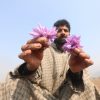
Kashmir’s New Land Laws Could Impact Biodiversity
Walking in the middle of fields of delicately-scented purple saffron crocus flowers, 36-year-old Mubeen Yasin, a saffron farmer from the southern region of Indian Kashmir, is not optimistic that in a few years time the scenery will remain as beautiful as it is today.
Reclaim Your Rights: Defend Indigenous People’s Lands
Rights are earned through hard-fought struggles. And for Indigenous Peoples (IP), its fulfillment comes from the collective and continuous defense of ancestral land and territory, and assertion of their ways of life and the right to self-determination.
Can Conservation and Development Be Balanced in Sri Lanka?
The Sri Lankan government recently cancelled three circulars that protected 700,000 hectares of forests, labelled Other State Forests (OSFs), which are not classified as protected areas but account for five percent of the island nation’s remaining 16.5 percent of forest cover.
Solar Power from Argentina’s Puna Highlands Reaches Entire Country
The unprecedented growth of renewable energies in Argentina over the last three years has borne its greatest fruit: the Cauchari solar park, with nearly one million photovoltaic panels and 300 MW of installed power, which was connected to the national power grid on Sept. 26.
Can Agricultural Apps Bring Indonesia’s Farmers Back to the Fields?
When his friends prodded him to use an agricultural app in July, rice farmer Mustafa reluctantly downloaded RiTx Bertani into his smart phone. Four months later, he feels happy to have given the technology a try.
Drop in Remittances – a Financial Lifeline for 800 Million People – Could Impact Financial Stability of Numerous Countries
On Dec. 2 Gabriel Arias, 42, left a Washington Heights, New York, money transfer agency after sending money home to the Dominican Republic. For the past eight years, every fortnight he would come to this branch at 171st street after getting paid from his construction job. But things are different this year and he worries about his family back home. Arias lost his job in May, amid heightened COVID-19 restrictions in the state. He told IPS he has tried to work some odd jobs, but has barely earned enough for his monthly apartment rental. This early December visit to send money home was only his second since June.
How Artificial Intelligence Could Widen Gap Between Rich & Poor Nations
New technologies like artificial intelligence (AI), machine learning, robotics, big data, and networks are expected to revolutionize production processes, but they could also have a major impact on developing economies.
Mexico Sticks to Natural Gas, Despite Socioenvironmental Impacts
In his community of small farmers and ranchers in northern Mexico, Aristeo Benavides has witnessed the damage caused by the natural gas industry, which has penetrated collectively owned landholdings, altering local communities' way of life and forms of production.
Fixing the Food System to Produce Healthy Diets
As the world accelerates towards achieving the targets of the Sustainable Development Goals by 2030, it is time to replace the current broken food system. With only a decade left to reach the deadline, evidence shows that the way food is produced, processed and transported is not only destructive to the environment but it is also leaving millions behind.
COVID-19 an Opportunity to Build Resilience around Food Systems
The Barilla Centre for Food and Nutrition (BCFN) has appealed to the United Nations to educate citizens to use their roles as consumers to create a momentum for change. This was ahead of the 2021 Food Systems Summit which the United Nations Secretary-General, António Guterres, will host on November 25 next year.
Securing Freedom to Eat
For Zimbabwean organic farmer, Elizabeth Mpofu, access to healthy food is liberation.Millions of people across the world go to bed hungry. Scores do not have access to nutritious food owing to an inequitable global food system focused on industrial mass food production. The food from this system is less nutritious, more expensive and less friendly to the environment.

Q&A: Next Decade Sufficient Time for a Food Revolution
In March, after the World Health Organisation first declared COVID-19 a pandemic, the World Food Programme (WFP) of the United Nations activated a global corporate emergency mechanism for the first time. It had already written to all donor countries asking for $1.9 billion in front-loaded funding, and had begun emergency procurement. Its priority was to sustain life-saving assistance first.
Q&A: Vote with your Fork for a World Free from Hunger
A world free from hunger is possible but only if we change how we grow and eat food. And resetting the food system — including all aspects of production, processing, marketing, distribution and the consumption and nutrition of food — is key to securing a sustainable food future post COVID-19.
UN Warns of an Impending Famine With Millions in Danger of Starvation
The numbers are staggering— as reflected in the ongoing coronavirus pandemic which has triggered a new round of food shortages, famine and starvation.
Sustainable Measures Help Farmers Script a Positive Story Amid COVID-19 Uncertainty
 As India continues to grapple with the COVID-19 pandemic and a growing number of deaths, farmers here have been fighting a battle of their own against volatile pricing, uncertain demand and lack of access to the market. But in the midst of all this uncertainty, one farming couple in a village near Hyderabad are working towards a food-secure future for themselves using eco-friendly farming techniques.

Q&A: Mro Indigenous Community Plea for Halt of Construction of 5-Star Hotel
The construction of a five-star hotel in the Chittagong Hill Tracts, Bangladesh, could lead to the forced eviction of the Mro indigenous community from their ancestral lands and destroy “the social, economic, traditional and cultural fabric of the community”, warns Amnesty International.But local activist Reng Young Mro told IPS that the international community must rally behind the Mro indigenous community to halt the construction.

It’s Time for Results as Sudan Enters Second Year of NDC Partnership
Earlier this year, when heavy rains caused massive flooding in Sudan, a three-month state of emergency was declared in September. The floods which began in July, were the worst the country experienced in the last three decades and affected some 830,000 people, including 125,000 refugees and internally displaced people.
Tobacco Industry Capitalizes on Pandemic to Increase Influence in Low- and Middle-Income Countries
While the COVID-19 pandemic has elevated public health to a top priority in every country in the world, it has left many poorly resourced governments receptive to any and all aid that can provide immediate assistance to help their people.
Youth Demand a ‘Fair Share’ from World Leaders Ahead of G20 Summit
Heads of youth movements and student unions are challenging the world’s richest nations to correct an ‘incredibly unequal’ global response to COVID-19, by considering the plight of the world’s most vulnerable children and young people.
Bringing Clean Water On Tap To Rural Villages In Polynesian Island Nation Of Tuvalu
Rural communities on one of the nine islands that make up the Polynesian nation of Tuvalu are anticipating how life will change when they are connected to piped clean water for the first time.
« Previous Page — Next Page »





The Week with IPS

NEXT STOP - SDGs
Tracking global progress towards a sustainable world
Tracking global progress towards a sustainable world
