Languages
Sunday, November 8, 2026



News and Views from the Global South
Editors' Choice

Eswatini makes Progress on NDCs thanks to Crucial Partnership Support
Barry de Maine, the director of Green Cross Pharmacy, lost about $ 7,675 worth of stock when The Mall, the largest shopping centre in Mbabane, was flooded back in 2003. But when the flash floods hit again this year, he had already installed a flange to stop water from coming in. “This is the best I could do under the circumstances,” De Maine told IPS, adding: “Otherwise since we started experiencing floods at The Mall (17 years ago) nothing has been done.”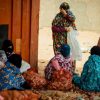
The Silence of the International Community on Western Sahara
For my entire life, I have been forgotten. I am a Sahrawi refugee, born and raised in the Algerian desert, where my people have remained displaced for 45 years, awaiting the moment when we can finally return to our homeland, Western Sahara.
Chile’s Energy Revolution Has an Achilles’ Heel
The Atacama Desert, a giant reservoir of solar power, is the battering ram of the transformation undertaken by Chile to decarbonise its energy mix, in a country with enormous potential in non-conventional renewable sources.
Punches & Insults: Why Zimbabwe’s Women Candidates Want to Change the Political Playing Field
“I have long given up on active politics,” Gertrude Sidambe, a 36-year-old member of one of Zimbabwe’s opposition parties, tells IPS. When female members of the ruling Zimbabwe African National Union – Patriotic Front complained last month about political violence as male members chose brawn over brains to solicit for positions, the party’s National Secretary for Women’s Affairs Mabel Chinomona advised that they enter the punch-and-insult battlefield and “fight” like everyone else.
UN’s $5.1 Billion Shortfall Threatens Operations Worldwide
When the United Nations was struggling to cope with a cash crisis back in April 1996, one of the many drastic measures it undertook was to cut down on its staff.
Forced Child Marriage & Conversion: Public Discussion & Legal Reforms Called for in Pakistan
October 13 began like any other day at the Lal house as Raja Lal and his wife Rita Raja left for work at 7:30 am. "I made the usual breakfast of anda paratha (egg and flat bread) and told my eldest to lock the door from inside," Raja, who works as an ayah in a school, told IPS. Their 13-year old daughter, the youngest of their four children, did not go to school that day as her school shoes no longer fit and her parents hadn’t bought her a new pair yet. Little did they know that that day was the beginning of a nightmare for the Lal household. Their daughter would then allegedly be "abducted, forcefully converted and married in just one day”, Lal, a Christian, told IPS.
The Rape of India’s Dalit Women: It’s All about Gender & Class Subordination
Shabnam*, a young woman from Northern India’s Haryana state, is two years away from becoming a law graduate. She sees parallels between her own rape and that of the 19-year-old Maha Dalit woman whose brutal rape and torture by a group of men from a “dominant” or “higher” caste in the neighbouring state of Uttar Pradesh triggered nationwide protests.
Distributed Generation Provides Hope of Energy for the Poor in Brazil
"Showing solidarity is consuming the energy generated in your own municipality" - this is the motto of a project of distributed electricity generation in one of Brazil's many poor neighbourhoods.
Cultivating an Eco-friendly Culture in Indonesia’s Schools
In West Jakarta, Indonesia, teachers at the private Santo Kristoforus High School are so environmentally conscious they make other schools seem a little bit green when it comes to environmental education.
Global Data Community’s Response to COVID-19
The world is currently counting more than 42 million confirmed cases of the COVID-19 and over 1 million deaths since the start of the pandemic.1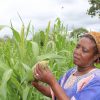
Using Traditional and Indigenous Food Resources to Combat Years of Successive Drought
For Zimbabwean farmer Sinikiwe Sibanda, planting more sorghum and millet than maize has paid off. As the coronavirus pandemic has led to decreased incomes and increased food prices across the southern African nation -- it is estimated that more than 8 million Zimbabweans will need food aid until the next harvest season in March -- Sibanda's utilisation of traditional and indigenous food resources could provide a solution to food security here.
Budgeting for a Better Future, for Every Child
2020 has not turned out as planned. As the COVID-19 pandemic continues to impact populations around the world, governments have been forced to take a fresh look at their spending and how to meet additional costs of pandemic response as they expect a fall in revenue. Budget information has become even more critical.
Capture of CO2 and Hydrogen as Part of Latin America’s Energy Future
While struggling to increase the generation and consumption of renewable energy, Latin America is beginning to see the rise of new technologies, such as the capture and storage of carbon and hydrogen from fossil fuels or wind and solar energy.
Bulawayo Water Crisis: When the Taps Run Dry and the City Runs out of Ideas
Dotted across the Zimbabwean city of Bulawayo, the water tanks installed in private residences is evidence that years of a water crisis, that has seen some suburbs here going for months without running water, has not spared anyone. The large plastic drums, locally called Jojo tanks after the company that manufacturers them, and which have a storage range of up to 10,000 litres, have assumed a class status of sorts in Bulawayo.
Questions Remain over Botswana’s Mass Elephant Deaths
When hundreds of elephants died in the space of a few months in Botswana earlier this year, conservationists were shocked. Wildlife experts said it was one of the largest elephant mortality events in history.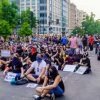
Amid COVID-19, What is the Health of Civic Freedoms?
More than half a year after the World Health Organization declared the COVID-19 outbreak a pandemic, governments are continuing to waste precious time and energy restricting human rights rather than focusing on fighting the virus.
Why We Need Trees to End to Poverty – Landmark Report
With extreme poverty (living on $1.90 a day) projected to rise for the first time in over 20 years, a new study has concluded that global poverty eradication efforts could be futile in the absence of forests and trees.
Changing the Lives of Bangladesh’s Rural Girls by Giving them a Tertiary Education
Nila Kispotta, a 19-year-old rural girl from the Oraon ethnic community, has become a figure of exceptional achievement to the small, poverty-stricken village in Thakurgaon in northwest Bangladesh that she grew up in. Born into a family of daily wage earners, Kispotta dreamt of a different life. So when she enrolled in tertiary education to pursue a diploma in Nursing Science and Midwifery — she achieved something her family and community hadn’t even dreamed was possible.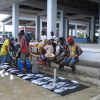
How the Pacific Islands are Balancing COVID-19 Survival Demands on Coastal Fisheries with Sustainable Management
Coastal fisheries in the Pacific Islands have become a food and livelihood lifeline to many people who have lost jobs, especially in urban centres and tourism, following COVID-19 lockdowns and border closures. Now governments and development organisations are trying to meet the crisis-driven survival needs of here and now, while also considering the long-term consequences on near shore marine resources and habitats.
Nobel Peace Prize to World Food Programme Delivering Life-Saving Sustenance to Millions Worldwide
With the 2020 Nobel Peace Prize bestowed on the Rome-based World Food Programme (WFP), the United Nations and its affiliated agencies continue to hold a monopoly of one of the world’s most prestigious annual awards.
Poverty, Official Complicity Hampers Human Trafficking Fight in Malawi
In August, police intercepted the trafficking of 31 people to Mozambique. The victims, all Malawians, included 17 children and 6 women. Their two traffickers, also Malawians, had coerced them from their rural village in Lilongwe district with a promise of jobs in estates in neighbouring Mozambique. But they were saved in large part thanks to their own community.« Previous Page — Next Page »





The Week with IPS

NEXT STOP - SDGs
Tracking global progress towards a sustainable world
Tracking global progress towards a sustainable world
