
Monday, November 16, 2026



News and Views from the Global South
Environment
Reclaiming a Waste Land Called Ukraine
Ukrainian authorities are launching a massive nationwide project to transform the country’s dangerous and inefficient waste disposal network as officials admit the former Soviet state is facing an "ecological catastrophe".
Sweden Runs Into South Sudanese Oilgate
Civil society leaders in South Sudan are closely watching a legal battle unfolding in Sweden, as prosecutors investigate an oil company accused of involvement in massive human rights abuses here.
“God Wants Us to Live in a Garden, Not a Desert”
The European Union plan to save the Kyoto Protocol may meet its greatest obstacle in the developing world.
Q&A: Why Africa Must Remain United in Durban
African leaders have urged the international community to move the United Nations climate change negotiations, which started in Durban, South Africa on Monday, to a different level, and to prioritise adaptation for the continent.
JAMAICA: Environmental Watchdog Breached Rules, Court Says
When Jamaica's environmental watchdog agency approved road expansion and coastal improvement works inside the Palisadoes Port Royal Protected Area without consulting the public, environmentalists took them to court and won.
West African farmers see climate changing
 Women in West Africa have over the years relied on fishing and farming as their traditional source of income. But as Sam Olukoya reports from Lagos, changing weather patterns caused by climate change have put their livelihood under threat.

South Outdoing North in Fight against Global Warming
The claims of some industrialised nations, which accuse the developing countries of not doing their share to curb emissions that contribute to climate change, are proven false in studies conducted by respected academic institutions.
Latin American Integration Does Not Extend to Climate Change**
The foreseeable absence of binding agreements to stabilise the global climate could give rise to increased regional cooperation to help Latin American countries adapt to the severe effects of climate change.
Brazil Cannot Swim Against the Climate Current
With no meaningful proposals, and in the face of internal setbacks and an adverse international context, Brazil is largely unprepared to assume the leadership role expected of an environmental power at the Durban climate change conference.
MALAWI: Changing Climate Compounds Environmental Degradation
As Daniel Chakunkha and Mussa Abu talk on the side of a dirt path in Makunje village, Malawi, a steady stream of bicycles loaded with charcoal passes by. The men stand at the halfway mark between Mwanza, a small city in the country’s southwest, and Blantyre, Malawi’s commercial hub.
ENVIRONMENT: Seeing the Trees In The Year Of Forests
When firefighters arrived to put out a blaze that was engulfing the home of Elise Inversin on the French island of Corsica, the 66-year-old grandmother told firemen to forget about her house and save a neighbouring 900-year-old Mastic tree. The house could be rebuilt, she said.Ecobreves – BRAZIL: Biodiesel Harmful to Marine Life
Biodiesel, a partially renewable agrofuel, generates fewer greenhouse gas emissions than gasoil, but could have negative impacts on marine life, warns a study by Brazil’s Universidade Estadual Paulista.Ecobreves – MEXICO: Adapting Transportation to Climate Change
Mexico should implement climate change adaption and mitigation policies in the transportation sector, recommends a non-governmental organization.Ecobreves – ARGENTINA: Grants for Environmental Activism
Greenpeace Argentina has launched a grant competition for young people, who would be provided with training and funding for campaigns aimed at solving environmental problems in their communities that are not being addressed.
U.S.: Nation’s Tallest Solar Tower Set for Arizona
In the western desert state of Arizona, a company called EnviroMission is planning to build a new solar tower, the first of its kind, an ambitious new way to produce energy with heat from the sun.
Q&A: Climate Talks Must Ensure That “Words Become Reality”
Involving women in decision-making and resource management is a basic necessity for any effective plan to address the multi- layered and life-threatening consequences of climate change, says the head of UN Women.
INDIA: Elephants and Mahouts Held Captive by Tradition
As the number of captive elephants grows to 35 percent of the wild population of the world’s largest land-dwelling mammal, elephant trainers, or mahouts, find themselves just as chained to hardships as their charges.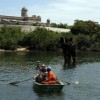
CLIMATE CHANGE: Cuba Joins New South-South Alliances
Cuba will be attending the next round of climate change negotiations after a year that has seen a growing consensus in the developing South to put pressure on rich nations to take on firmer commitments within an international governance regime for climate stability.
KENYA: Like a Fish Belongs to Water, the Ogiek Belong to the Mau Forest
The resettlement of evictees from Kenya’s Mau Forest remains a humanitarian and environmental concern for the country as more than 25,000 people continue to live in camps around the forest.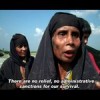
Climate Change – A silent killer in coastal Bangladesh
 Bangladesh, a deltaic country that drains major Asian rivers like the Ganges and the Brahamputra, is highly vulnerable to climate change and the effects are already being felt in the coastal regions in the shape of salinity, frequent floods and land erosion. Farmers and fisherman are already turning into climate refugees and, in a buiness as usual scenario, the next decades could see millions of people displaced according to projections by the United Nations Framework Convention for Climate Change.
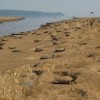
Belo Monte Dam and Hunters Endanger Amazon Turtles
Luiz Cardoso da Costa was horrified as he watched the Amazonian manatee, a large docile beast, bleeding out from the knife wound he had dealt it, yet greedily gulping down grasses as if eating could somehow stave off death.« Previous Page — Next Page »


Through our global network of local writers, we are continuing our award-winning coverage of global and local environmental challenges, with a focus on the people for whom the ecosphere matters in a direct way: rural dwellers who have little means to protect themselves against adverse conditions; communities that need to switch to sustainable development in order to survive; poor women and children, who are the most vulnerable in natural disasters. Sponsored by the United Nations Environment Program (UNEP), the United Nations Development Program (UNDP) and The World Bank (WB), IPS also maintains the award-winning Tierramérica, a specialised information service on environment and development.

The Week with IPS

Tracking global progress towards a sustainable world


