
Friday, November 20, 2026



News and Views from the Global South
Environment

URUGUAY: Tools Needed for Those Most Vulnerable to Climate Change
Water-borne diseases and illness related to natural disasters are on the agenda for plans of officials and civil society to help the precarious settlements in the outskirts of the metropolitan area of Montevideo and in other Uruguayan cities.
ENVIRONMENT: Giant Bacteria Colonise the Oceans
A mat the size of Uruguay composed of giant bacteria has been discovered in the mid-depths of the ocean off the coasts of Chile and Peru, report scientists who are working on a series of studies of the ocean's smallest life forms.
ENVIRONMENT-ICELAND: Living With Volcanic Eruptions
Incredible as it may seem, daily life for the vast majority of Icelanders is completely unaffected by the volcanic eruption under the Eyjafjallajökull glacier, that has left thousands of air passengers around the world stranded due to flight cancellations.Opposition Mounts to Carbon Compensation Schemes
The World People's Conference on Climate Change and the Rights of Mother Earth, which opened Monday in Bolivia, will reflect vigorous resistance to financial compensation for forest conservation in return for permits to emit greenhouse gases, activists told IPS.
CLIMATE CHANGE: Voice of Civil Society Loud and Clear in Cochabamba
The success of the climate change conference taking place in the central Bolivian city of Cochabamba will depend on how unified civil society ultimately is in its efforts to influence the United Nations climate summit, in Mexico, say Latin American activists.CHINA: In Latest Quake, Poorly Built Schools Haunt Gov’t – Again
Collapsed buildings, homes turned to rubble, students killed or trapped in the wreckage of schools and dormitories – last week’s 7.1-magnitude earthquake in western China’s remote Qinghai province offered chilling reminders of the Sichuan earthquake that killed almost 90,000 people in 2008.
PARAGUAY: Bamboo Against Deforestation
Uncontrolled expansion of cattle farming in Paraguay has led to "cutting down trees and planting exotic grasses," says environmentalist Guillermo Gayo. To put a halt to this practice in the southern department of Paraguarí, the foundation he heads has implemented what is known as "permaculture."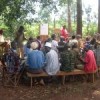
AFRICA: Foreign Investors Safeguarded From Obligations to Locals
Parts of the Tana Delta on Kenya’s northern coastline are being leased to foreigners to grow food and bio-fuels for export. Civil society organisations are worried about such deals as they are done without public consultation while safeguarding investors from requirements that could benefit local communities, such as technology transfer.
Civil Society's Voice Loud and Clear in Cochabamba
Activists from across the Americas are in Bolivia for an event with little government participation. They are looking for ways to join forces ahead of the next global climate summit, to be held in Mexico at the end of this year.
Giant Bacteria Colonize the Oceans
Marine biologists have discovered giant mats composed of megabacteria off the coast of South America, and suggest that they could serve vital ecological functions.
Tools Needed for Those Most Vulnerable to Climate Change
A global forum in Uruguay is evaluating the country's plans for dealing with the problems that arise from increasing variability and unpredictability of the climate, especially for poorer populations.Ecobreves – HONDURAS: Government Suspends Logging Permit
Honduran authorities ordered a halt to logging in 600 hectares of forest in six communities of Valle de Siria, in the central department of Francisco Morazán, in the wake of protests by local residents and clashes with the loggers, which left one person dead and two injured.Ecobreves – MEXICO: A Push for Eco-Lighting
The environmental group Greenpeace is pressuring the Mexican Parliament and businesses to promote the replacement of incandescent light bulbs with ecological alternatives.Ecobreves – ARGENTINA: To the Rescue of Stranded Marine Animals
Argentine environmental activists and officials have united to help marine animals that are in situations of risk along the coast of the province of Buenos Aires.
PHILIPPINES: Revival of Filthy River Flows from Changed Habits
While more developed countries consider waterfronts prime property, most Filipinos have regarded rivers and creeks as their "backyard" and sewage system.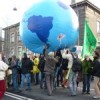
ENVIRONMENT: European Activists Against Economic Growth
The global environmental crisis requires replacing the existing capitalist model of production with one that promotes "selective degrowth" of the economy and the restricted and responsible exploitation of natural resources, according to European experts and activists.
WATER-ZAMBIA: Lozi Make Annual Migration to Higher Ground
Josias Akataama spent March watching the moon wane above, and flood waters rise from below. Only with the sighting of the new moon, would the men, women and children of Kandiani know when they could leave the water-logged village for higher ground.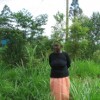
AGRICULTURE: Affordable Solution to Costly Pests
The International Centre for Plant Physiology and Ecology (ICIPE), based at Mbita, on the Kenyan shores of the world’s second-largest freshwater body, is advocating "push-pull cultivation" as the answer to feeding future generations in Africa.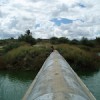
NAMIBIA: Banking Water for the Future
In the driest capital city south of the Sahara, water engineers are "banking" ground water to meet future demand, but the enormous costs might sink the project before water can be harvested.CLIMATE CHANGE-BOLIVIA: In Defence of Pachamama
Through their ancestral knowledge and traditions, indigenous peoples will make a unique and invaluable contribution to the World People’s Conference on Climate Change and the Rights of Mother Earth, which begins Monday, Apr. 19 in the central Bolivian city of Cochabamba.
INDIA: Balancing Biodiversity and Livelihood A Juggling Act
Hanumantha Nayak had not ventured too far into the forest in search of firewood. But, while he was apparently attempting to tear up a cluster of dried bamboo, a tigress leapt onto his back, bit his forearm, and then went for his throat. Nayak, 50, never stood a chance.« Previous Page — Next Page »


Through our global network of local writers, we are continuing our award-winning coverage of global and local environmental challenges, with a focus on the people for whom the ecosphere matters in a direct way: rural dwellers who have little means to protect themselves against adverse conditions; communities that need to switch to sustainable development in order to survive; poor women and children, who are the most vulnerable in natural disasters. Sponsored by the United Nations Environment Program (UNEP), the United Nations Development Program (UNDP) and The World Bank (WB), IPS also maintains the award-winning Tierramérica, a specialised information service on environment and development.

The Week with IPS

Tracking global progress towards a sustainable world


