
Friday, November 6, 2026



News and Views from the Global South
Environment

Localizing SDGs Means Truly Empowering Citizens
The Future We Want was the groundbreaking outcome of the Rio+20 Summit, the summit, held in 2012, where the idea of Sustainable Development Goals (SDGs) was first conceptualized.
We can Achieve the Sustainable Development Goals but it will take Courage & Urgent Transformations
The world is at a crossroads. This week, the United Nations Secretary-General, government ministers and senior leaders are gathered in New York at the ECOSOC Financing for Development Forum. (scheduled to take place April17-20).
Water is Life: How the UN in Samoa is Responding to the Triple Planetary Crisis
Water is life. No other definition captures quite so aptly what this essential element means for our lives, livelihoods and the natural environment.
Vulnerable Countries Need Action on Loss and Damage Today and Not at COPs To Come
In March 2023, more than 600 people died in Malawi after Tropical Cyclone Freddy dumped heavy rain, flooding the southern part of the country, displacing over half a million people, and damaging property and livelihoods.
Crisis? What Crisis? Media Failing to Convey the Urgency of the Climate Emergency
If an alien landed on Planet Earth today and started watching television and reading the newspapers, it would probably not realize that humanity and the natural world face an existential threat - one that has taken us into the Sixth Mass Extinction, is already devastating the lives of many, especially in the Global South, and is set to hit the rest of us soon.
In Zimbabwe, Golf Is Giving Cyclone Idai Survivors Hope
Trust Makanidzani’s golf practice session with his friends is disrupted by a howling wind and a heavy pelting of water that thundered against rooftops at Chimanimani Golf Course in the eastern part of Zimbabwe.
Planet Garbage
Straight to the point: the current system of voracious money-making production and the induced over-consumption patterns have turned Planet Earth into a giant garbage dump.
Food Shortages Deepen in Cyclone-Devastated Vanuatu
One month after the Pacific Island nation of Vanuatu was hit by two Category 4 cyclones within three days, food scarcity and prices are rising in the country following widespread devastation of the agriculture sector.
Andean Indigenous Women’s Knowledge Combats Food Insecurity in Peru
Paulina Locumbe, a 42-year-old peasant farmer who lives in the Andes highlands of southern Peru, learned as a child to harvest and dry crops, one of the ancestral practices with which she combats the food insecurity that affects millions in this Andean country.
CIVICUS Report Exposes a Civil Society Under Attack
As conflict and crises escalate to create human emergencies that have displaced over 100 million people worldwide, civil society’s vital role of advocating for victims and monitoring human rights cannot be over-emphasised.
Malawi: Cyclone Freddy Devastates Communities, Farmers, Heightens Food Insecurity
In Sonjeka village in Mulanje district, which lies on the border with Mozambique in southern Malawi, destroyed crop fields stretch almost interminably after floods ripped through them when Tropical Cyclone Freddy pounded the country.
Quo Vadis Republic of Mauritius?
On 12th March 2023, The Republic of Mauritius celebrates 55 years of post-independence history. It would be an understatement to just say that there has been a lot of water under the bridge on our journey to self-determination!.. Indeed, we have made massive progress since we lowered the Union Jack and unfurled our own flag. It was and remains a moment of great pride whenever I see our flag in any international event, I participate in.
Civil Society a Vital Force for Change Against the Odds
Brave protests against women’s second-class status in Iran; the mass defence of economic rights in the face of a unilateral presidential decision in France; huge mobilisations to resist government plans to weaken the courts in Israel: all these have shown the willingness of people to take public action to stand up for human rights.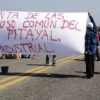
Opposition in Mexico to Mega-Industrial Model
In March 2021, the community assembly of the municipality of San Blas Atempa, in the southern Mexican state of Oaxaca, approved the sale of 360 hectares for the creation of an industrial park. But part of the community opposed the initiative due to irregularities, such as the falsification of signatures of supposed attendees, including those of people who had already died.
A Plan for the Gulf States to Power a Low-Emissions Revolution
This year’s United Nations Climate Change Conference, COP 28, will be hosted by the United Arab Emirates, which, together with its Gulf neighbors, enjoys abundant solar, natural gas and financial resources. At the same time, many poorer countries are struggling to generate the additional affordable electricity they need to power their development — especially as wealthier nations halted their overseas financing for high-emitting coal power plants.
Climate Resilient Indigenous Crops Underutilised even as Climate Change Threatens to Cripple Food Systems
Elizabeth Njoroge recounts her poverty-stricken upbringing in Ting’ang’a village in the Central part of Kenya, growing up on a diet heavy on Amaranth and pumpkin.
If We Value Human Rights and the Rule of Law, Then We Must Fight for Climate Justice
Human life is sacred and every individual deserves an equal chance in life. We have a common desire, we all want to lead a free, fulfilling existence, with dignity, where our basic needs are met, with opportunities to advance and equal treatment under the law. These are fundamental human rights, protected by international law, which we all have a shared responsibility to protect.
The ‘Vampiric’ Draining and Poisoning of Lifeblood: Water
Shockingly, the human suicidal war on Nature not only continues unabated but is also set to become even more virulent. Just to start with, please be reminded that groundwater accounts for 99% of all liquid freshwater on Earth, according to the 2022 UN World Water Development Report.
Venezuela Makes Timid Headway in Solar Energy
The installation of solar panels in a remote village in the Andes highlands in late February marked a second incursion by the Venezuelan government into the field of solar energy, previously uncharted territory in this country that for a century was a leading global oil producer.
Keep Moving …
Only forty-five days into our new Strategic Plan 2023-2026, Education Cannot Wait secured 55 percent of its total requirement for the coming four years, reaching $826 million at #HLFC2023. This is a significant milestone for education in emergencies and protracted crises, and ECW will continue to pursue fund-raising year-round in the coming four years. The goal is to reach the target of 20 million children and adolescents affected by armed conflicts, climate-induced disasters and forced displacement.
Protecting and Managing the High Seas
On March 4 2023, the 193 members of the United Nations reached a major milestone. They agreed on a treaty to manage and protect the high seas– the marine areas that lie outside the 200 mile Exclusive Economic Zones (EEZ) of coastal states. The high seas are an essential part of the global ecosystem. They cover 50 percent of the Earth’s surface, produce half the oxygen we breathe, provide a home to 95 percent of the planet’s biosphere, are a critical sink for carbon dioxide, and help regulate the Earth’s temperature.« Previous Page — Next Page »





Through our global network of local writers, we are continuing our award-winning coverage of global and local environmental challenges, with a focus on the people for whom the ecosphere matters in a direct way: rural dwellers who have little means to protect themselves against adverse conditions; communities that need to switch to sustainable development in order to survive; poor women and children, who are the most vulnerable in natural disasters. Sponsored by the United Nations Environment Program (UNEP), the United Nations Development Program (UNDP) and The World Bank (WB), IPS also maintains the award-winning Tierramérica, a specialised information service on environment and development.

The Week with IPS

Tracking global progress towards a sustainable world


