Languages
Monday, November 9, 2026



News and Views from the Global South
Featured

Smallholder Farmers in Uganda Recruit Black Soldier Fly for Green Fertiliser
The conflict in Ukraine has led to an increase in fertiliser prices in Uganda and neighbouring Kenya. Amidst the shortages, some farmers are shifting to a more sustainable way of enriching their soils using frass from the Black Soldier Fly.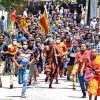
Sri Lanka: Why a Feudal Culture & Absence of Meritocracy Bankrupted a Nation
Sri Lanka is officially bankrupt and a failed state in all but name. How did a country of 22 million people with a level of literacy on par with most of the developed world end up in such a dire position where the state coffers did not have the measly sum of 20 million dollars to purchase fuel to keep the country functioning beyond the next working day?
Most Suspended Ugandan NGOs Still in Limbo
Nearly a year after the Ugandan government suspended 54 NGOs for allegedly operating illegally and failing to file accounts, most civil society organisations (CSOs) remain shut.
A New World Order is Dawning – But will it be Liberal or Illiberal?
With the invasion of Ukraine, Russia effectively destroyed the European peace order. Now, Europe needs to find ways to contain its aggressive neighbour, while its traditional protector, the United States, continues its shift of focus to the Indo-Pacific.
Immigrant Supports Other US Migrants Run the Gauntlet of Bureaucracy
Veronica Vega's husband was the first in the family to immigrate to Oakland, California. When 27 years ago Vega decided to join him, she was five months pregnant and walked across the Mexican border to come to the United States.
Clean Energies Seek to Overcome Obstacles in Argentina
The multitude of solar panels stands out along a dirt road in an unpopulated area. Although located just an hour's drive from Buenos Aires, the new solar park in the municipality of Escobar is in a place of silence and solitude, symbolic of the difficulties faced by renewable energies in making inroads in Argentina.
“Made in Chile” Electric Buses, Another Stride Towards Electromobility
The manufacture in Chile of an electric bus christened Queltehue, a wading bird native to the country, is another step towards electromobility and in the fight against pollution that triggers frequent environmental crises and smog emergencies in Santiago and other cities.
Grassroots Organizing Should Dump Biden and Clear Path for a Better Nominee in 2024
Pundits are focused on Joe Biden’s tanking poll numbers, while progressives continue to be alarmed by his dismal job performance. Under the apt headline “President Biden Is Not Cutting the Mustard,” last week The American Prospect summed up: “Young people are abandoning him in droves because he won’t fight for their rights and freedom.”
A New Mideast Peace Plan: A Confederation of Israel, Palestine & Jordan
The Israeli-Palestinian conflict, which dates back to the mid-1940s, is one of the longest military confrontations defying a permanent solution – even as it continues to be on the agenda of the United Nations whose primary mandate is the maintenance of international peace and security.
Drones To Help Fishers Avoid Border Conflicts on Lake Victoria
It is exactly two years since George Omuodo’s brutal confrontation with fishers from Uganda, an encounter that left him hospitalized with a broken arm and bruised ribs. After listening to his ordeal, one wonders where he gets the courage to go back to the lake every day.
World Faces Cascading Crises Causing Profound Suffering & Multiple Famines
Our world is in deep trouble – and so too are the Sustainable Development Goals (SDGs). Time is running out. But there is still hope. Because we know what we need to do:
BRAC celebrates 50 years: A case for social development founded and led by the Global South
As part of the 2022 United Nations High-Level Political Forum, BRAC, with the Permanent Mission of Bangladesh to the United Nations, and the Permanent Mission of the Republic of Rwanda to the United Nations, hosted a side event this week to discuss development opportunities led by the Global South. The event highlighted the NGO’s achievements over the last five decades in alleviating and eradicating poverty and the interconnectedness between the UN Sustainable Development Goals (SDGs) in their initiatives.
Soaring Temperatures Devastate Kashmir Farmers
The soaring temperatures this year in India’s northern state of Kashmir are proving calamitous for the region’s farming community. The place, otherwise known for its emerald streams, lush green hills, and ice sheets, is reeling under heat attributed to climate change this year. The heat wave of such intensity has left most of the water canals dead and dry, plunging the already conflict-torn region into a frightening agrarian crisis.
Income-based Solutions Paramount for Addressing Food Insecurity – Experts
Lisa Argiropulos, a single mother of two teenage sons and a resident of Ottawa, Ontario, has been facing food insecurity since 2016, after an accident that left her with chronic pain and disabilities.
Aid for Power in New Cold War
Long a means for powerful nations to influence developing countries, development finance has gained renewed significance in the new Cold War. Unlike during the US-Soviet Cold War, the rivalry now is between mixed market capitalist systems.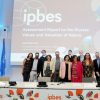
Narrow Valuation of Nature is Widening Biodiversity Loss
Nature has diverse values for different people, but it is poorly evaluated, and this is driving the global biodiversity crisis, top scientists say in a new report.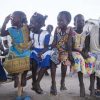
What Future for a World of 8 Billion?
What does a young girl from Juba, in South Sudan, an 8-year-old boy living in the slums of Mumbai, in India, a young mother from the south of Lima, in Peru, and an 83-year-old man enjoying retirement in the suburbs of Stockholm, in Sweden, have in common?
India & China Continue to Lead –as World Population Projected to Reach 8.0 Billion
India and China, two Asian nuclear powers who are also longstanding rivals embroiled in the geo-politics of the Indian Ocean region, have remained two of the world’s most populous nations accounting for over a billion people each. But as the world’s population reaches the 8.0 billion mark, come November, India is projected to surpass China.
Wild Species Central to Human Survival, New IPBES Report Offers Options for their Sustainable Use
Fifty thousand wild species meet the needs of billions of people worldwide, providing food, cosmetics, shelter, clothing, medicine and inspiration. But now, a million species of plants and animals face extinction with far-reaching consequences, including endangering economies, food security and livelihoods.
Migrant Workers from Mexico, Caught Up in Trafficking, Forced Labor and Exploitation
Eduardo Reyes, originally from Puebla in central Mexico, was offered a 40-hour workweek contract by his recruiter and his employer in the United States, but ended up performing hundreds of hours of unpaid work that was not authorized because his visa had expired, unbeknownst to him.
Intersecting Crises are Impeding the UN’s Sustainable Development Goals, Threatening Peace & Security
This week marks the mid-way point to the 2030 Agenda on Sustainable Development and with it the release of the UN’s Sustainable Development Goals Report 2022.« Previous Page — Next Page »





The Week with IPS

NEXT STOP - SDGs
Tracking global progress towards a sustainable world
Tracking global progress towards a sustainable world
