Languages
Tuesday, November 10, 2026



News and Views from the Global South
Featured

Caribbean Under Threat: Report Reveals Enormous Challenges for the Region
Less than halfway into the 2021 Atlantic Hurricane Season, Jamaica and its Caribbean neighbours were already tallying the costs of infrastructural damage and crop losses from the passage of three tropical storms - Elsa, Grace and Ida. And after a record-breaking 2020 season, the region is on tenterhooks as the season peaks.
A Tale of Two Internationally Trained Medical Doctors in Canada
Wagma Saad, is an Internationally Trained Medical Doctor (ITMD) from Kabul Medical University, Afghanistan, currently living in Canada with her family. Saad graduated in 2016, an education that didn’t come easily to her. With numerous restrictions, blocks and challenges placed at every step, fighting numerous social and political battles, she chased her passion for science and medicine, and after seven years at medical school, she finally got to call herself a doctor.
Afghanistan’s Girls Need our Unwavering Support in Education
The Taliban takeover of government in Kabul is just days old, and the eyes of Afghans and the world are cautiously watching and hopeful to see them stand by their word and ensure that girls’ education be promoted and protected.
In a Watershed Year for Climate Change, the Commonwealth Secretary-General calls for Urgent, Decisive and Sustained Climate Action
This November, five years after signing the Paris Agreement and pledging to limit global warming to 2 degrees Celsius above pre-industrial levels, with a further target of below 1.5 degrees Celsius, world leaders will meet in Glasgow, UK amid COVID-19 pandemic shocks, rising hunger and an Intergovernmental Panel on Climate Change report that warns of more extreme temperature, droughts, forest fires and ice sheet loss due to human activity.
A Regional Agreement for Healthy Eco-Systems in Latin America & the Caribbean
In August 31st 2021, five Nations including Costa Rica - the country where the Escazú Agreement was adopted - announced publicly working towards a proposal for UN Human Rights Council to recognize globally the right to a clean, safe, healthy and sustainable environment at its 48th session in September.
Climate Crisis Drives Up Cost of Electricity and Brings Big Changes in Brazil
As most of the world seeks to modify its energy mix to mitigate climate change, Brazil has also been forced to do so to adapt to the climate crisis whose effects are being felt in the country due to the scarcity of rainfall.
The ARC Model: Proactive Disaster Risk Financing for a More Resilient Africa
The world faces multiple crises: climate change, extreme weather events, food security and biodiversity. For African nations, these issues are compounded by the COVID-19 pandemic and epidemic outbreaks that include Rift Valley Fever and Malaria. With 35 African Union Member States as signatories to its establishment Treaty, the African Risk Capacity (ARC) Group – comprising of ARC Agency and ARC Limited - works with Governments to help improve their capacities to better plan, prepare, and respond to extreme weather disasters and natural disasters.
“Time Is A-Wasting”: Making the Case for CEDAW Ratification by the United States
The U.S. is one of only a handful of countries that has yet to ratify the Convention on the Elimination of Discrimination against Women (CEDAW), rendering it “strange bedfellows” with Sudan, Somalia, Iran, Tonga, and Palau.
Belarus Crackdown Leaves Human Rights, Minorities Exposed
There will soon be no one left to defend human rights or help minorities in Belarus as the country’s third sector moves closer to “complete liquidation”, international rights groups have warned.
Civil Society Must Build on Protest Movements – Podcast
 2020 was a year of tremendous upheaval. The murder of George Floyd, followed by global Black Lives Matter protests, Covid-19 and the stark light that the pandemic shone on inequality within countries and between the global north and south, protests and brutal repression after elections in Belarus, ongoing demonstrations for climate action led by youth around the world, to name just a few.
Afghanistan – a Turning Point?
Headlines in the press, live TV and internet coverage of the chaos at Kabul airport following the American withdrawal from Afghanistan has generated an impression around the world of an American foreign policy debacle, belittling the supremacy of American military power.
Journalists in Hiding to IPS: Silencing Women Journalists, is Silencing the Voice of Afghan Women
“If I fall into the hands of the Taliban, not only me but my family will be killed,” said AB, 23*, who worked as a broadcast journalist for the past seven years and is a well-known face on the television screen.
The Future of Food & Water Systems in Pakistan & Central Asia?
An intense monsoon season in Pakistan means the country’s food system faces the challenge of both extreme floods and extended droughts. In an effort to address these challenges through cross-sectoral collaboration, Dr. Mohsin Hafeez, IWMI’s Country Representative for Pakistan and Regional Representative for Central Asia, convened a regional dialogue in advance of the UN Food Systems Summit (which is scheduled to take place at the United Nations, September 23) .
IUCN Congress to Push for Stronger Regulations against ‘Imported Deforestation’
As Arti Prasad rode the Kuala Lumpur Pavilion mall escalator up to the third floor, a pair of luscious lips pouted down at her. Next to the towering and oversized lips, the vibrant red shades of lipstick on the giant screen immediately caught the 36-year-old Indian tourist’s fancy.
Biden’s Revenge: Fueling ‘Madness of Militarism’ in Afghanistan
Joe Biden provided a stirring soundbite days ago when he spoke from the White House just after suicide bombers killed 13 U.S. troops and 170 Afghans at a Kabul airport: “To those who carried out this attack, as well as anyone who wishes America harm, know this: We will not forgive. We will not forget. We will hunt you down and make you pay.”
South Korea’s Women Fire Back
A strong movement of feminism is sweeping South Korea. While women feel empowered to stand their ground, the men are retaliating. When South Korean archer An San won two gold medals in just two days during the recent Tokyo Olympics, the response the 20-year-old received at home was a mixed. Some men were angered and said her medals should be taken away. Why? Because her short hair was a sign that she was a ‘man-hating’ feminist.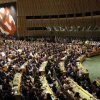
Taliban’s Quest for Legitimacy – and a Seat at the United Nations
When the Taliban captured power back in 1996, one of its first political acts was to hang the ousted Afghan President Mohammed Najibullah in Ariana Square in Kabul. The newly-installed government played a triple role: judge, jury and hangman, all three rolled into one.
‘COVICANE’ – How One Caribbean Country is Coping with the Hurricane Season during COVID-19
Around 2 pm on August 18, 89-year-old farmer Whitnel Louis and his wife Ayma began packing up their unsold produce, hoping to leave the capital of Roseau and get home way ahead of the 6 pm curfew recently put in place to curb the spread of the COVID-19 virus.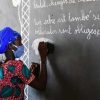
Social Protection at a Crossroad—and Poverty On the Rise
How can we ensure a resilient and inclusive recovery from COVID-19? How can we hold on to the target of eradicating poverty and hunger by 2030, with the pandemic still ongoing?
Argentina Takes Controversial Step Backwards in Biofuel Production
Argentina, historically an agricultural powerhouse, has become a major producer of biofuels in recent years. However, this South American country is now moving backwards in the use of this oil substitute in transportation, a decision in which economics weighed heavily and environmental concerns have been ignored.
Closed Borders and Hostile Receptions Await Afghan Refugees
Whether desperately trying to get a place on the last evacuation flights out of Kabul or trekking to the borders with neighbouring Pakistan and Iran, tens of thousands of Afghans are fleeing their country once more. Events are unfolding at speed. The Taliban are establishing a central government in the capital to fill the void of the collapsed western-backed administration, but they do not control all the country as the protracted civil war enters a new stage. The UN refugee agency UNHCR says that in its “worst case scenario” it is preparing for around 500,000 new refugees in the region by the end of this year. As with many past estimates that could prove optimistic.« Previous Page — Next Page »





The Week with IPS

NEXT STOP - SDGs
Tracking global progress towards a sustainable world
Tracking global progress towards a sustainable world
